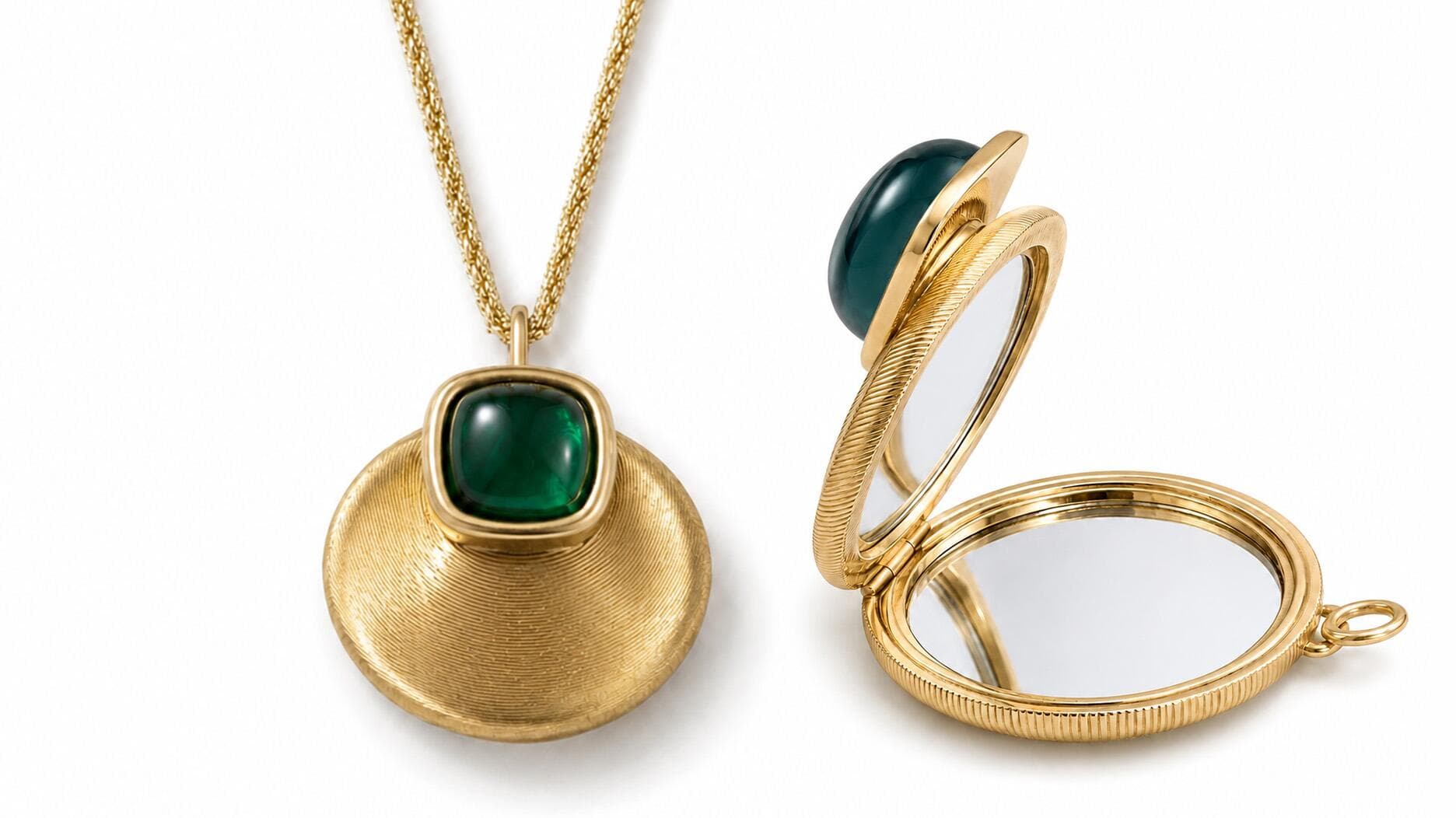
How vintage plastic jewelry turned imitation materials into style icons
Celluloid made imitation jewelry possible, but Bakelite turned plastic into a collectible language of color, carving, and resale value.

Celluloid, patented in 1869 and produced commercially in 1871, gave jewelers a way to copy ivory, tortoiseshell, amber, and bone at a price middle-class buyers could reach. Bakelite later pushed plastic into a bolder, more durable, and more collectible era. Knowing which material you are holding is the difference between dating a piece correctly, pricing it honestly, and caring for it without ruining the finish.
The first plastic gave jewelry a new vocabulary
Celluloid became the world’s first commercially successful plastic and moved quickly into jewelry and other fancy goods, where it answered a very specific demand: attractive substitutes for scarce natural materials. John Wesley Hyatt’s material let buyers wear something that borrowed the look of ivory, tortoiseshell, or amber while signaling modern manufacturing.
The Smithsonian’s material history links its rise to the growing middle class, the same audience that wanted decorative objects with the visual weight of precious materials but without their cost. In vintage jewelry, that makes celluloid a date marker as well as a design clue: if a piece is trying to look like bone, ivory, or shell while feeling lighter and more mass-made, you are likely looking at the first chapter of plastic adornment.
Bakelite turned imitation into a design language of its own
Bakelite changed the story. Leo Hendrik Baekeland invented it in 1907. Britannica identifies it as the first truly synthetic resin and the first thermosetting plastic. The Smithsonian’s collections place it as the first plastic made from synthetic components, which helps explain why it reads so differently from earlier plastics. Celluloid borrowed from nature; Bakelite declared that modern material could be the aesthetic.
By the 1920s, molded Bakelite and its cast cousin Catalin had moved into costume jewelry. Their heyday came in the 1930s and 1940s, and a Smithsonian object entry places Bakelite jewelry at the height of its popularity in the 1930s as an inexpensive form of costume jewelry. Bakelite was hard enough to cut and polish, which made it ideal for bracelets, beads, and brooches, as Collectors Weekly notes.
How the material helps date the piece
Materials do the dating for you if you know what to look for. Bakelite continued to appear in jewelry from the 1950s through the early 1970s, while acrylics such as Lucite and Plexiglas carried over from the 1930s and 1940s. Antique Trader separates thermoset plastics like Bakelite and Catalin, which do not melt after curing, from thermoplastics such as cellulose acetate and polystyrene, which can be reheated and reshaped.
Thermosets tend to survive with their form intact, while thermoplastics often tell a different story through flexibility, lighter weight, or surface wear. The Metropolitan Museum of Art places these materials in a broader postwar shift: wartime-developed materials and technologies helped lower prices and free design in the 1950 to 1975 period.
The practical markers collectors use
The safest way to read vintage plastic jewelry is to start with what the material wants to be. Cellulose acetate, a cotton-based synthetic plastic marketed in the early twentieth century, was prized for its gloss, transparency, and hand feel. Lucite and other acrylics are often recognized by their transparent bodies, dyed clarity, and lighter feel. Polystyrene can appear brightly colored and unusually light, which helps separate it from denser-feeling materials at a glance.
Bakelite has its own set of clues, but the best identification habits are the cautious ones. Cellulose acetate can smell vinegary, and hot-water testing can distort fragile pieces, so heat is not a harmless shortcut. In practice, that means you should look first at finish, weight, transparency, and construction before you ever think about testing. A piece that looks glossy and glasslike may be acetate or acrylic; a carved, substantial bangle from the interwar years may be Bakelite or Catalin; a lightweight, vividly colored form is more likely to belong to the later plastic families that followed.
Why material changes value, not just appearance
Celluloid marks the moment when jewelry began to imitate costly materials for a larger market. Bakelite made the imitation less important than the object itself, with enough hardness to cut and polish into bracelets, beads, and brooches that still hold their edges and shape.
A properly identified Bakelite bangle or brooch can carry far more collector weight than a later thermoplastic piece.
This article was produced by Prism’s automated news system from verified source data, official records, and press releases, then run through automated quality and moderation checks before publishing. The system is built and supervised by the people who set the standards it runs under. Read our full AI policy.
Did this article answer your question?