Late-16th-century Evesham Diamond Ring heads Noonans auction
A rare Evesham ring with eight hogback diamonds and a central rose-cut stone will go to Noonans, after Stuart Jones recovered a second missing diamond from the soil.
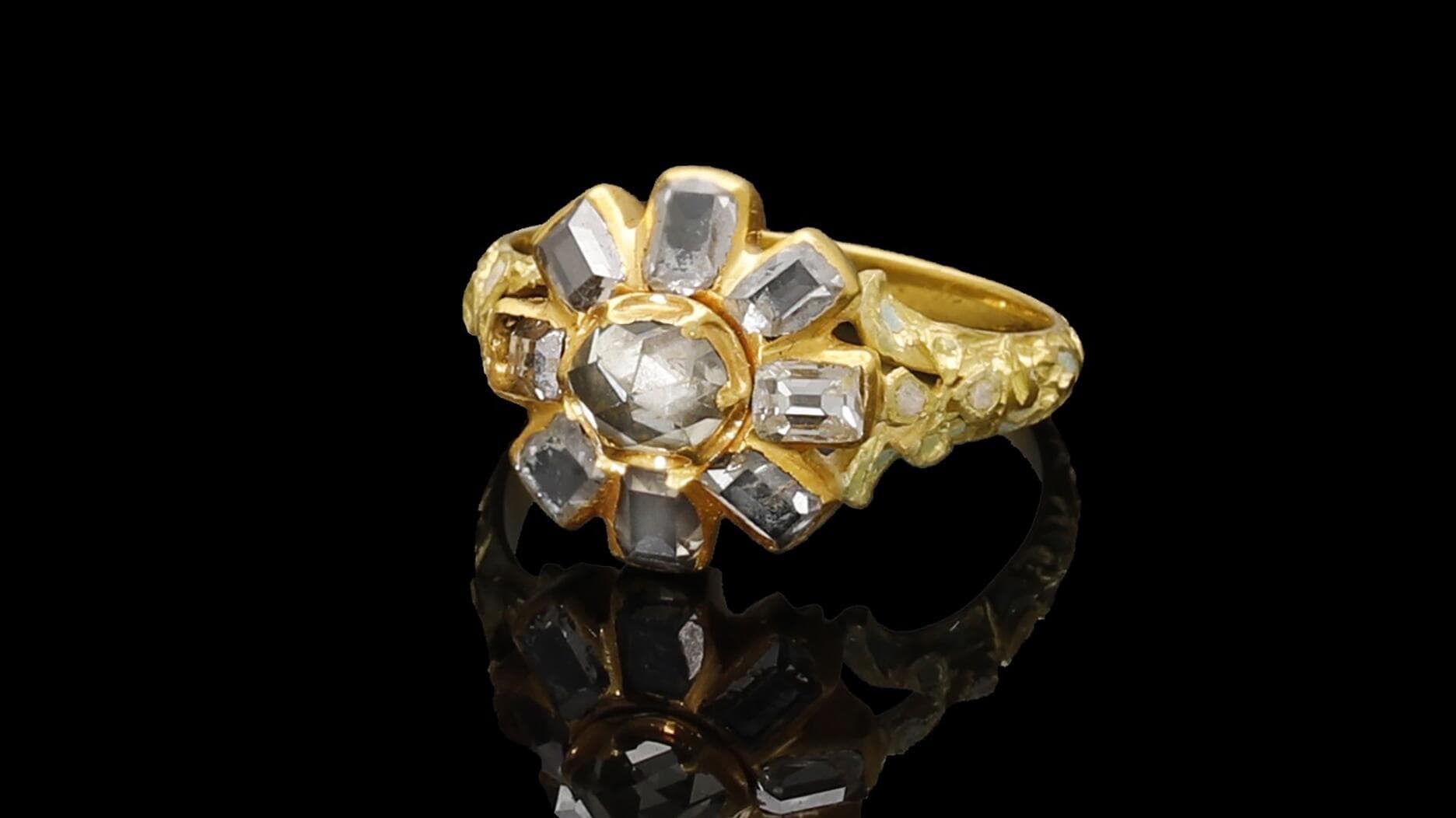
A late-16th- to early-17th-century diamond ring with an unusually vivid discovery story will lead Noonans’ Jewellery, Objects of Vertu, Silver and Watches sale, where the Evesham Diamond Ring is estimated at £15,000 to £20,000. Found by metal detectorist Stuart Jones in Wormington, Gloucestershire, the ring combines a flowerhead bezel, a lost-and-found pair of diamonds, and the sort of provenance that can matter as much as carat weight to serious collectors.
The ring is lot 106 in the June 23 auction, which begins at 12:00 PM and spans 663 lots. Noonans says the piece was uncovered in November 2024, just four miles from Broadway on the London-to-Worcester road, and is now disclaimed as Treasure. Its proceeds will be shared equally with the landowner, a detail that underlines how closely these finds still sit between private collecting and public history.

Jones, a 42-year-old welder fabricator at Jaguar Land Rover from Solihull, described the discovery as his “once in a lifetime find.” One diamond dropped out when he lifted the ring from the ground, and a second setting was empty. He gathered the surrounding soil, washed and sieved it at home, and recovered the missing stone, a reminder that a detectorist’s work often continues long after the first flash of metal in the field.
The ring’s appeal lies in its form as much as its story. Noonans says the flowerhead bezel holds eight hogback diamonds around a central rose-cut diamond, with turquoise and white enamel on the underside. Laura Smith, Noonans’ jewellery specialist, said the hogback diamond is an early form of diamond cut, and that the stones appear slightly gray compared with modern faceted diamonds because 16th- and 17th-century cutting emphasized external rather than internal reflection. The International Antique Jewellers Association describes the hogback cut as a forerunner to the baguette, with a similar rectangular outline and rounded top.
Frances Noble, Noonans’ Head of Jewellery, said early-17th-century baroque taste favored large decorative rings set with small stones arranged as rosettes, pansies, crosses and fleur-de-lys. On that reading, the Evesham ring sits squarely within a courtly visual language, and its quality suggests an owner of considerable wealth and status, possibly even royal status. Noonans points to nearby 16th-century estates, including Snowshill Manor, which Henry VIII gave to Catherine Parr in 1543, as part of the ring’s broader historical landscape.
The ring also fits a larger theme running through the two-day sale, which includes other detectorist finds such as the Allerdale silver Viking Hoard. That mix of archaeological context, intact craftsmanship and documented recovery is exactly what turns a ring from an object of beauty into an object of appetite for collectors.
This article was produced by Prism’s automated news system from verified source data, official records, and press releases, then run through automated quality and moderation checks before publishing. The system is built and supervised by the people who set the standards it runs under. Read our full AI policy.
Did this article answer your question?