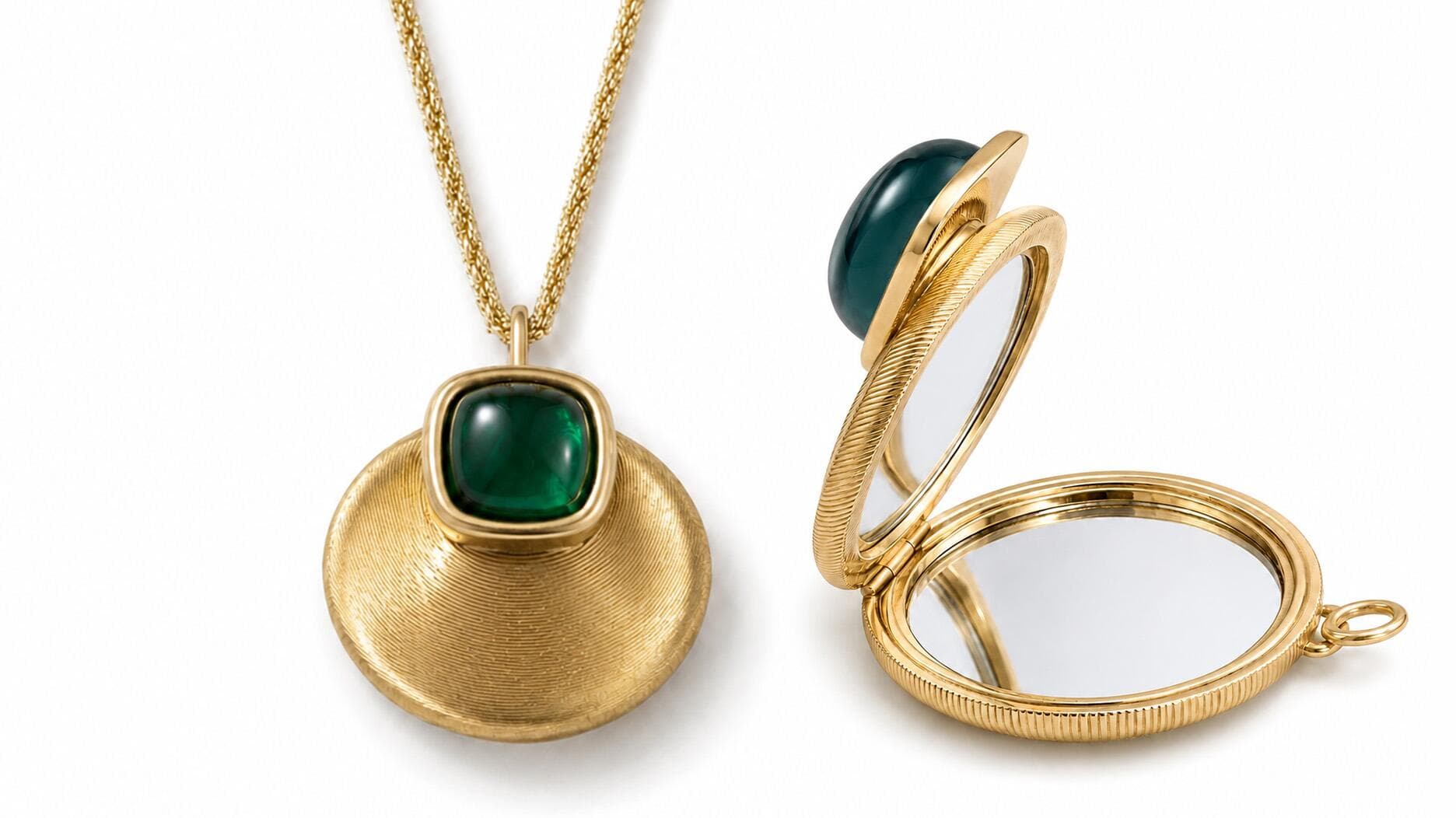
Pinterest and resale data show vintage jewelry revival is gaining steam
Nostalgia and TikTok are pushing vintage jewelry into the spotlight, but the winners will be the pieces merchandised as mysteries to decode, not just old stock.

The new vintage sale is a story sale
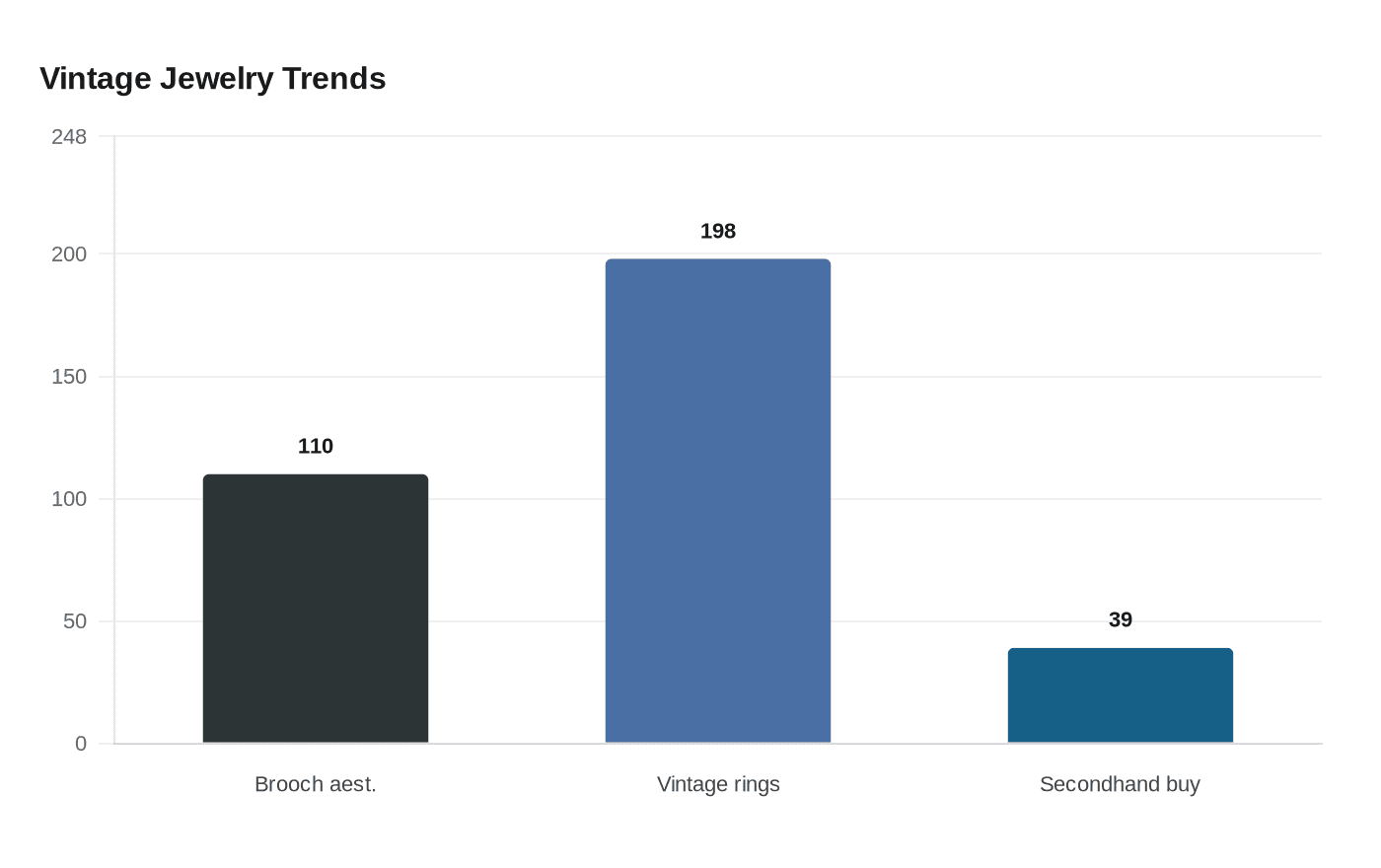
Vintage jewelry is moving fastest when it feels like something the buyer can decode. Search interest is rising for vintage jewelry and Art Deco design, Pinterest says the “brooch aesthetic” jumped 110%, and searches for vintage engagement rings were up 198% year over year at The RealReal. Add the fact that 39% of younger shoppers made a secondhand apparel purchase on social commerce in the last year, and the merchandising brief becomes clear: sell the clue, the era, and the proof, not just the object.
That matters because the current revival is not one narrow look. It spans Art Deco geometry, chunky 1980s-style yellow gold, crystal clip-ons, heirloom brooches, and signed pieces from names such as Cartier, Tiffany & Co., Van Cleef & Arpels, Bulgari, Verdura, David Webb, Aldo Cipullo, Suzanne Belperron, and Elsa Peretti. A smart assortment makes those references legible at a glance, then uses provenance and styling to turn curiosity into confidence.
Lead with the eras that already have language
The easiest way to reach younger buyers is to give them a vocabulary they have already absorbed from social platforms and celebrity dressing. Pinterest says consumers are seeking styles they can “reclaim” to bridge past and present, which makes Art Deco one of the most useful anchors on the sales floor. Its sharp geometry, calibrated symmetry, and graphic contrast read instantly on camera and in a display case.
Just as important, the current conversation is not limited to the 1920s and 1930s. Beth Bernstein’s 2025 book traces vintage jewelry from the Art Deco 1930s through the early 1980s, which gives merchandisers a clean way to organize stock by decade. That means separating slim 1950s lines, sculptural 1960s silhouettes, bold 1970s forms, and the heavier, more unmistakable yellow-gold look of the early 1980s instead of mixing everything into one “estate” bucket.
Make the mystery visible
The strongest vintage pieces are often the ones that reward close looking. A ring with a hidden stamp, a brooch with an unusual clasp, or a signed back plate gives the shopper a puzzle to solve, and that is exactly the kind of content that travels well on TikTok and Pinterest. Show the hallmarks, maker’s marks, underside construction, and any original case or paperwork in the first seconds, because those are the details that convert a scroll into a save.
In practice, that means filming tight macro shots of the shank, pin stem, earring fittings, and setting architecture, then pairing them with plain-language labels: identify the mark, decode the era, explain the stone cut, state the metal. If a piece can be linked to a major house such as Cartier or Van Cleef & Arpels, say so plainly. If it cannot, do not overstate it. Precision builds trust, and trust is the real luxury here.
Brooches, pins, and clip-ons deserve a front table, not a back shelf
Pinterest’s 2026 forecast around the “brooch aesthetic” is a reminder that brooches are no longer afterthoughts. The platform says men, especially millennials and baby boomers, are expected to wear vintage pins, crystal clip-ons, and heirloom brooches in 2026, which opens a broader audience than the traditional female buyer. That means brooches should be displayed as styling pieces, not merely collectibles.
Put them on jackets, caps, scarves, and lapels in store imagery, then show the same piece worn three ways online. A crystal clip-on on a black blazer feels different from the same jewel pinned to a sweater or denim collar, and that versatility matters when buyers are still deciding whether vintage is wearable or precious. The quickest route to a sale is to prove that a piece lives in the wardrobe, not only in the archive.
Price for entry, not intimidation
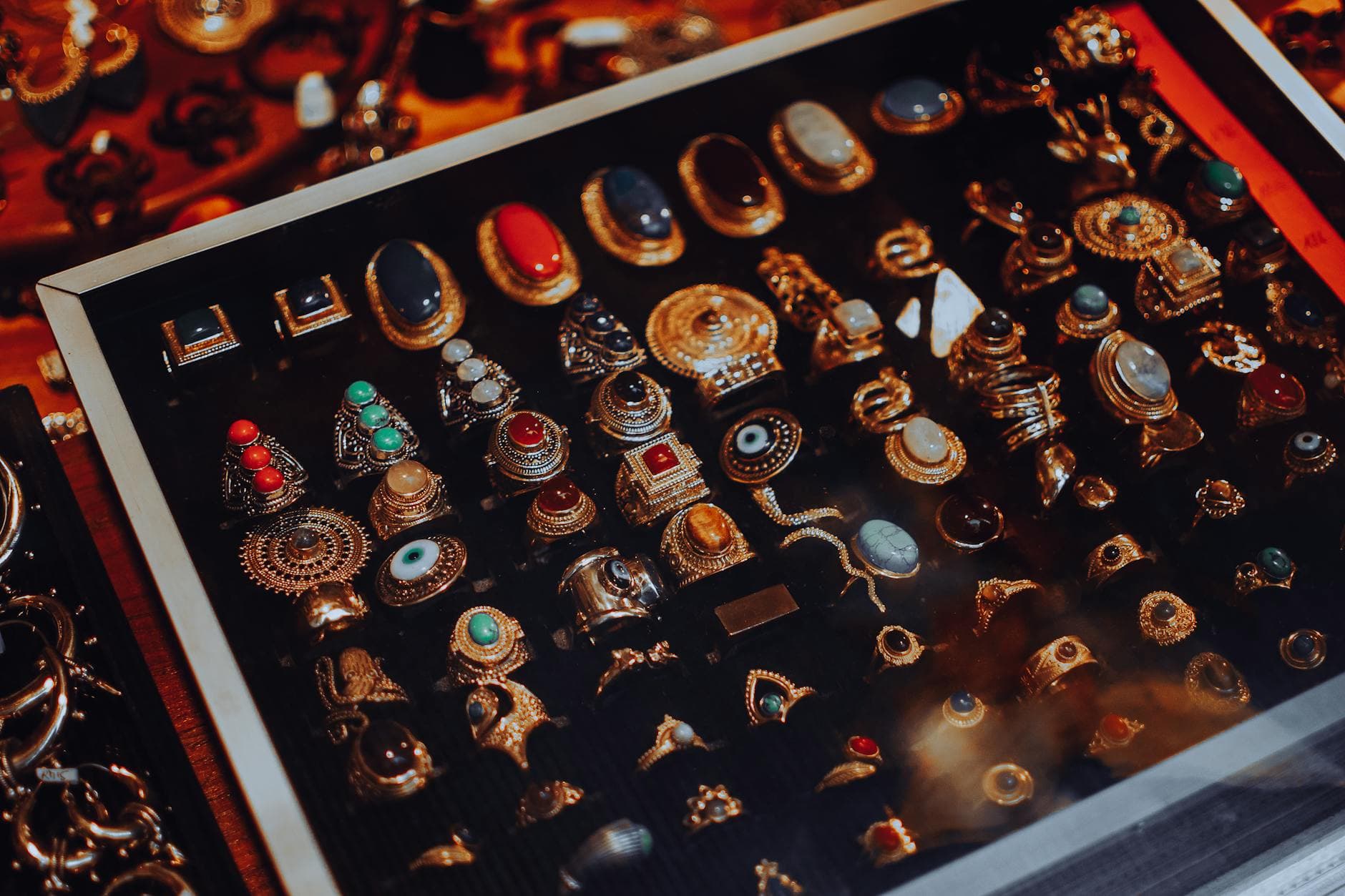
The RealReal ties the rise in vintage engagement-ring searches to economic uncertainty and to buyers looking for lasting value and individuality. That is a cue to offer a price ladder that gives shoppers a way in without forcing them to commit immediately to a high-ticket signature piece. Entry-level items should be easy to understand, mid-tier pieces should explain their craft or maker, and top-tier signed designs should carry the strongest provenance story.
For the floor, small differences matter. Group rings by style and period, not just by price, so a buyer comparing an Art Deco bezel to a late-century solitaire can understand why one feels sharper, rarer, or more architectural. For online selling, include weight, metal, stone type, and any visible marks in the first line of the product copy. The more clearly you decode the object, the less the buyer has to guess about value.
Use social commerce like a digital case tray
ThredUp’s 2025 report projects the global secondhand apparel market at $367 billion by 2029, and says 39% of younger shoppers bought secondhand through social commerce in the past 12 months. That is not a fashion-footnote statistic; it is a merchandising roadmap. If discovery is happening in feeds, vintage jewelry content needs to behave like a feed-native object: short, visual, and built around one strong idea.
- Start with the mark or clasp before the full reveal.
- State the era in the first caption line.
- Show scale on a hand or neck, because vintage pieces can read smaller or larger than expected.
- Pair the jewel with one modern wardrobe item so the styling bridge is immediate.
- End with provenance details, such as maker, metal, and any documented history.
A practical format is simple:
That structure works because it mirrors the way people already browse: first the hook, then the proof, then the reason to buy. A buyer who sees a 1930s Art Deco ring or a chunky 1980s yellow-gold chain as a solveable object is much closer to purchase than someone simply scrolling past a tray of old jewelry.
Designer names still matter, but they need context
Bernstein’s lineup of houses and designers, from Cartier and Tiffany & Co. to Verdura, David Webb, Aldo Cipullo, Suzanne Belperron, and Elsa Peretti, offers a ready-made shorthand for quality. Those names help distinguish a truly collectible piece from something merely old, but they work best when paired with craftsmanship details. A buyer should understand whether the interest lies in design language, metalwork, gem setting, or documented provenance.
That is the real merchandising opportunity in this vintage revival. The strongest sellers will not be the loudest or the oldest pieces, but the ones presented with enough clarity that a younger buyer can identify the era, decode the marks, and see the jewel as both adornment and evidence. In a market shaped by nostalgia, uncertainty, and social discovery, the most persuasive vintage piece is the one that tells its own history before the shopper ever asks.
This article was produced by Prism’s automated news system from verified source data, official records, and press releases, then run through automated quality and moderation checks before publishing. The system is built and supervised by the people who set the standards it runs under. Read our full AI policy.
Did this article answer your question?