Rare ship brooch from 1894 surfaces at Lancashire roadshow
A £100 gold brooch from 1894 tied Elizabeth McIntyre Anderson to the SS Citrine and a family line that stretched for more than 130 years.
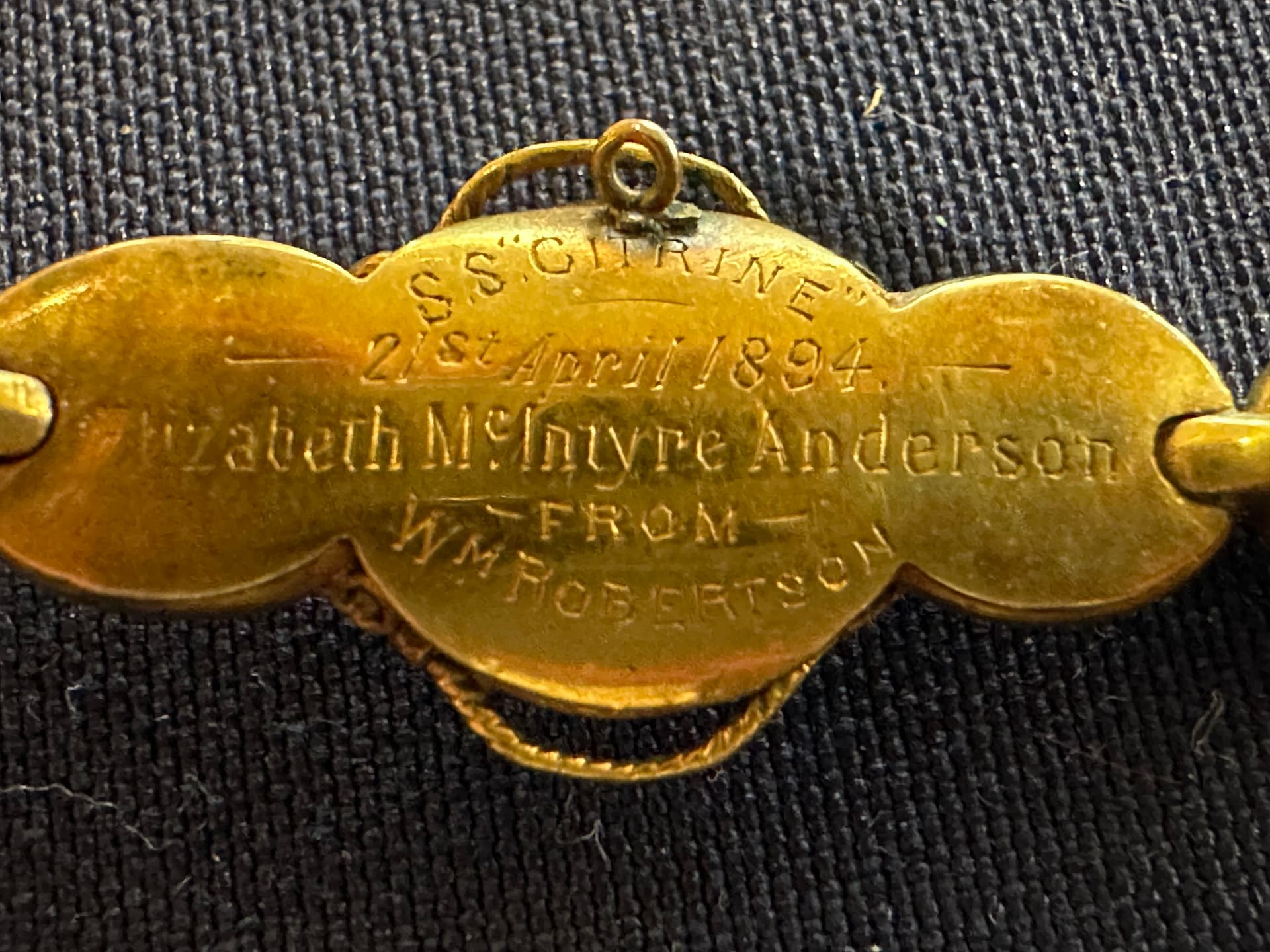
A modest gold brooch that surfaced at a WeBuyVintage roadshow in Fleetwood, Lancashire, turned out to be a compressed maritime archive: a maiden voyage, a named recipient and a family heirloom that appears to have stayed put for more than 130 years. The piece was valued at about £100, yet its reverse carries a full inscription and its front is built like a tiny ship’s emblem, with rope detailing, a life-ring motif and a citrine stone that points straight back to the vessel it commemorated.
The brooch was presented on April 21, 1894, by shipping magnate William Robertson to Elizabeth McIntyre Anderson, who is believed to have been the first passenger aboard the SS Citrine for its maiden voyage. The engraving leaves little doubt about its story, reading: “SS Citrine, April 21 1894, Elizabeth McIntyre Anderson, from William Robertson.” Matt Case described the jewel as a “rare and poignant survivor” of Scotland’s maritime history, and the language fits a piece that has carried both sentiment and documentation in one small object.
Robertson’s shipping business began in 1852, when he entered the trade with the scow or barge Ellen on the Forth and Clyde Canal and Clyde Estuary. His Gem Line expanded through a naming tradition that ran from Gem and Ruby to Pearl, Jasper, Agate and Sapphire, and by the outbreak of war in 1914 the company owned 49 vessels. It moved coastal cargoes such as coal and limestone around Great Britain, Ireland, France, the Netherlands and the Baltic, building a fleet large enough to leave a paper trail now held in archives and histories devoted to the line.

The SS Citrine, built in Dundee by W.B. Thompson & Co., was one of the last jewels in that fleet. Its fate sharpened the brooch’s significance: on March 17, 1931, the steamer struck rocks at Bradda Head near Port Erin on the Isle of Man and sank in darkness and heavy seas. Nine of the 11 crew members died, though some contemporary reports put the death toll at 10. Robertson had died in 1919, and by the time of the wreck the Gem Line was being run by his sons, William Francis Robertson and James Robertson.
The man who brought the brooch in said it had passed down through his late wife’s family, which makes the object more than an accessory and less than a relic in the usual museum sense. The value is not in the gold alone, but in the inscription, the maker’s hand, the ship name and the chain of custody that kept one small piece of 19th-century shipping history intact until a Lancashire roadshow brought it back into the light.
This article was produced by Prism’s automated news system from verified source data, official records, and press releases, then run through automated quality and moderation checks before publishing. The system is built and supervised by the people who set the standards it runs under. Read our full AI policy.
Did this article answer your question?