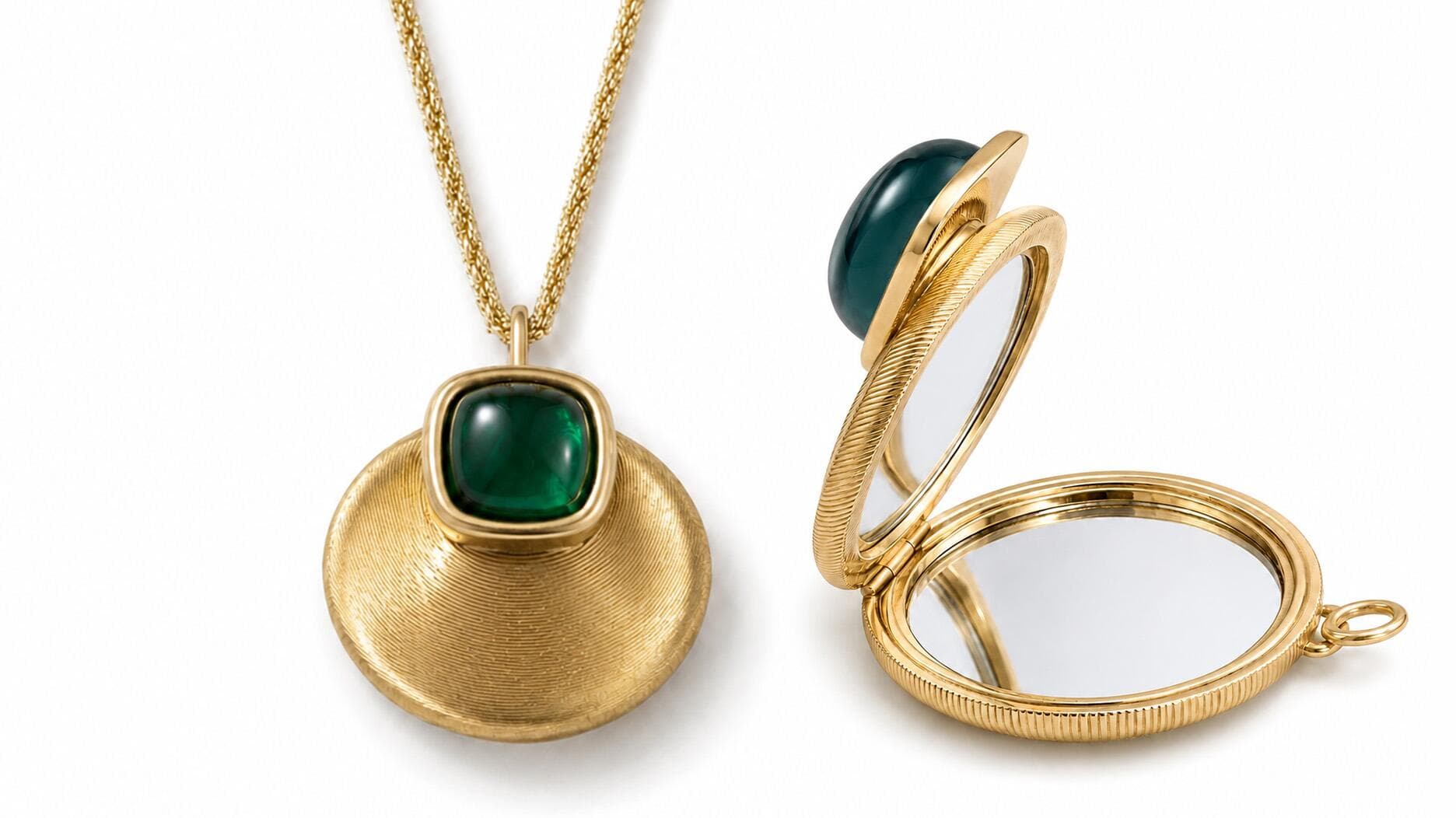
Retro jewelry’s wartime glamour, bold gold and colorful stones
Retro jewelry turns wartime shortage into glamour, with oversized gold, rose tones and vivid stones proving that scarcity can shape a style's most collectible details.
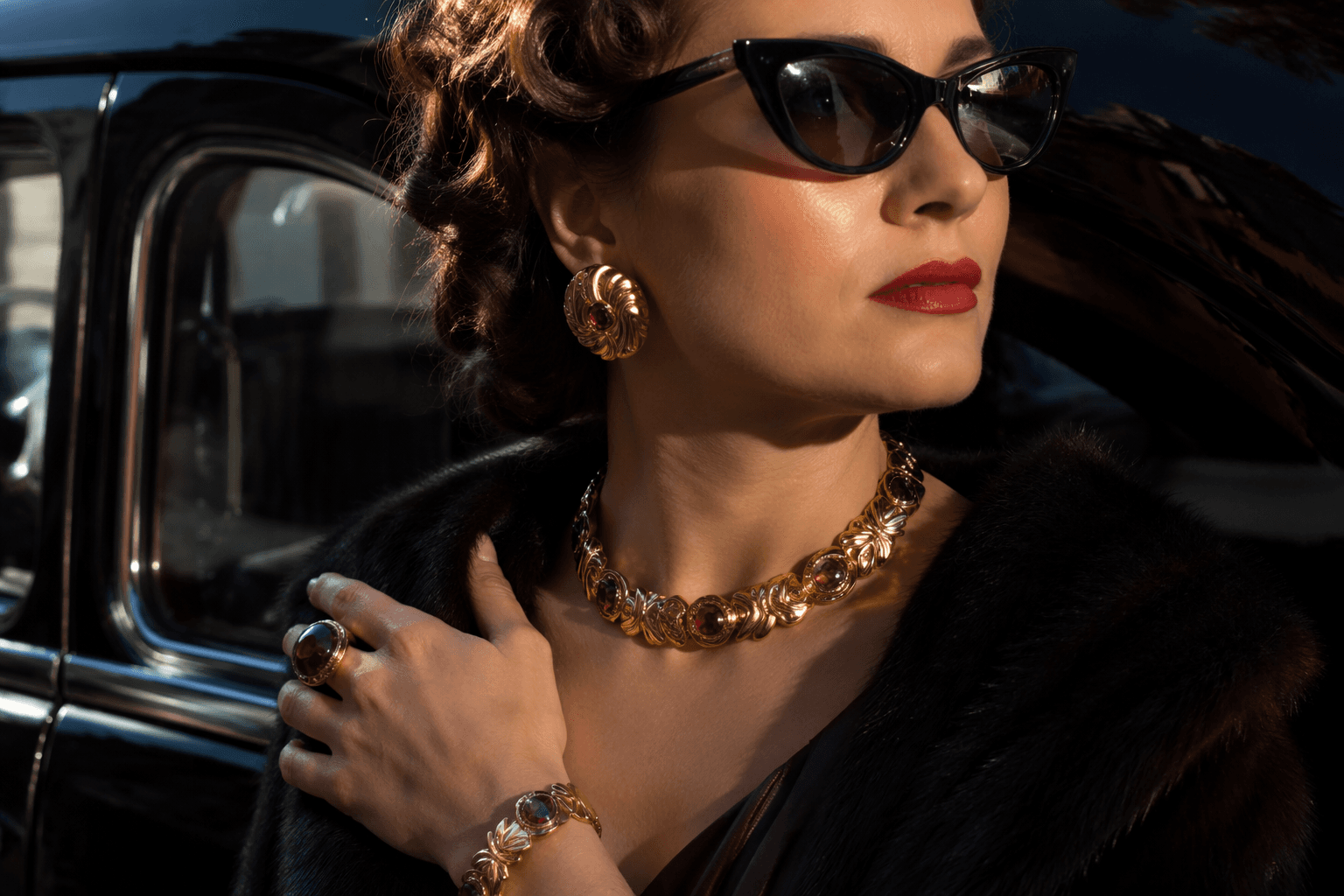
World War II tightened access to platinum and disrupted gemstone supply lines, so jewelers reached for gold, volume and invention, creating pieces that look lavish even when they were engineered to conserve material. The result is a language of scrolls, volutes, bombé curves and tubogas coils that still reads as unmistakably glamorous.
Why Retro looks the way it does
The Retro period runs through the late 1930s and 1940s, with roots in the 1937 Paris International Exhibition and a decisive break from Art Deco as the war began. Where late Art Deco tends toward crisp geometry and controlled surfaces, Retro leans into movement and scale. Flowers, animals and broad sculptural forms replace the cooler architecture of the previous decade.
The glamour of the 1930s gave way to World War II in 1939, and that transition is visible in fashion and jewelry alike. A 1940 House of Chanel evening ensemble shown in New York for French war charities put that transition on display.
The metals tell the story first
If you want to understand a Retro jewel quickly, start with the metal. Platinum was restricted for wartime use and became rare in jewelry, so gold dominated in yellow, white, green and rose forms. Rose gold gained its color from copper alloying, while palladium sometimes stood in for platinum when designers needed a paler alternative.
That metal story explains why Retro jewelry often looks big but feels surprisingly manageable on the body. Tubogas, literally “gas pipe,” is a flexible hollow tubular chain made from interlocking gold strips with no soldering, and it was popular in the late 1930s and 1940s because it used less metal. Hollow chains, wide bracelets and generous brooches gave the impression of abundance even when the material count was carefully controlled.
A Retro piece often reveals the economy behind the boldness through a hollow interior, a layered collar or a coiled form that achieves volume without unnecessary mass.
Stones changed too, and that matters at the counter
Gemstone shortages pushed jewelers toward the stones they could still source in quantity. Rubies, emeralds and sapphires remained part of the palette, but so did citrine, amethyst, topaz, moonstone and aquamarine, often used as large focal stones with smaller precious accents. Synthetic and faux materials also entered 1940s jewelry when necessary, which means a colorful Retro piece is not automatically a costume piece, but it does need to be read closely.
The distinction between style and value is useful here. A Retro brooch in gold with a substantial aquamarine center, clever mounting and strong workmanship sits in a different category from a similarly shaped piece made primarily of base metal, glass or plastic. The look can overlap; the material truth usually does not.
Van Cleef & Arpels shows how high the technical bar could be. The house patented the Mystery Set in 1933, and the technique set stones into gold rails so the surface appears seamless. The innovation predates the heart of the Retro period.
What to look for when you examine a piece
The most useful Retro clues are tactile. Bombé rings swell upward in rounded domes. Tank-tread bracelets bring a mechanical rhythm to the wrist. Tubogas coils wrap with a springy flexibility. Sculptural brooches are often designed so they can also be worn as pendants, a practical duality that suits the era.
A strong Retro jewel usually combines more than one of these cues. The form may be oversized, but the edges are rarely crude. Scrolls and volutes soften the silhouette, while flowers and animals give the design a theatrical, almost cinematic feel.
Collector interest rises when several of these wartime-era features converge: gold construction, inventive hollow work, vivid stones, and a design that clearly depends on period scarcity. Pieces linked to major houses or technical breakthroughs carry added weight, and workmanship can distinguish a named atelier from an anonymous fashion accessory.
Retro is not the same as costume-inspired
Retro jewelry can be mistaken for costume because it is so boldly shaped, but the resemblance is only skin deep. The 1940s also saw plastic, glass, wood, enamel and synthetic stones used in colorful, economical designs, and silver and enamel allowed for striking pieces at lower cost. Those materials belong to the era, but they usually shift a jewel away from the collectible end of the category unless the design is especially rare or well documented.
The key is to separate visual drama from material value. A warm rose-gold brooch with a tubogas frame and a properly cut stone is one thing. A similar silhouette in plated metal and molded paste is another. Retro style includes both, but the market does not treat them the same.
How it differs from late Art Deco and what came after
Late Art Deco and Retro often get grouped together because both can be glamorous, but the feel is different the moment you hold the piece. Art Deco is controlled and linear, with a taste for symmetry and restraint. Retro is more muscular, more theatrical and more concerned with volume, especially in the United States, where the Hollywood Wartime Retro strand ran roughly from 1940 to 1945.
Postwar jewelry moved beyond wartime improvisation as material shortages eased, and the exuberant bulk of the 1940s gave way to different priorities.
This article was produced by Prism’s automated news system from verified source data, official records, and press releases, then run through automated quality and moderation checks before publishing. The system is built and supervised by the people who set the standards it runs under. Read our full AI policy.
Did this article answer your question?