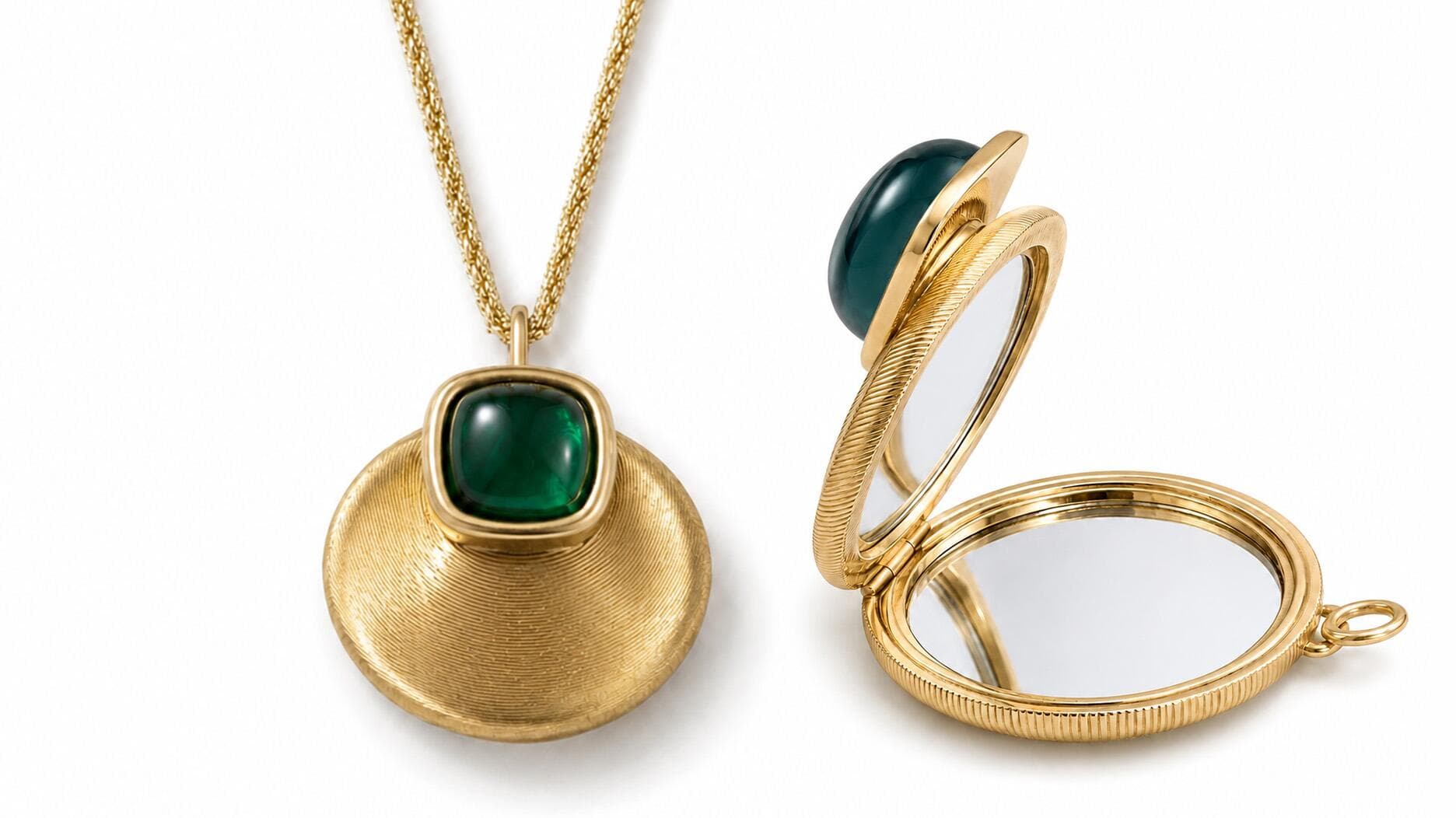
Spring 2026 Embraces Collectible Vintage Jewelry, Bold Color and Craftsmanship
The best vintage jewels read like miniature archives: signatures, cabochons, and serious scale reveal why Seaman Schepps, Verdura, Tiffany and Saidian Vintage Jewels still matter.

The new vintage signal
A vintage jewel is a small archive you can wear. In the current accessory mood, that archive is being pulled out of velvet boxes and onto the body, where one-of-a-kind pieces read as self-expression, heirloom appeal, and craftsmanship rather than costume. WWD’s spring 2026 coverage places collectible jewelry beside ornate shoes, a reminder that the season’s taste for boldness is broader than a single category and that the most persuasive pieces are the ones that feel made, not mass-produced.
That distinction matters if you are trying to separate true vintage statement jewelry from a trend-driven imitation. The names that keep surfacing, Tiffany, Verdura, Seaman Schepps, and Saidian Vintage Jewels, are not just shorthand for luxury. They are clues to a language of scale, stone choice, and construction that can help you read a piece before you buy it.
Start with the signature, then read the construction
The quickest way to place a jewel in its proper orbit is the mark. A maker’s stamp, a metal purity mark, or even a tiny signature tucked into a clasp or underside can reveal origin, workshop, and approximate era. In vintage jewelry, that little stamp is often the most honest part of the piece. It tells you whether you are looking at a house jewel, a later reproduction, or something assembled in the spirit of the original but without its pedigree.
Look at how the piece is built as carefully as you look at the front. Vintage jewelry often shows hand-finishing in the places most people never inspect, such as the reverse of a brooch, the underside of a ring head, or the links hidden near a clasp. A true collectible piece usually feels resolved from every angle, with engineering that supports wear, not just display. If the back looks as considered as the front, that is a very good sign.
Why Seaman Schepps still defines the category
Seaman Schepps is one of the clearest reference points for this season’s appetite for collectible color. Founded in 1904 and opening on Madison Avenue in 1934, the house became known for bold, unconventional materials and vibrant colors. That history matters because it explains why a Seaman Schepps jewel rarely whispers. It announces itself through texture, saturated stones, and an almost sculptural use of color.
A trade reference notes that the house often used cabochons and colorful stones such as turquoise, jade, quartz, and emerald. Those are not arbitrary choices. Cabochons, with their smooth domed surfaces, flatten light differently from faceted stones and give color a softer, more saturated presence. If you are trying to identify a Schepps sensibility, look for juxtapositions that feel playful but disciplined, unusual material pairings, and a confidence with scale that keeps the design from dissolving into prettiness.
That is why the house still reads as modern in a spring 2026 context. Its work embodies the exact mix WWD describes: self-expression, chunky volume, and craftsmanship. A Seaman Schepps jewel does not just accessorize an outfit. It structures it.
What Tiffany and Verdura signal
Tiffany and Verdura function differently in the vintage conversation, but both matter as recognizably collectible names. When editors invoke them, they are pointing to houses with enough design authority that even a small piece can carry historical weight. In practical terms, that means a buyer should look for proportion, clarity of line, and a finish that does not lean on flash alone.
With houses like these, the appeal is often in the tension between refinement and presence. A piece may be bold, but it should not feel crude. It may be ornate, but it should not look crowded. The best vintage statement jewels from houses in this orbit manage that balance through disciplined composition, whether the form is a brooch, a ring, or a necklace. If the design feels generic, the reference has probably been flattened into imitation.

Saidian Vintage Jewels and the value of one stone
Saidian Vintage Jewels offers another kind of lesson: how one exceptional stone can define an entire jewel. The seller describes its pieces as one-of-a-kind and heirloom-oriented, and its current highlights make that clear. One vintage yellow-gold cat’s-eye and diamond ring centers on a 7.00-carat cat’s-eye stone with 0.18 carats of brilliant-cut diamonds. That is the kind of specification that changes the way you read a piece immediately. The cat’s-eye, not the diamonds, is the star, and the gold setting acts like a frame around the effect.
The house also appears in WWD’s spring 2026 key accessories gallery with an 18-karat yellow-gold pear-shaped emerald and diamond necklace. That combination of shape, color, and metal is exactly what makes ornate vintage jewelry feel current again. Emeralds bring depth, yellow gold lends warmth, and diamond accents sharpen the silhouette without stealing attention from the center stone. When a jewel is built this way, it is not just decorative. It is directional.
How to tell collectible from merely ornate
Ornate jewelry is easy to copy in appearance and hard to copy in spirit. To separate the real thing from a trend imitation, focus on a few concrete details:
- Signatures and stamps: Look for maker marks, metal purity marks, and tiny signatures hidden on clasps, backs, or shanks.
- Motifs: House language matters. Seaman Schepps leans into bold color and unconventional material pairings, while houses like Tiffany and Verdura often signal a more controlled, design-led vocabulary.
- Stones: Cabochons, emeralds, turquoise, jade, quartz, and cat’s-eye stones create different visual effects from faceted fashion stones. The cut is part of the identity.
- Scale: Vintage statement pieces are usually unapologetic in proportion. They are built to be seen, not merely noticed.
- Construction: Examine hinges, clasps, prongs, and the underside of settings. A well-made vintage jewel feels engineered, not assembled for the moment.
The larger lesson of spring 2026 is that collectible jewelry is no longer being treated as something that belongs behind glass. It is being styled with the same conviction as clothing, and the best pieces, whether from Seaman Schepps, Tiffany, Verdura, or Saidian Vintage Jewels, have a kind of visual authority that outlasts any seasonal mood. A true vintage statement jewel does not imitate the past. It carries it.
This article was produced by Prism’s automated news system from verified source data, official records, and press releases, then run through automated quality and moderation checks before publishing. The system is built and supervised by the people who set the standards it runs under. Read our full AI policy.
Did this article answer your question?