Tanzy Ward Reveals Black Victorian Jewelry Culture Through Portraits
Pick up an inherited brooch and you may be holding a small archive. Tanzy Ward’s portraits decode how Black Victorians and Edwardians wore, preserved, and read jewelry.
A recovered archive in portrait form
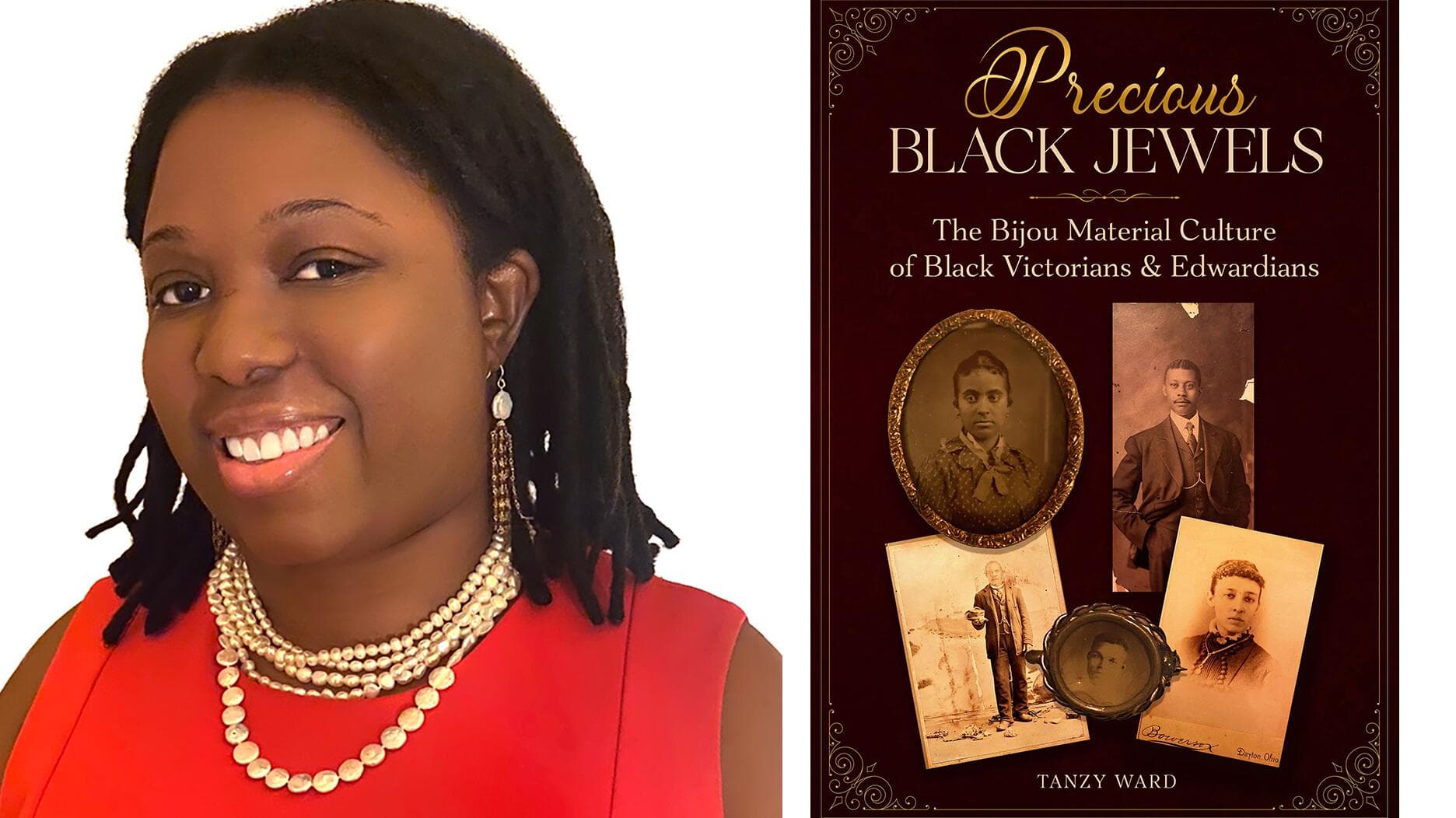
Pick up an inherited brooch and you may be holding a small archive. Tanzy Ward’s new book turns Black Victorian and Edwardian jewelry into a decoding exercise, using portraits and surviving objects to show how Black Americans wore, preserved, and signaled meaning through adornment from 1837 to 1910.
Ward is not approaching the subject as a casual admirer. The Atlanta-based antique jewelry dealer, preservationist, historian, author, and founder of Zanathia Jewelry has built her work around the idea that Black material culture deserves a place in the decorative-arts record. Her book, “Precious Black Jewels: The Bijou Material Culture of Black Victorians & Edwardians,” is her third, following “Hidden Legacies: African Presence in European Antiques” and “Unsung Portraits: Anonymous Images of Black Victorians and Early 20th Century Ancestors.”
What makes this project especially valuable to collectors is its method. Ward structures each chapter around a specific jewelry style and uses antique Black photography from her archives as both reference and identification tool. That means the book is not just a cultural history, it is also a way to read silhouette, placement, and symbolism more precisely when a piece turns up in a family box, an estate sale tray, or a dealer’s case.
How portraits change the way jewelry gets read
Portraiture matters because it shows jewelry in motion, on bodies, in clothing, and alongside hairstyles that shape how pieces were worn. A brooch pinned high at the neckline, a scarf pin threaded through fabric, or a bracelet worn close to the wrist tells you something different about use, status, and intention than a loose object in a display tray.
Ward’s portrait-based approach also pushes collectors to ask better questions. Was the piece made to be seen in mourning dress, formal day wear, or as a sentimental keepsake? Does the scale fit a bodice pin, a scarf pin, or a small commemorative brooch? Is the design meant to sit flat against black fabric, or does it carry enough visual weight to hold its own against lace, velvet, or silk?
That kind of close looking matters because Black Victorian and Edwardian adornment has often been left out of standard jewelry narratives. Ward’s work restores those omissions by placing Black Americans inside the same visual and material record long used to study white elite dress, which is where so much of conventional jewelry history still begins and ends.
The mourning vocabulary collectors should know
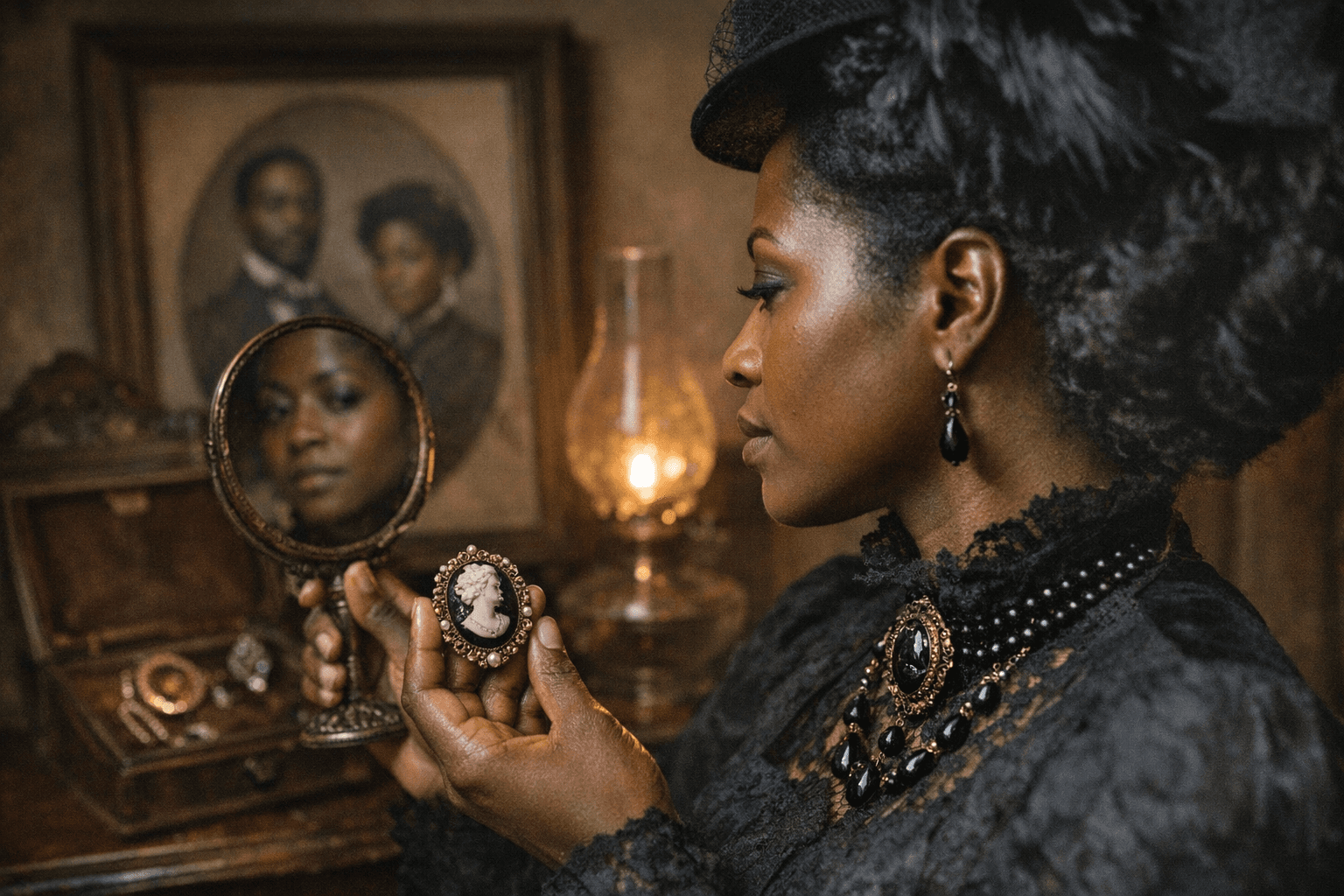
One of the clearest identification lessons in this story is mourning jewelry. The Metropolitan Museum of Art notes that nineteenth-century Americans commonly commissioned mourning jewelry, and that these pieces often incorporated hair under crystal alongside gold, pearls, black enamel, or jet. In other words, the material language of grief was not vague. It was specific, tactile, and highly readable once you know what to look for.
A mourning brooch with a lock of plaited hair beneath a crystal face, edged with pearls and detailed in gold rays and black enamel, is not merely decorative. It is a memorial object, built to hold memory in plain sight. Hair under glass, especially when paired with dark enamel or jet, is one of the strongest clues that a piece belongs to this commemorative world.
The broader fashion system helped spread that language. Black mourning dress reached its peak during the reign of Queen Victoria, and the first half of the nineteenth century saw fashion magazines increase demand for mourning attire. As shops specializing in mourning goods expanded in the mid-nineteenth century, the look became more standardized and widely available, which means surviving pieces may range from bespoke commissions to mass-produced examples.
For collectors, that distinction matters. A mourning jewel with fine hand work, original crystal, and well-preserved hairwork may carry a different level of rarity than a later, factory-made example with similar motifs. But both can be historically important, especially when paired with portrait evidence or family provenance that confirms how they were worn.
What to inspect when a piece may tie to Black history
Ward’s project gives collectors a practical checklist, even when a jewel is unsigned or undocumented. The strongest clues often come from the relationship between the object and the image, not from the object alone.
- Look for hairwork beneath crystal, especially in brooches and memorial pins.
- Note black enamel, jet, pearls, and gold, all of which fit mourning vocabulary.
- Check the silhouette, since scarf pins, brooches, and bracelets signal different uses.
- Compare the scale of the jewel with portrait placement at the neckline, bodice, or wrist.
- Search for family photos, cases, inscriptions, or oral history that connect the object to a specific person or household.
- Treat vague claims carefully when no portrait, hallmark, or ownership trail supports them.
That last point is crucial. When a dealer, estate, or seller calls something “historic” or “ancestral” without showing why, the story may be thinner than the piece itself. Ward’s approach insists on evidence, and that standard serves both scholarship and the market.
Why this recovery work reaches beyond one book
Ward’s project sits inside a larger effort to document Black life through archives and collections. The National Museum of African American History and Culture says its collection includes more than 45,000 objects, with more than half contributed by members of the public. That fact alone is a reminder that history often survives through families, not institutions, and that private holdings can become public memory when they are properly preserved.
That is the deeper value of Ward’s work. By pairing portraits with material culture, she gives readers a way to identify forms, read motifs, and judge provenance with more care. She also expands the idea of what Victorian and Edwardian jewelry history looks like when Black lives are centered rather than appended.
At Hapeville Depot Museum, Ward described each chapter of her book as devoted to a specific jewelry style, using antique Black photography from her archive to aid identification and reference. That is the right frame for the project. In Ward’s hands, a brooch is not just an ornament, and a mourning jewel is not just a relic. Each piece is a record of taste, grief, identity, and survival, finally being read on its own terms.
This article was produced by Prism’s automated news system from verified source data, official records, and press releases, then run through automated quality and moderation checks before publishing. The system is built and supervised by the people who set the standards it runs under. Read our full AI policy.
Did this article answer your question?