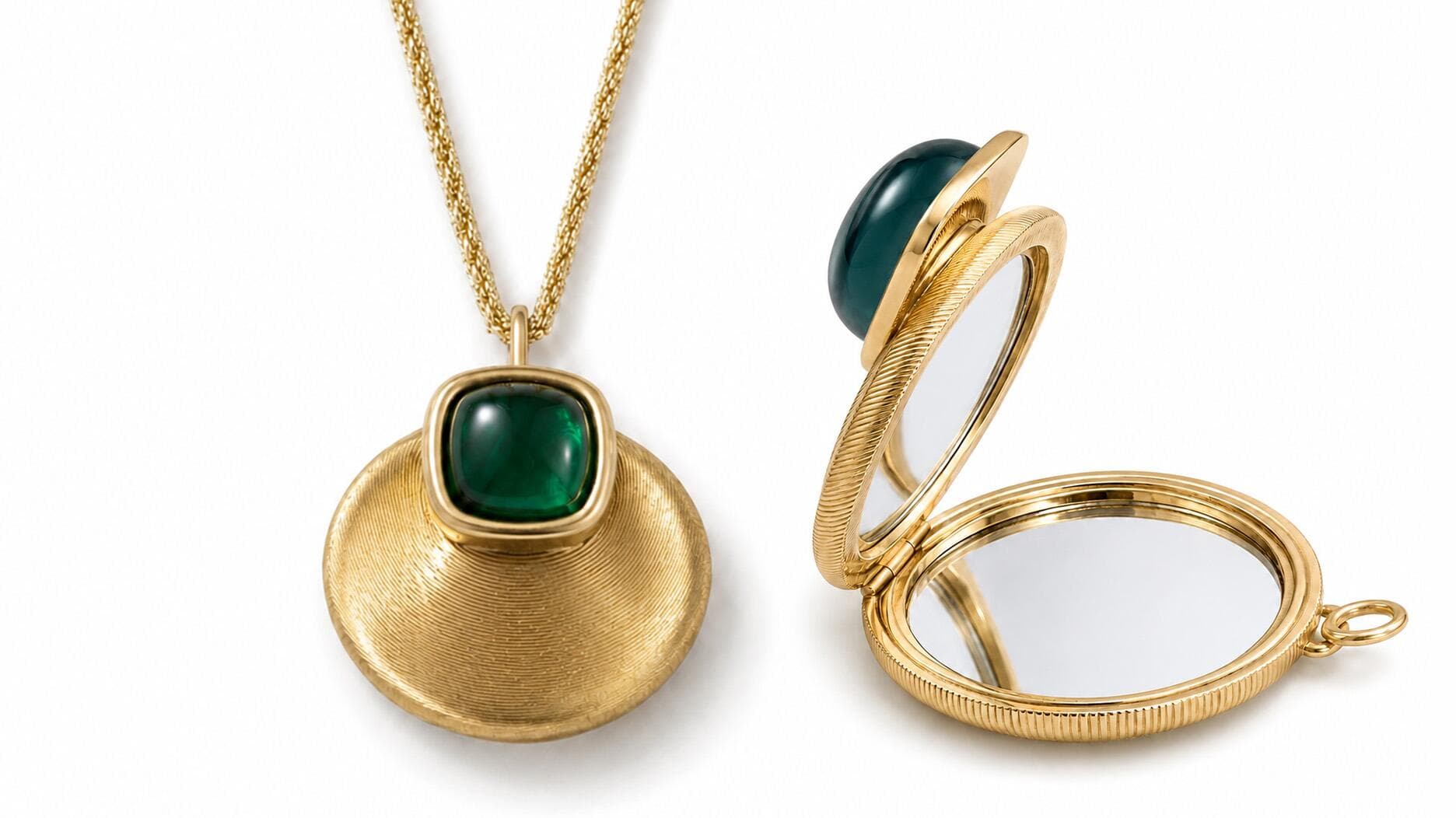
Vintage gold chains, from Georgian guard chains to Art Nouveau elegance
The quickest way to date a vintage gold chain is to read its links, clasp, and purpose together. Georgian guards, Albert chains, and tubogas each leave distinct clues.
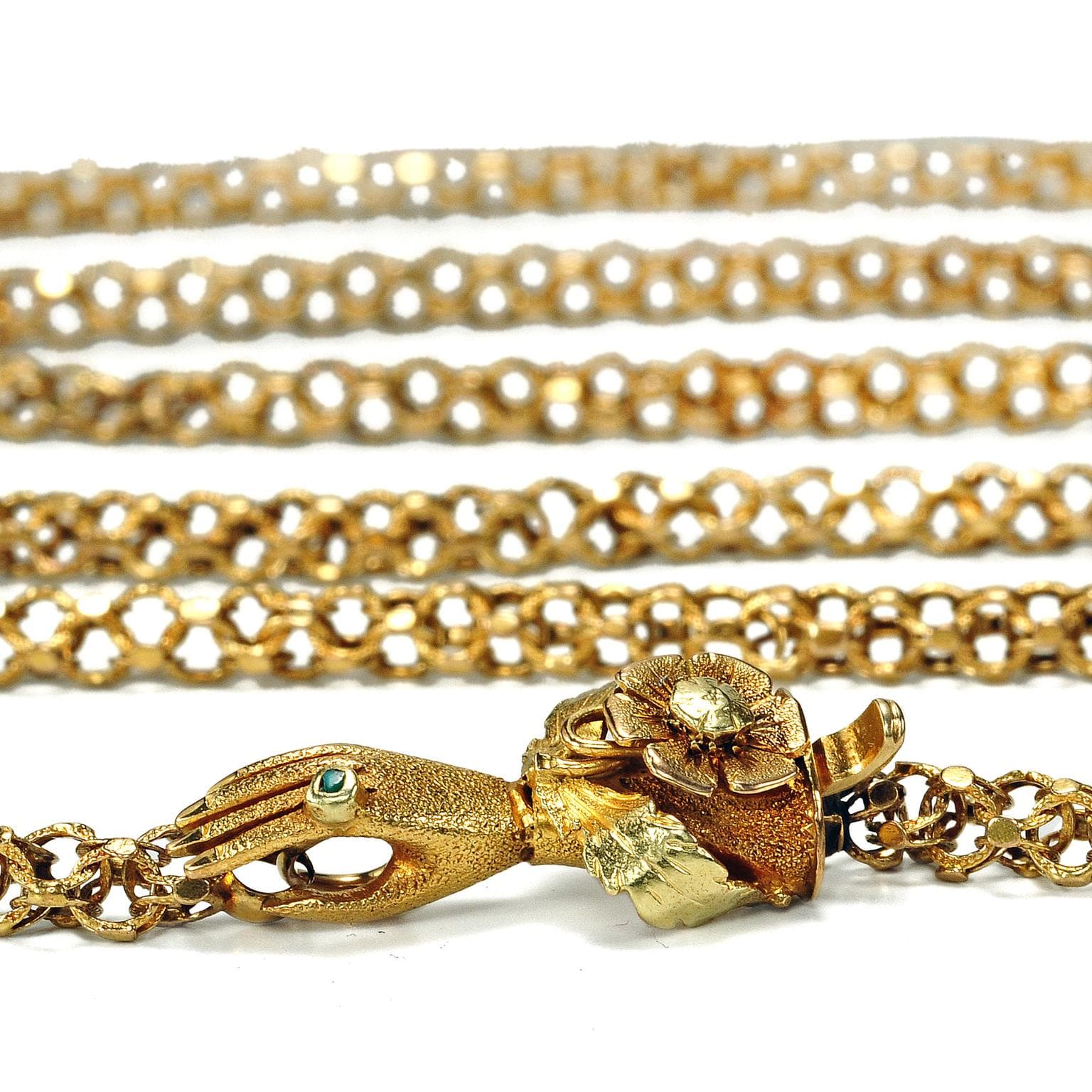
A T-bar, a swivel hook, and a set of hallmarks can date a vintage gold chain faster than the diamond hanging from it. Read the link geometry, the clasp, the terminals, and the hallmarks together, and the chain starts to reveal whether it began life as a guard chain, a pocket-watch chain, or a later assembly built from period parts.
Read the chain before you read the gold
At the Victoria and Albert Museum and the Metropolitan Museum of Art, jewelry is cataloged as adornment, status, rank, and protection. By about 1520, watchmaking had advanced enough that a tiny movement could be set into a jewel or another small precious object, which made chain fittings, clips, and vest fastenings important evidence of use.
For a quick dating read, start with three things: link shape, intended function, and closure. A chain made to hold a watch will look and behave differently from one made to hang a pendant or sit as a necklace. The most convincing pieces feel internally consistent, with the clasp, end caps, and link form all belonging to the same moment in jewelry history.
Georgian guard chains: long, light, and functional
Georgian guard chains were built to do a job first. They were ultra-lightweight, often more than 50 inches long and sometimes as much as 64 inches, with dog clips that swivel open to hold a watch. Their length is part of the clue: these were meant to drape, loop, and secure rather than sit as a compact collar.
Original guard chains tend to have fine tooling and the soft wear of long use, while modern copies often feel heavier and more rigid. A reproduction can mimic the silhouette but miss the engineering, and those missing signs of period construction usually show up in resale pricing as well. Well-preserved examples have appeared in the $4,000 to $9,000 range. Before any price is taken at face value, check the chain’s length, lightness, and original swivel clips.
Victorian watch chains: Albert and Waldemar
The Albert chain is one of the cleanest examples of form following function. Named after Prince Albert, it was designed to suspend a pocket watch from a vest buttonhole and traditionally uses a T-bar on one end and a swivel hook on the other. Its links often read as Industrial Revolution geometry, a controlled, engineered look that feels very different from the airy sprawl of a guard chain.
Late-19th- and early-20th-century albert watch-chain sets on British Museum showcards were sold with pattern numbers and prices per dozen. They were standardized, widely recognized objects, not one-off curiosities. If you are examining a chain that looks Victorian but has a wildly mismatched clasp or a modern loop soldered onto an otherwise period piece, the mismatch is a warning sign.
The Waldemar chain sits close beside the Albert in the watch-chain family, but its profile is different enough to help with identification. It is a pocket-watch chain worn across the vest from left pocket to right, with a swivel catch on one end and a spring catch on the other, averaging about 35 cm, or 14 inches. That shorter length and cross-body wear tell you it was built to sit across cloth, not to fall in long decorative loops.
Clasp language is the fast track to dating
Closures often give away more than the links. A spring ring is a simple spring-loaded clasp used on necklaces and bracelets, while a lobster claw is another spring clasp, also called a Cartier clasp or snap hook; Cartier introduced the style into jewelry. If a chain otherwise reads as Georgian or Victorian but carries a lobster claw, you are likely looking at a later repair or replacement rather than a pure period finish.
A swivel catch is especially revealing on watch chains. It is an oval safety catch that rotates on a lateral axis, letting a suspended watch turn freely without twisting the chain. Because pocket watches were commonly hung on a chain with a swivel catch, its presence strongly supports a watch-chain origin. The absence of one is not fatal, but a chain that should have a swivel and does not may have lost an original component, and that usually softens both collectability and price.
Hallmarks, terminals, and signs of alteration
Hallmarks and maker’s marks are the paperwork of the object, but they only work when they make sense with the construction. On a period chain, the marks should sit comfortably with the link style, the clasp type, and the overall wear. Fresh solder, odd color breaks in the gold, or end caps that look newer than the chain itself suggest later intervention.
Terminals matter as much as the central links. A true period chain tends to finish cleanly, with ends that feel integrated rather than patched on. When the terminals, clasp, and chain body all speak the same design language, you are more likely to be holding a piece that survives as it was made. When they do not, the object may still be beautiful, but the market will read it as an assembled chain rather than an intact one.
Tubogas brings the story into the modern age
Tubogas is the sharpest diagnostic form from the Retro era. First seen in 1934 and prominent throughout the 1940s, it is a flexible hollow tubular necklace made from interlocking gold strips wrapped together without soldering. The name literally means gas pipe, and the line of the piece feels almost architectural, more sheath than chain.
Its rise was tied to wartime scarcity. During World War II, precious metals were constrained, platinum was rare and sometimes forbidden for jewelry, and designers answered with ingenuity instead of excess.
How to shop the chain as an object, not a trend
A Georgian guard chain should feel improbably long and light, with swivel dog clips that belong to watch culture. An Albert chain should show its vest-button logic through the T-bar and swivel hook. A Waldemar should read as a shorter cross-vest watch chain, while a tubogas necklace should show the unmistakable wrap of interlocking gold strips.
This article was produced by Prism’s automated news system from verified source data, official records, and press releases, then run through automated quality and moderation checks before publishing. The system is built and supervised by the people who set the standards it runs under. Read our full AI policy.
Did this article answer your question?