Vintage jewelry’s floral legacy shapes 2026’s bold nature-inspired trends
Vintage florals, dragonflies and bright stones make 2026’s most expressive jewelry trends feel richer, rarer and easier to wear with modern polish.
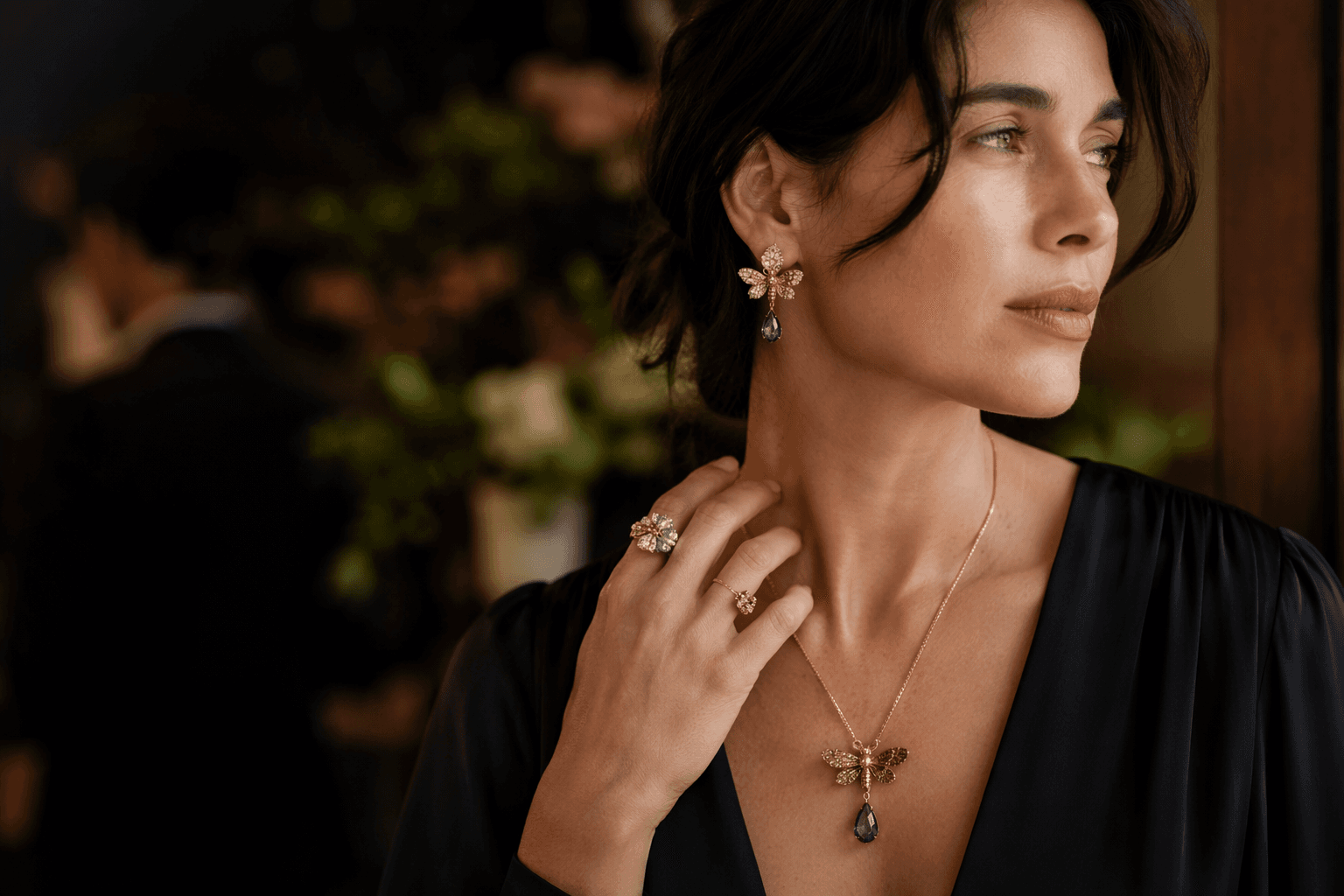
Jewelry is moving away from near-invisible minimalism and back toward pieces with texture, color and a clear point of view. For summer 2026, the mood is defined by marine motifs, bold florals, personalized stacking and bright color palettes, a shift that makes vintage jewelry feel less like an alternative and more like the source code of the trend itself.
Why vintage suddenly looks so modern
The appeal of vintage jewelry in this moment is not nostalgia for its own sake. It is the sense that older pieces already understood what the market now wants: individuality, personal significance and visual depth. Jewelry has always tracked changing society and artistic movements, and the best antique and vintage designs carry that history in their settings, stones and silhouettes.
That is exactly why a floral brooch from the early 20th century can read fresher than a generic new pendant. A handmade jewel with an uneven enamel petal, a slightly asymmetrical leaf or an old-cut stone has character built into its construction. In a season that values expressive detail, that character is the luxury.
Florals with lineage, not novelty
Florals are not a fleeting trend in jewelry. They recur across centuries, from ornate 19th-century jewels to the sinuous lines of Art Nouveau. The Metropolitan Museum of Art traces Art Nouveau in Western Europe and the United States from the 1880s until the First World War, noting that the movement drew inspiration from the unruly aspects of the natural world. That made flowers, stems, dragonflies and vines central visual languages rather than decorative afterthoughts.
For collectors, the most compelling floral vintage pieces are the ones with material nuance. Look for enamelled orchids, plique-à-jour effects, seed pearls, old mine-cut diamonds and carved colored stones set as petals or buds. Tiffany & Co.’s enamelled orchids, first shown at the 1889 Paris Exposition, are a perfect reference point: refined, botanical and unmistakably of their era without feeling mannered.
- Art Nouveau floral brooch
- enamel orchid pendant
- antique flower spray clip
- seed pearl floral necklace
- botanical cocktail ring
If you are hunting, the smartest search terms are specific:
The goal is not to assemble a garden on the body. It is to find one piece with enough sculptural conviction to stand on its own.
Marine motifs and the old language of the sea
The marine trend has the same historical logic. Shells, coral, pearls, fish and wave-like scrolls have long appeared in jewelry, especially in periods that prized craftsmanship and symbolism. Vintage versions feel richer because they often use natural materials or hand-finished details that newer mass-market interpretations flatten.
A sea-inspired vintage jewel should look as though it came from a jeweler’s imagination, not a costume rack. Search for coral branches, shell-form clips, starfish motifs, textured gold, turquoise cabochons and pearl clusters. Art Deco versions tend to be crisp and graphic, while earlier pieces can be more naturalistic and romantic. Both speak to the trend, but in different registers.
The best way to wear marine vintage today is to let it be the focal point. A shell brooch on a linen jacket, a coral ring against a stack of slim gold bands, or a pearl-and-turquoise pendant worn with a clean neckline keeps the look elegant rather than themed.
Stacking, made smarter
Stacking is not new, but 2026 asks for more discipline. Jewelers Mutual describes the direction as more curated, intentional and theme-driven, which is a useful correction to the overly maximal mix-and-match look that has dominated recent years. Vintage jewelry is ideal for this shift because older pieces already come with a built-in point of view.
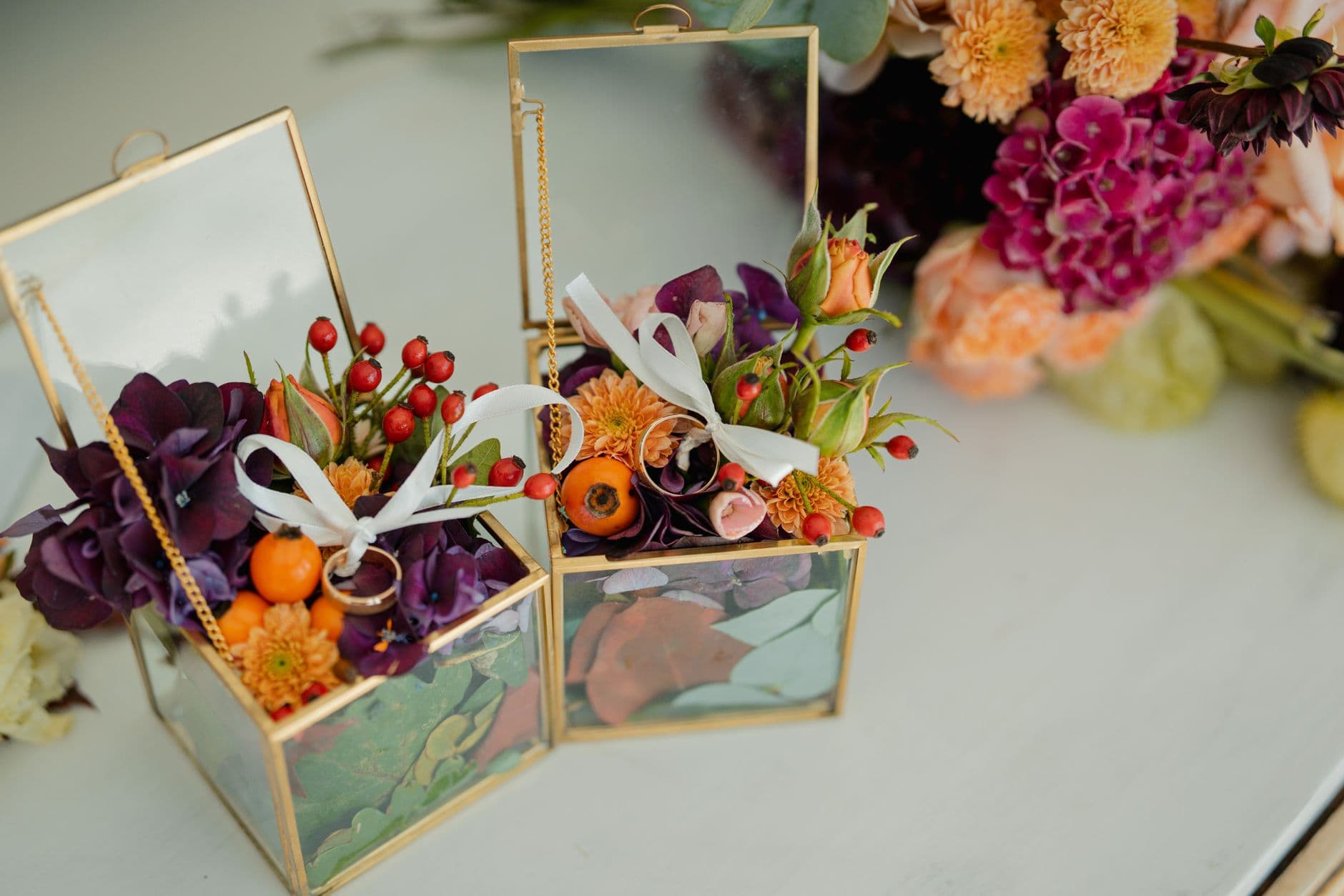
A strong stack usually begins with one anchor: a signet ring, a slim antique wedding band, a Victorian bangle or a Deco bracelet. From there, build with variation in width, finish and era, but keep one element consistent, such as metal color, stone family or shape. That coherence is what keeps the stack from looking costume-like.
- A carved gold bangle with two thin vintage bands in the same metal tone
- An Edwardian ring with a modern plain band and one small gemstone ring
- A Deco watch or bracelet paired with one geometric ring and one smoother, earlier band
- A floral brooch converted to a pendant, worn beside a simple chain
A few combinations work especially well:
The key is restraint. If every piece is ornate, the eye loses the rhythm that makes stacking feel styled rather than crowded.
Bright color through antique stones
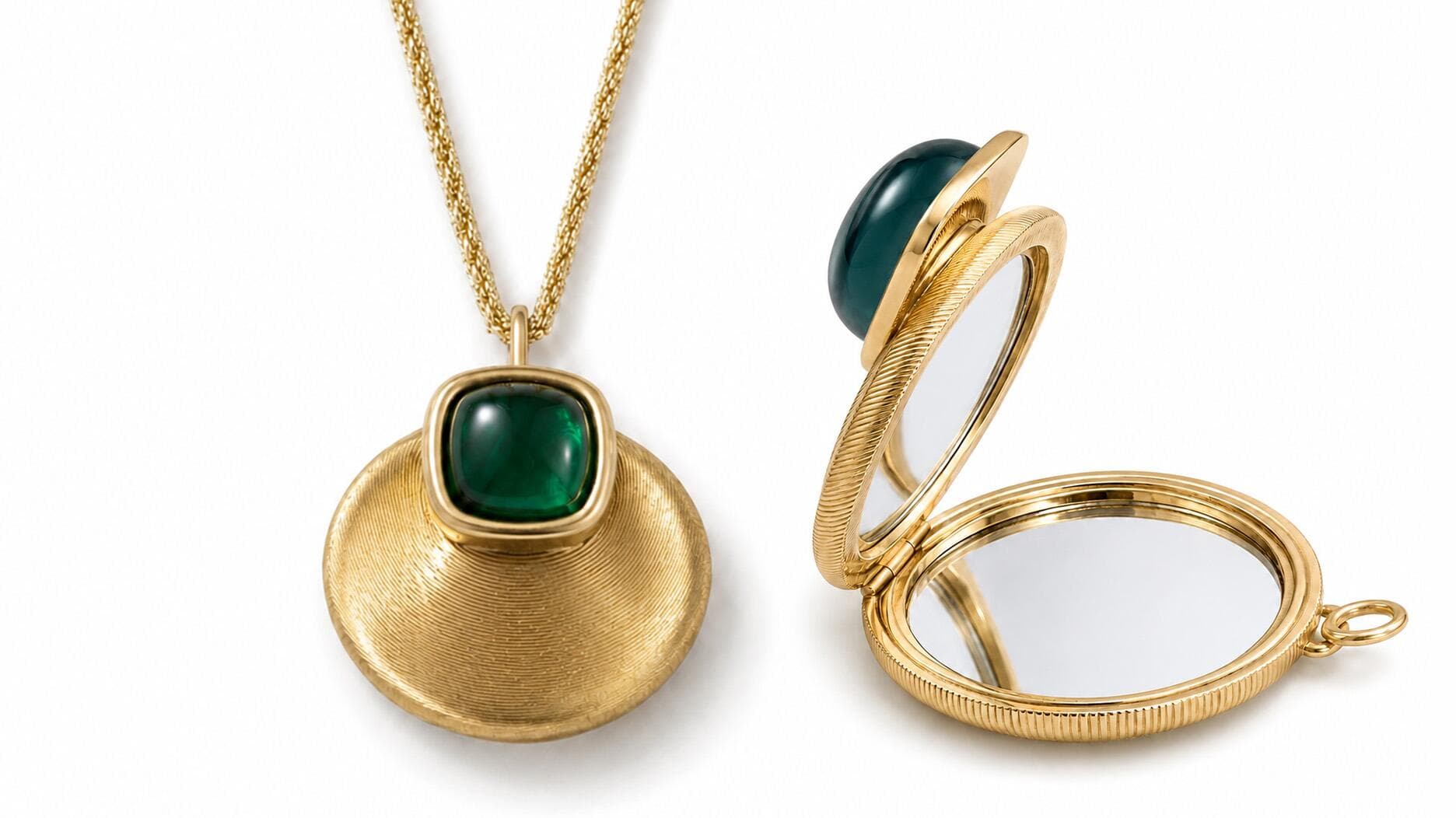
The return of bright color is perhaps the easiest trend to shop through vintage, because older jewelry often uses stones in saturated, confident ways that contemporary fine jewelry sometimes softens. Look for emeralds, rubies, sapphires, peridots, turquoise, garnets and amethysts, especially in settings that highlight the stone’s outline rather than burying it in excess metal.
Victorian and Art Deco pieces are particularly useful here. A ruby and diamond ring from one era or a turquoise-and-gold pin from another can inject color into a modern wardrobe without looking loud. Older cuts often have less sparkle but more depth, which suits this trend’s move toward personality over polish.
Color also works best when it is repeated sparingly. One vivid stone in a stack of neutrals feels intentional. Three competing colors can quickly feel theatrical.
What to look for in the case
When vintage jewelry is doing the work of a trend, construction matters as much as style. A well-made floral or marine jewel should have crisp joins, secure clasps and a design that still reads clearly from a few feet away. Enamel should be intact where possible, stones should be matched in tone and quality, and the setting should support the design rather than overpower it.
For floral pieces, the most desirable examples often show hand-worked petals, slight asymmetry and a believable sense of movement. For marine pieces, texture is everything: engraved scales, ribbed shells, scalloped edges and pearly surfaces all deepen the effect. In stacking pieces, look for wearable proportions that allow the jewel to sit comfortably beside modern additions.
The enduring lesson of decorative nature
What makes vintage jewelry so apt for 2026 is that it already understands the relationship between ornament and identity. The Victoria and Albert Museum describes jewelry as something that evolves with society, personal meaning and international art movements, and that perspective explains why these designs keep resurfacing. They are not simply pretty objects. They are records of how people have chosen to wear meaning on the body.
In a season drawn to marine imagery, bold flowers, bright stones and carefully built stacks, vintage offers more than nostalgia. It delivers better proportion, more character and a stronger story. That is why the most convincing new jewelry mood may already be sitting in a velvet tray from another century.
This article was produced by Prism’s automated news system from verified source data, official records, and press releases, then run through automated quality and moderation checks before publishing. The system is built and supervised by the people who set the standards it runs under. Read our full AI policy.
Did this article answer your question?