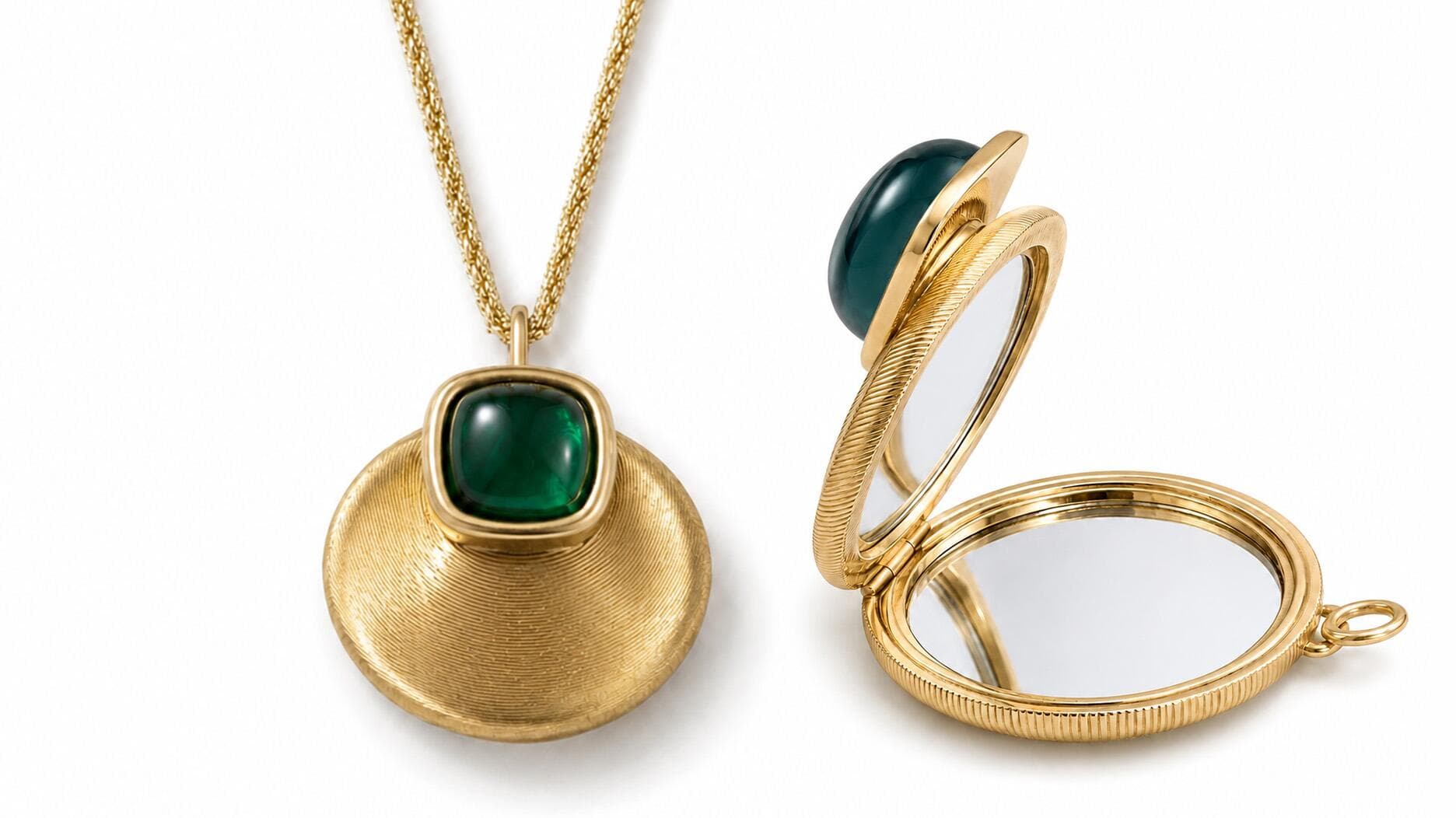
Why authentic Georgian jewelry is rare, and what collectors seek
Genuine Georgian jewelry is scarce because so much was remade, but the surviving clues, from closed backs to mourning motifs, still reveal the era.
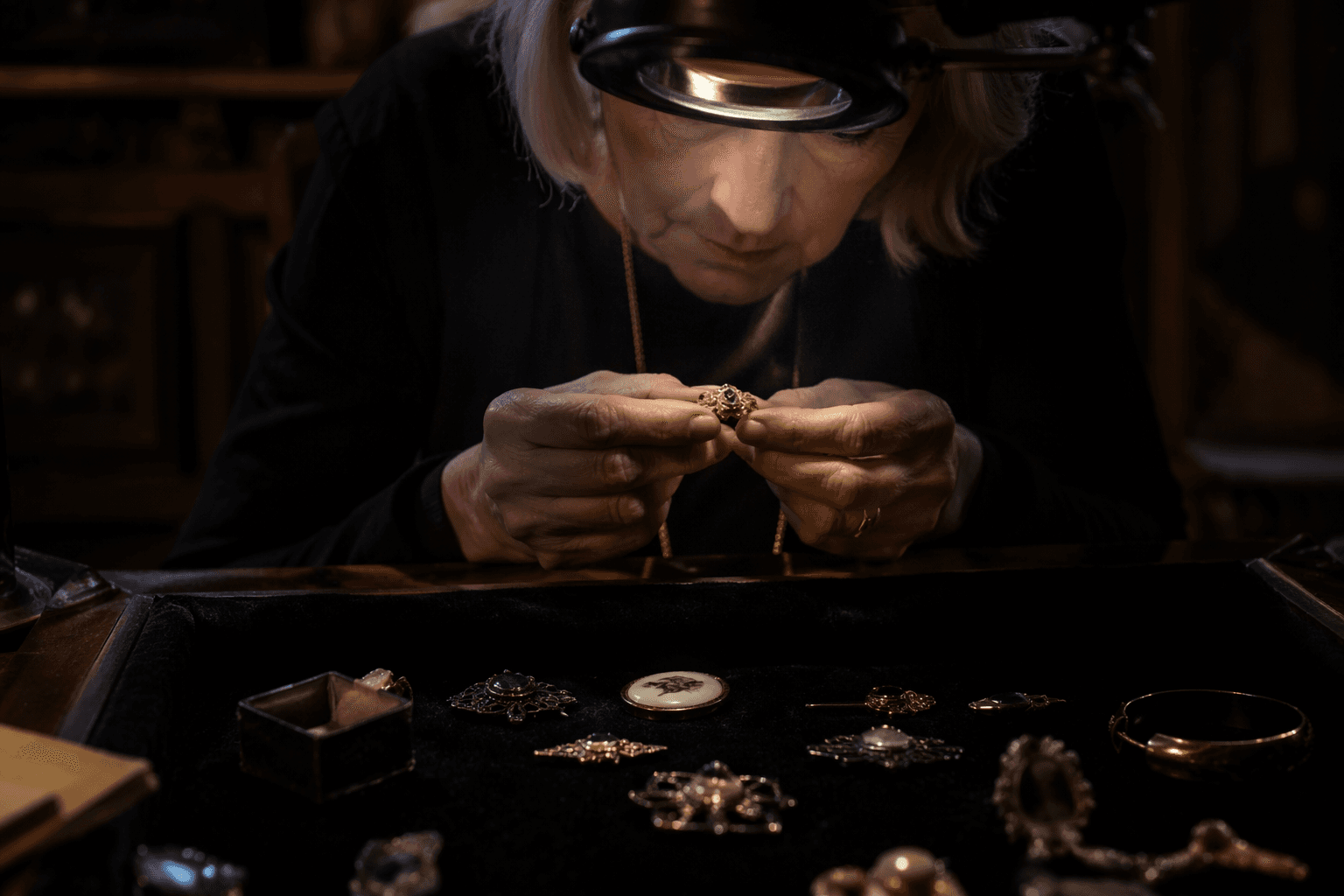
The most valuable thing about a Georgian jewel is often what it has managed to survive. Many pieces from the reigns of King George I through William IV, roughly 1714 to 1837, were reset, recut, remade, or broken apart as fashions changed, which is why intact examples are so prized today. To collect this period well, you have to read the piece like a document: through its settings, its materials, and the irregularities left by handwork.
What makes a jewel Georgian
Georgian jewelry spans the long run from George I to William IV, placing it at the very beginning of what the trade generally considers antique. In most jewelry circles, antique means at least 100 years old, which means Georgian pieces sit at the front edge of the category and often define it. That timeline matters because it places the style amid the American Revolution, the French Revolution, and the Napoleonic era, all of which pushed fashion, technology, and taste in new directions.
The result was not a purely English look. Georgian design absorbed influences from France, Germany, and Italy, and that crosscurrents quality is part of its charm. A genuinely Georgian jewel usually looks made by hand, not standardized by machine: mounts may be a touch asymmetrical, stone cuts slightly uneven, and proportions more intimate than later Victorian or Edwardian work.
The signs collectors learn to read
The first clue is often construction. Georgian jewels commonly use closed-back settings, where the back is sealed rather than open to the light, and many stones were foil-backed to intensify color and sparkle in candlelight. That means the glow is part craftsmanship, part theatricality. Openwork gallery settings and modern prong construction belong to later habits of making; a Georgian piece usually feels more enclosed, more private.
Collectors also look for the materials that survived the period’s visual language. Gold, enamel, diamonds, hair, glass, and jet all appear in the record, and the workmanship tends to be delicate rather than heavy. Cameos, miniature portraits, and memorial jewels are especially telling, because they combine sentiment with technical skill. In the best examples, the object is not just decorative, but deeply personal, as if it were meant to be worn close and read slowly.
Mourning jewelry holds the clearest evidence
Mourning jewelry is one of the most revealing Georgian categories, and one of the most moving. National Jeweler traces the tradition in the Georgian era to roughly 1714 to 1830, while an earlier strand goes back to 1649, after the execution of King Charles I, when royalists commissioned pieces with images beneath faceted Stuart crystal. By the later 18th century, mourning rings often carried neo-classical imagery such as urns, broken pillars, and mourning figures, turning grief into a coded visual language.
Hair from the deceased was commonly worked into the design or hidden in a compartment at the back of a ring. Black enamel signaled mourning, while white enamel was often used for children and unmarried adults. That distinction matters, because it shows how specific these jewels were as records of family history, rank, and loss. Hair jewelry survived well beyond the Georgian period, but its memorial roots are already visible here, and that is part of why collectors respond to it so strongly.
Portrait miniatures, cameos, and enamel enrich the story
Georgian jewelry was never limited to one type of object. Portrait miniatures, cameos, and enamel work all belong to the period’s vocabulary, and they often appear together in the same jewel. The British Museum holds Georgian-era pieces that include pendants with miniatures, cameos, enamel, diamonds, and mirror elements, a reminder that these objects were designed to be intimate and portable, not merely precious.
That intimacy is one reason they survive so unevenly. A portrait pendant might have been loved, worn, converted, or passed down until only the miniature remained and the original mount was changed. In the Georgian market, what looks like a simple later piece can sometimes carry a much older heart, but only if the construction still makes sense for the period. The best examples retain a sense of proportion and delicacy that later revivals often miss.
Why so few authentic examples remain
The scarcity is not accidental. Antique Trader is blunt about the fate of Georgian jewelry: most examples were altered or destroyed over time. That history explains why authenticity and integrity are not the same thing. A jewel may be genuinely Georgian in origin and still have a later clasp, a replaced stone, or a reshaped frame, while another may be entirely later but styled to imitate the period.
This is where condition becomes part of value. A piece that has not been heavily rebuilt is rare precisely because the eighteenth century was not kind to jewelry. Fashion shifted, stones were reused, and old settings were often sacrificed to create something newer. The surviving jewels that still carry their original structure, especially in closed-back, enamelled, or memorial form, are the ones collectors pursue most avidly.
What the great collections preserve
Museums provide the clearest benchmark for the period’s standards. The Victoria and Albert Museum says its jewellery collection includes more than 3,000 jewels and is among the most comprehensive in the world, a scale that makes it a crucial reference point for Georgian work. The Metropolitan Museum of Art holds mourning jewelry examples made with gold, glass, hair, and jet, while the British Museum preserves miniature portraits, cameos, enamel, diamonds, and mirror elements that help define the period’s range.
Taken together, those collections show that Georgian jewelry is not a single look but a set of related habits: closed constructions, candlelight effects, memorial symbolism, and meticulous handcraft. For the collector, the goal is not merely to find age. It is to find survival, and to recognize the small structural clues that prove a jewel has lived through the very centuries it now represents.
This article was produced by Prism’s automated news system from verified source data, official records, and press releases, then run through automated quality and moderation checks before publishing. The system is built and supervised by the people who set the standards it runs under. Read our full AI policy.
Did this article answer your question?