Adams County heritage drive highlights museums, bridges and historic homes
West Union’s Heritage Center anchors a county-only loop that can fit Buckeye Station, two covered bridges and a quilt-barn stop in a single day.
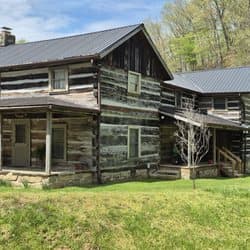
The shortest Adams County heritage drive starts in West Union at the Adams County Heritage Center, where a genealogical collection, museum, post office and log house sit within a few minutes of the county’s best-known historic stops. Open Thursdays and Saturdays from noon to 4 p.m., the center gives you a compact first stop before you fan out to frontier homes, Civil War landmarks and the Quilt Barn Trail.
Start in West Union
The Adams County Historical Society places the Heritage Center just off St. Rt. 247 on the north side of town at 262 Heritage Way, while county travel material lists it at 507 N. Cherry St. in West Union. Both point to the same practical starting point, and both agree on the same visitor window, Thursdays and Saturdays from 12:00 p.m. to 4:00 p.m.
The center is more than a local welcome desk. The society says it houses a genealogical collection, museum, post office and log house, and its mission is to preserve the heritage of previous generations, educate future generations and create a better future. That makes it the right place to begin a drive built around Adams County’s own memory map rather than a generic scenic route.
A loop that stays inside the county
From West Union, the county’s points-of-interest map gives you a route that stays tight and recognizable: Buckeye Station, Gov. Thomas Kirker Home & Bicentennial Barn, Harshaville Covered Bridge, John T. Wilson Homestead, Kirker Covered Bridge, Treber’s Inn & Zane’s Trace Monument and Wilson’s Civil War Soldiers Monument. Taken together, those stops move through frontier settlement, family history, road building and Civil War memory without pushing you out of Adams County.
If you have only a few hours, the most efficient version of the drive is simple: pair the Heritage Center with Buckeye Station and Harshaville Covered Bridge, then add the Kirker side of the route if you still have time. That still keeps the trip practical, and it gives you a county-only loop with two covered bridges and one quilt-barn stop built in.
Buckeye Station marks the county’s early settlement story
Buckeye Station is one of the clearest links to Adams County’s earliest years. The historical sites page says General Nathaniel Massie built it in 1797, and the Ohio History Journal carried a 1931 article titled “Buckeye Station: Built by Nathaniel Massie in 1797,” which shows how long the house has been treated as a significant historic site.
Massie was more than a builder. He was a frontier surveyor and land speculator who figured prominently in Ohio’s early territorial and state politics, including the statehood era of 1802. That matters on the ground in Adams County because Buckeye Station is not just an old house, it is a reminder of how land surveys, settlement patterns and early politics shaped the county’s first roads and farmsteads.
Harshaville Covered Bridge turns transportation history into a landmark
Harshaville Covered Bridge gives the drive a different kind of landmark, one that blends transportation history with military memory. Built around 1855, it is the last covered bridge still used in Adams County, and the bridge remains one of the county’s most recognizable historic structures.
The Civil War connection is unusually precise. Ohio Memory says General John Hunt Morgan crossed the bridge on July 15, 1863, when he and about 2,000 raiders passed through Adams County during Morgan’s Raid. The bridge was listed on the National Register of Historic Places in 1976, and National Register data identifies it as a Burr truss bridge with a 110-foot span. Those details help explain why the bridge still stands as both a working crossing and a documented historic asset.
The Quilt Barn Trail adds a second layer of local history
Adams County’s Quilt Barn Trail began in 2001, and its origin story is rooted in a family tribute. Donna Sue Groves started the trail to honor her mother, a quilter, then worked through P.A.C.T., with support from an Ohio Arts Council grant, to turn that idea into a countywide attraction. Ohio Magazine says the first barn quilt on the original trail was dedicated on Oct. 12, 2001, and the original trail featured 20 barn quilts.

That first idea has since grown into more than 21 quilt squares in county materials, with patterns named Lemon Star, Ohio Star, Sawtooth Star, Pinwheel and Windmill. The county map also places Kirker Covered Bridge among the quilt-barn sites, which makes it one of the best practical stops on a short loop because it gives you both a covered bridge and a quilt-barn marker at the same location.
The trail’s reach goes far beyond one county now. Materials describe it as a national movement, with quilt trails appearing in nearly all 50 states and parts of Canada. Adams County is where that model started, and the local version still reads as a working example of how folk art, family memory and roadside tourism can reinforce one another.
What to add if you have the full day
The county map’s other named stops help round out a longer drive. Gov. Thomas Kirker Home & Bicentennial Barn brings in one of the county’s political namesakes, John T. Wilson Homestead points to family landholding history, Treber’s Inn & Zane’s Trace Monument reaches back to early travel routes, and Wilson’s Civil War Soldiers Monument ties the route to military service and remembrance. Each site gives the loop a different historical layer, which is why the drive works as a county survey instead of a single-site stop.
That broader context fits the way Adams County now presents itself to visitors. County tourism material describes a growing destination built around hiking, lodging, Amish shops, the Great Serpent Mound National Historic Landmark, festivals, events, quilt barns, nature preserves and outdoor recreation. It also identifies Adams County as home to the nation’s first Quilt Barn Trail, which places the heritage drive inside a much larger local tourism economy.
The result is a route that can be done in a morning and expanded into a full day without ever losing its local focus. In one county-only loop, you can see a 1797 frontier house, a working covered bridge from about 1855, a Civil War crossing point, and a quilt-barn stop that began as a tribute to one quilter’s mother.
This article was produced by Prism’s automated news system from verified source data, official records, and press releases, then run through automated quality and moderation checks before publishing. The system is built and supervised by the people who set the standards it runs under. Read our full AI policy.
Did this article answer your question?