Adams County preserve shelters Ohio’s native prickly pear cactus
Rock Run Preserve protects Ohio’s only native cactus in Sandy Springs, where rare dunes, archaeology, and river ecology meet on Adams County’s Ohio River edge.
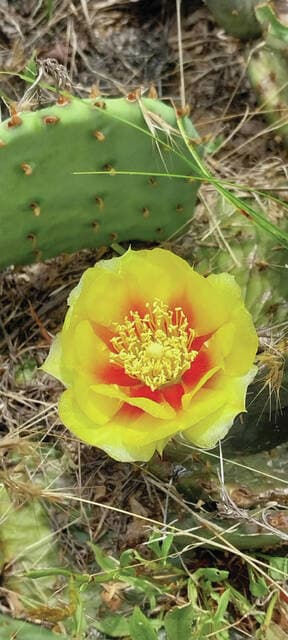
A rare prickly pear colony in Sandy Springs turns a quiet stretch of the Ohio River into one of Adams County’s most unusual natural assets. At Rock Run Preserve, the Arc of Appalachia protects an 802-acre landscape where Ohio’s only native cactus still grows in deep sand, a reminder that this part of the county is defined by more than hills and forests.
A cactus on the river edge
The plant at the center of the story is the eastern prickly pear, Ohio’s only native cactus, identified by the state as Opuntia cespitosa, with Opuntia humifusa listed as a synonym. Its presence in Adams County is not a curiosity planted from somewhere else. It is an established native population adapted to sandy ground and the relatively mild winters that the Ohio River corridor can provide.
That makes Sandy Springs more than a scenic place name. It is one of the few places in Ohio where the habitat still exists in a recognizable form, and that is why the preserve matters. The cactus’s flowering season, from June through July, and fruiting period, from August through September, give the site a clear seasonal rhythm that ties botany to the calendar of the county itself.
Why Rock Run is the right kind of ground
Rock Run sits on a section of the river known as Sandy Springs, where wide, flat terraces of deep sand and low dunes meet a sharp geological boundary. Upstream, the terrain is built on sandstone and shale; downstream, limestone and dolomite dominate. That transition helps explain why the preserve holds a botanical community that is rare in Ohio and far more familiar in river valleys shaped by ancient water and wind.
The dunes themselves trace back to the Pleistocene epoch, when floodwaters from the Ohio River deposited sand and later winds sculpted it into the forms visible today. In other words, the landscape is not accidental scenery. It is a survivor of glacial-era processes, and the cactus is one of the species best suited to the dry, loose soil that those processes left behind.

The Arc of Appalachia describes Rock Run as one of Ohio’s important biodiversity refuges, and the label fits. Rare and endangered plants grow there, along with bobcats and timber rattlesnakes, and the watershed is known for top-tier water quality. For Adams County, that combination of clean water, uncommon habitat, and intact wildlife makes the preserve a concentrated example of what river stewardship can still protect.
What you see when you walk it
A visit to Sandy Springs is not just about spotting a cactus. The place rewards slower observation, especially in a landscape where wildflowers, trees, and even wolf spider burrows show up as part of the broader ecological picture. The cactus itself is easy to miss until you know what to look for: small colonies that may spread only about a meter across, with long spines and tiny hair-like glochids that can catch on skin and clothing.
That is why the area deserves respect as a living habitat, not a backdrop. Weeding or brushing against the plant can quickly become a problem, and that is part of its defensive design. At the same time, the plant has long been useful to people. Its pads are edible, and the flowers can be turned into tea or jelly, which helps explain why the prickly pear has carried both practical and cultural importance across different regions.
The broader cultural record is striking. Native American and Mexican communities have used the plant for generations, and the cactus appears on the Mexico coat of arms. It is also found far beyond Ohio, with populations or cultivated presence in places such as Cuba, Australia, and South Africa. That global reach only sharpens the local point: Adams County is one of the places where a species with international symbolism still grows in a native Ohio habitat.
A landscape with deep human history
Sandy Springs is significant for reasons that predate modern conservation. The Ohio Department of Natural Resources says the area near Adams County contains Paleoindian artifacts at least 10,000 years old, and the state’s history material for Adams Lake State Park says the first people in Ohio arrived about 16,000 years ago. That means this river edge has been part of human movement and survival since the earliest chapters of Ohio history.
That archaeological layer changes how the preserve should be read. It is not only a plant site or a hiking destination. It is part of a corridor where geology, water, wildlife, and human settlement have intersected for millennia. For residents, that makes the cactus a marker of continuity: a species tied to sandy habitat that has persisted through immense environmental change and still anchors the landscape today.
Why the county should care
Rock Run became a focus of the Arc of Appalachia’s work in the region in 2004, and its preservation helps explain how local land stewardship can shape both ecology and public value. The organization says it has saved 14,312 acres of wildlands statewide and offers 90 miles of hiking trails in Ohio, placing Rock Run inside a larger network of conservation and recreation rather than leaving it as an isolated patch of sand.
That network matters for tourism potential, too. Rare native cactus habitat is not something most Ohio counties can claim, and Sandy Springs gives Adams County a story that is geographically specific and difficult to duplicate. It adds depth to the county’s identity alongside its more familiar river and forest assets, and it offers visitors a reason to look closely at a place that might otherwise be overlooked.
For Adams County, the value of Rock Run is not just that a cactus survives there. It is that the preserve protects the geology that made the cactus possible, the wildlife that shares the habitat, and the long human history recorded in the sand. In Sandy Springs, the county holds a landscape that is rare in Ohio, and preserving it says as much about local priorities as it does about native plants.
This article was produced by Prism’s automated news system from verified source data, official records, and press releases, then run through automated quality and moderation checks before publishing. The system is built and supervised by the people who set the standards it runs under. Read our full AI policy.
Did this article answer your question?