Serpent Mound draws visitors to Adams County’s prehistoric landmark
Serpent Mound is Adams County's signature landmark, but its deeper value lies in the heritage, archaeology and stewardship stories it still carries.
Serpent Mound as Adams County’s defining landmark
Serpent Mound is more than a scenic stop in southern Ohio. It is one of Adams County’s clearest cultural touchstones, a prehistoric earthwork that helps define the county’s identity, its tourism appeal and its obligation to protect Indigenous heritage with care and accuracy.
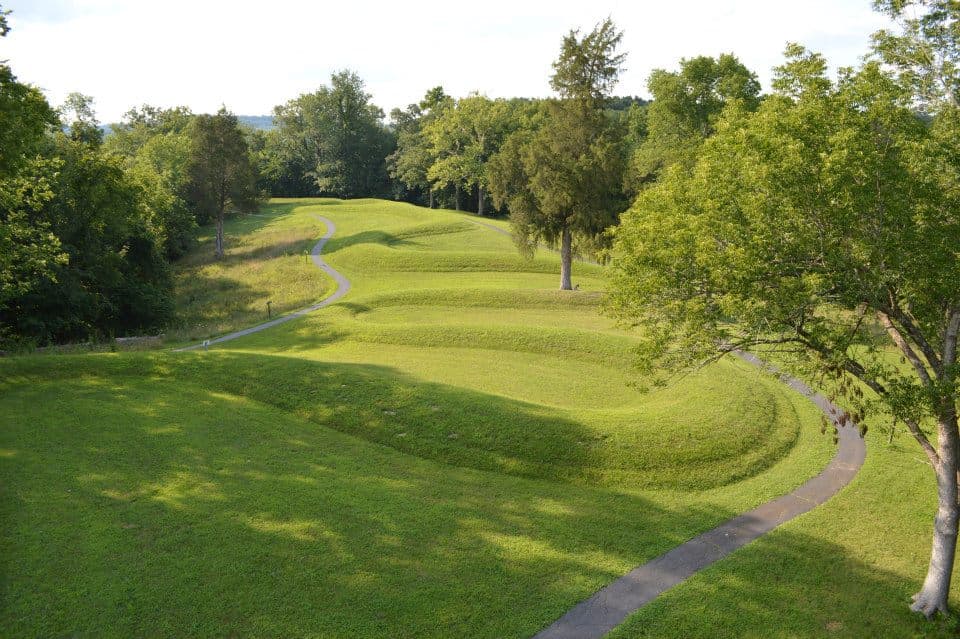
Set near Peebles and overlooking Brush Creek, the site draws visitors because it sits at the meeting point of landscape and history. The Adams County Travel & Visitors Bureau describes it as one of the few effigy mounds in Ohio and the largest and finest serpent effigy in the United States. Ohio History Connection calls it an internationally known National Historic Landmark and one of North America’s most spectacular effigy mounds.
What visitors see on the ground
The scale alone explains why the site remains such a strong draw. National Park Service landmark documentation says the serpent figure measures 1,254 feet from the northern jaw to the tip of the tail, with a winding path measuring 737 feet. The earthwork rises about 4 to 5 feet high and averages about 7 feet in width.
That physical form is only part of the experience. The site combines outdoor scenery with interpretation, and that makes it especially important for families, students and travelers trying to understand what they are looking at rather than simply photographing it. The museum at the memorial includes exhibits on the mound itself and on the geology of the surrounding area, including the Serpent Mound crypto explosion structure. For Adams County, that means the site functions as both a landmark and a classroom.
A place that has been explained, rebuilt and reinterpreted over time
Serpent Mound has a long history of public interpretation. The tourism office notes that it was first described in the 1848 volume *Ancient Monuments of the Mississippi Valley*, placing it at the center of early American archaeological documentation. Ohio History Connection says the site was listed as a State Historic Site in the 1960s and added to the National Historic Landmarks registry in the 1970s.
The visitor experience also reflects 20th-century preservation work. Ohio History Connection says a 1908 observation tower was built at Serpent Mound, and the tower was constructed by the Columbus Wire and Iron Works Company using 6,000 pounds of steel. The tower stands 25 feet high. In the 1930s, the Civilian Conservation Corps added a museum and other visitor facilities, giving the site the kind of public-facing infrastructure that still shapes how people encounter it today.

The age of the mound remains a live question
One of the most important facts about Serpent Mound is that its story is not settled. Early archaeologists long attributed the mound to the Adena culture, which flourished in Ohio from about 800 B.C. to A.D. 100. But Ohio History Connection says a 1991 excavation using radiocarbon dating suggested the mound was about 900 years old and may have been built by Fort Ancient people, who lived from A.D. 1000 to 1500.
That interpretation was challenged again in 2014, when another team proposed new radiocarbon dates suggesting an Adena-era construction around 300 B.C. Ohio History Connection says more work is needed to clarify the mound’s age. For visitors, that uncertainty matters. It changes how the site is understood, who is associated with its creation and how the earthwork fits into the broader story of Ohio’s ancient cultures.
Why the site matters beyond Adams County
Serpent Mound is a local landmark, but it also belongs to a much larger state and national conversation about Native American earthworks. The National Park Service says the Hopewell Ceremonial Earthworks became the United States’ 25th UNESCO World Heritage site on September 19, 2023, underscoring how much international attention Ohio’s monumental earthworks now receive.
Serpent Mound itself is on the U.S. Department of the Interior’s Tentative List for possible UNESCO World Heritage nomination. That status does not make it a World Heritage site, but it does show how seriously its preservation and interpretation are treated at the federal level. For Adams County, that raises the stakes. The mound is not just a tourism asset; it is part of a heritage landscape that carries national and global significance.
Tribal meaning and contemporary interpretation
Any serious guide to Serpent Mound has to include the living Indigenous meaning of the place. Ohio History Connection published a 2021 joint piece with Ben Barnes, chief of the Shawnee Tribe, noting that the Shawnee tradition includes a Snake Clan and that serpent imagery remains meaningful in modern Shawnee traditional community life.

The National Park Service says the Shawnee Tribe returned in 2021 to present interpretation at Serpent Mound, and that Culture Day resumed that year with one of the biggest turnouts in years. That is an important shift. It signals that the site is no longer being discussed only through archaeology and tourism, but also through direct tribal participation and cultural continuity. For visitors, that should change the way the place is understood: not as a relic of a vanished past, but as a living Indigenous landmark still connected to present-day Shawnee identity.
Preservation, responsibility and public respect
The site’s significance also comes with a record of vulnerability. Ohio History Connection said Serpent Mound was desecrated in 2012, and authorities sought criminal charges while the organization coordinated with the Adams County Sheriff’s Department. That episode made clear that cultural preservation is not abstract here. It depends on enforcement, public respect and the willingness to treat the mound as a protected heritage site rather than a backdrop for casual behavior.
That is why local stewardship matters so much. The county’s tourism identity benefits from Serpent Mound, but the site also carries an obligation: to preserve the earthwork itself, to explain the uncertainty around its age honestly, and to elevate Indigenous perspectives instead of flattening the mound into a roadside curiosity.
What Adams County should preserve and explain better
The most important thing to preserve is not only the shape of the serpent in the earth. It is the full meaning of the place. That includes the geology visitors learn in the museum, the tower and visitor facilities that reflect earlier preservation eras, the unresolved archaeological debate, and the living Shawnee cultural context that gives the serpent image continuing significance.
For Adams County, Serpent Mound is a signature landmark because it tells several stories at once. It is a tourism anchor, an archaeological question, a protected memorial and a reminder that the county’s identity is tied to more than scenery. It is tied to stewardship, accuracy and the responsibility to explain a remarkable place well enough that visitors leave understanding why it matters.
This article was produced by Prism’s automated news system from verified source data, official records, and press releases, then run through automated quality and moderation checks before publishing. The system is built and supervised by the people who set the standards it runs under. Read our full AI policy.
Did this article answer your question?