Alamance County inventory maps more than 700 historic sites
More than 700 Alamance County sites are mapped in the 2014 inventory, a tool that shows where preservation pressure is likely to meet growth in rural townships and mill communities.
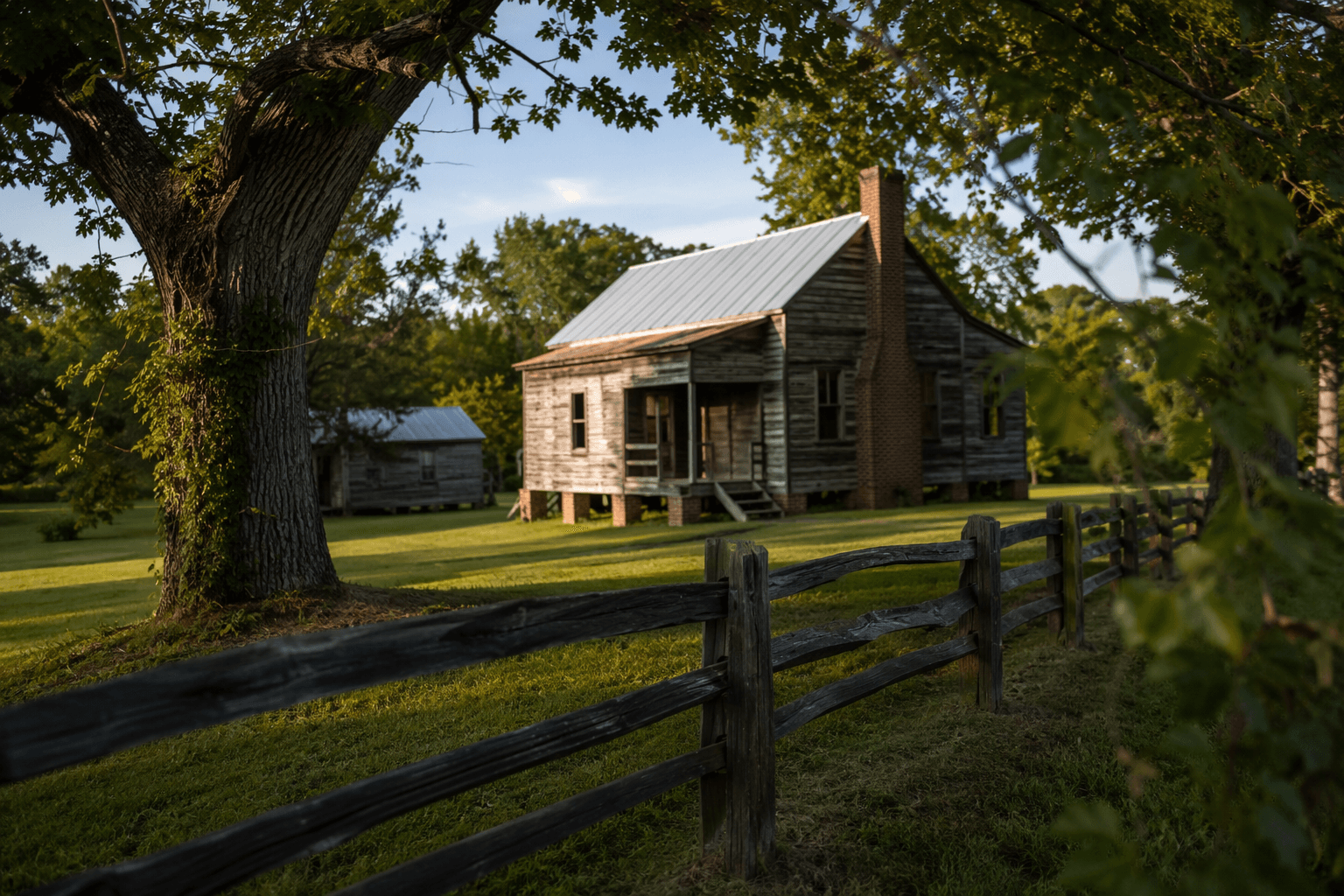
More than 700 historic places now appear in Alamance County’s architectural inventory, and the map reaches far beyond the familiar downtown blocks of Burlington and Graham. The 2014 update covers twelve of the county’s thirteen townships, putting early farmsteads, vernacular houses, mill-era structures and civic buildings into one countywide record.
What the inventory is really for
The Alamance County Historic Properties Commission issued the inventory in April 2014 as an update to Alamance County Architectural Heritage, the 1980 volume by Carl Lounsbury that the Alamance County Printing Department produced for the same commission. That earlier book identified more than 500 historic sites, and the county followed it with an architectural survey update in 2002 before later adding properties through local landmark designations and National Register Study List applications.
The inventory records where Alamance County’s architectural and historic story is visible on the ground, from the county’s farm landscapes to its mill heritage and public buildings. The 2014 version shows preservation interest across the county rather than concentrating only on a few well-known blocks.
Where the surprises are hiding
Historic value is not confined to downtown Burlington or the center of Graham. Rural roads, older crossroads, and mill communities may hold buildings that are historically important even if they are not obvious landmarks to someone driving past.
The Alamance Cotton Mill marker in Burlington and Alamance is a good example of how local significance can sit just off the standard tourist path. The marker states that the mill was built in 1837 by E. M. Holt and produced Alamance Plaid, the first factory-dyed cotton cloth south of the Potomac. The inventory also includes farmsteads and civic buildings elsewhere in the county.
What inclusion means for property owners
Being in the inventory means a place has been documented as historically or architecturally significant in Alamance County’s preservation record. It does not, by itself, create the same legal effect as a local landmark designation, a historic marker, or a preservation easement.
A listed property can still change hands, and it can still face alteration unless a separate protection applies. The inventory mainly raises visibility, often the first step before a property is considered for other preservation tools.
- It can alert owners, neighbors and planners that a site has recognized historic value.
- It can help frame redevelopment conversations before demolition or major alteration becomes the default option.
- It does not replace owner permission, easements or other legal protections.
For marker placement, the applicant must be the property owner or have written agreement and an easement from the owner.
How the marker program fits in
Alamance County’s Historic Marker Program is intended to increase public awareness of the county’s heritage, encourage preservation and improve enjoyment of local historic sites. The program reaches beyond architecture alone, recognizing resources, persons and events significant to architecture, archaeology, county history and traditional culture.
Under that framing, a building, a person, or a community event can qualify as part of the county’s memory if it shaped how Alamance developed. The county’s historic marker work also sits inside a larger North Carolina system, where the Highway Historical Marker Program has operated jointly with the North Carolina Department of Transportation since 1935 and uses an advisory committee of 10 history professors from four-year colleges and universities.
The April 8, 2014 meeting of the Historic Properties Commission included a draft architectural inventory and a historic marker application for Graham High School.
Why the inventory matters before the next update
Buildings can be lost long before the next countywide update catches up to them, especially when property changes, neglect or redevelopment move faster than preservation review. Once a historic building is gone or heavily altered, the county’s next survey can document the loss, but it cannot recover the place itself.
The inventory works as an early-warning map. It helps owners understand when a site may deserve more care, helps neighborhood groups identify places worth defending, and gives county planners a baseline for where historic resources are concentrated. Alamance County’s preservation record is also broader than this one document, with the University of North Carolina at Chapel Hill publishing the Alamance County Archaeological Survey Project in September 1986.
The deeper preservation picture
Historic preservation easements protect fragile, irreplaceable historic resources while keeping them in private ownership. That principle is useful in Alamance County because many important places are not museums or public buildings, they are homes, former industrial sites, rural structures and working properties that still belong to private owners.
The county’s inventory, marker rules and easement framework together show a layered system rather than a single lock on development. The inventory identifies what matters, the marker program helps make that heritage visible, and easements or landmark tools provide stronger protection when a property owner chooses them.
This article was produced by Prism’s automated news system from verified source data, official records, and press releases, then run through automated quality and moderation checks before publishing. The system is built and supervised by the people who set the standards it runs under. Read our full AI policy.
Did this article answer your question?