Alamance County museum, library systems offer low-cost local history access
Alamance County’s museum and libraries make local history affordable, from Holt textile exhibits to free genealogy tools, countywide borrowing and community programs.
Where Alamance County history starts
The best low-cost history lesson in Alamance County begins in Burlington, at a house museum tied to one of the county’s most important industrial names. The Alamance County Historical Museum sits at 4777 NC Highway 62 South, beside E.M. Holt Elementary School, and it gives residents a direct route into the county’s textile story without needing a special research trip or expensive admission into a distant archive.

A house museum built around the Holt story
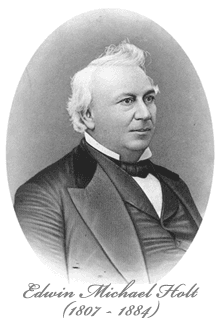
The museum is listed in the National Register of Historic Places, the official preservation program of the National Park Service. That designation matters because it places the building within a protected national record of sites considered worthy of preservation, not just local nostalgia. The museum says it was the birthplace of Edwin Michael Holt, who was born Feb. 14, 1807, and died May 14, 1884, and NCpedia describes him as an industrial pioneer and planter.
That history is more than a family name on a marker. Holt helped build the Holt and Carrigan Cotton Mill, which began operating in 1837 with 528 spindles on Alamance Creek, helping set the county on a manufacturing path that still shapes its communities. Inside the museum, the story is told through period room settings and docent-led tours, while the upper floor rotates temporary exhibits tied to local history. For newcomers, schoolchildren and families trying to understand why Burlington, Graham, Mebane and other towns developed as they did, this is a practical first stop.
The larger heritage landscape reinforces the point. Alamance Battleground State Historic Site, Glencoe Mill Village Historic District, the L. Banks Holt House, the Alamance County Courthouse and the Southern Railway Passenger Station in Burlington all sit inside a county where textiles and transportation left visible marks. Together, those places show that Alamance’s past is not confined to one building. It is woven through the county’s roads, mills, stations and courthouse square.
The library system is the free starting point
If the museum provides the backdrop, Alamance County Public Libraries supplies the day-to-day access. The system says people can use the online catalog from a computer, smartphone or tablet to browse items, place holds, review accounts and renew materials. That matters for budget-conscious households because it removes the need to buy books, chase down records or pay for basic research tools every time a question comes up.
The system also reaches beyond books. Library services include help finding local organizations, public-records help, health and wellness information, financial wellness resources, business and nonprofit information, a seed library, the Mobile Library and home delivery. For families, that means the library is not just a place to check out reading material. It is also a place to solve practical problems, from looking up a business contact to borrowing materials when transportation is tight.
Genealogy and local history without the private-research bill
The strongest draw for history-minded residents is the Local History & Genealogy program, which says its specialist works out of May Memorial Library. The collection includes Ancestry Library Edition, HeritageQuest, digitized local newspapers, the Historic NC Digital Newspaper Collection, Community History Archive materials, photographs and postcards, divorce and annulment records, war records and free genealogy classes. That mix is especially valuable for people tracing family lines, documenting a house, or trying to understand how a surname appears across local records.
For newcomers, the payoff is different but just as useful. Local newspapers and archived photographs can quickly explain a neighborhood’s past, while public records and newspaper databases can help confirm dates, names and property history. Students, caregivers and retirees all benefit from the same setup: records that would otherwise require paid subscriptions or a long drive are available through the county system.
How to move around the system
The county has made the library network easier to use across town lines. Current branches include May Memorial Library in Burlington, Graham Public Library, Mebane Public Library and North Park Library, along with outreach services such as the Mobile Library and BookMARK. The library says patrons can use their cards at any branch in the county and return materials at any branch, which makes access simpler for people moving between Burlington, Graham, Mebane, Haw River and surrounding communities.
Getting a card is straightforward. Alamance County Public Libraries says anyone who lives or works in the county may apply, and residents of several neighboring counties are also eligible for a free card. That is the place to start for anyone hoping to save money while expanding access to books, genealogy databases, public computers and community programs.
Why the numbers matter now
The scale of use shows that these are not niche institutions serving only a handful of hobbyists. In 2024, Alamance County Public Libraries served 299,200 visitors, checked out 468,820 items, offered 1,650 programs and drew 46,111 program attendees. Computer and Wi-Fi use reached 88,781 visits, up from 68,804 in fiscal year 2022-2023, a jump of roughly 29 percent. Those numbers point to a system that is serving as both a library and a digital lifeline.
That growth comes as Alamance County itself keeps expanding. A February 2025 county library study said the population had climbed to more than 171,000 residents and projected further growth through 2040. In that context, the museum and library systems do more than preserve the past. They give residents affordable ways to learn the county, borrow what they need, connect to records, and keep pace with a community that is still changing.
This article was produced by Prism’s automated news system from verified source data, official records, and press releases, then run through automated quality and moderation checks before publishing. The system is built and supervised by the people who set the standards it runs under. Read our full AI policy.
Did this article answer your question?