Alamance County’s textile heritage lives on along the Haw River
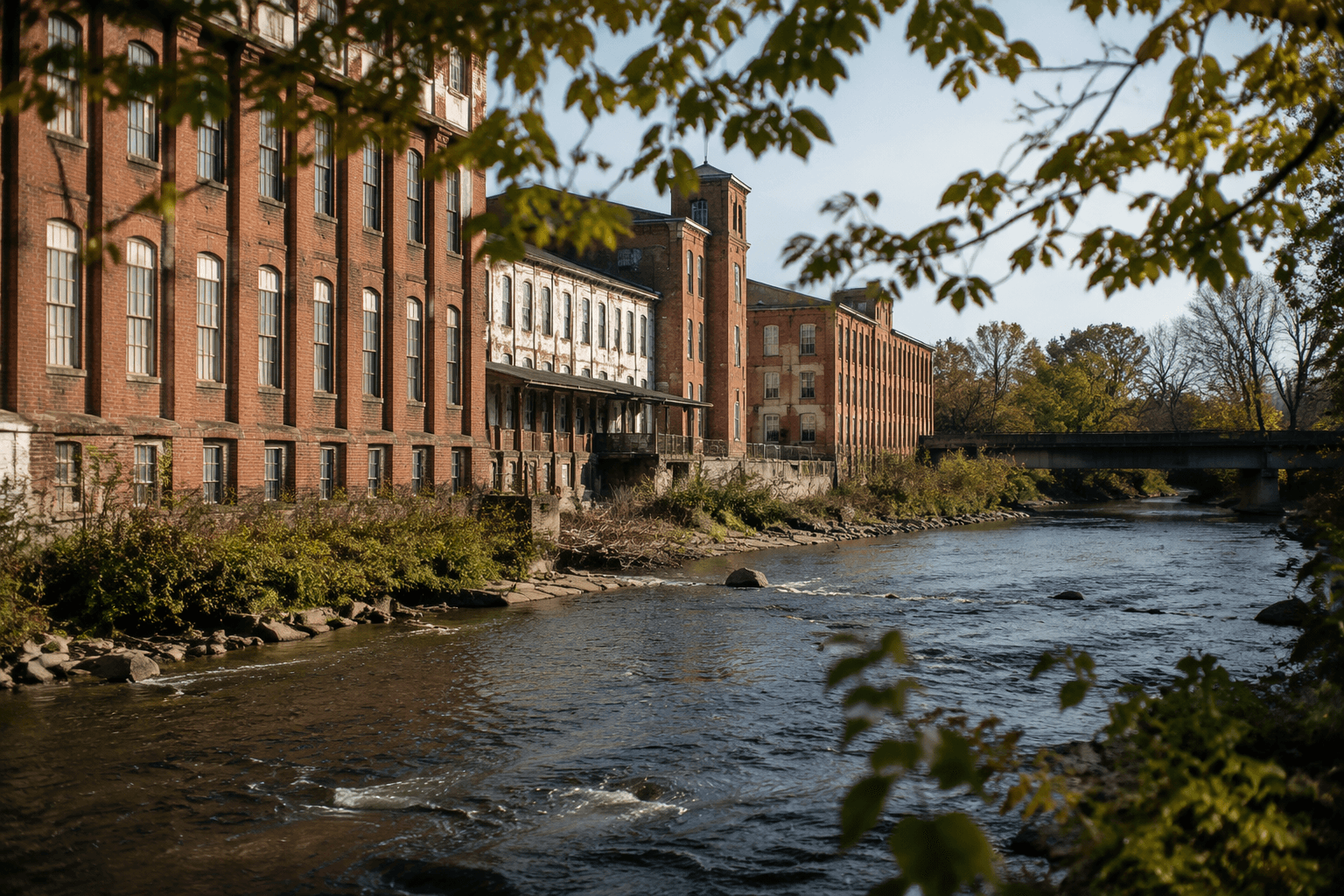
The Haw River still holds Alamance County’s textile story in plain sight, from Glencoe’s restored mill village to the Textile Heritage Museum at 2406 Glencoe Street.
The best place to understand Alamance County’s textile past is not a distant archive. It is the Haw River corridor north of Burlington, where a former mill village, a restored company building and a museum still sit inside the landscape that made the county an industrial center.
The Haw River made the mills possible
Between 1832 and 1880, Alamance County men established more than 8 water-powered mills, and every one of them stood along the Haw River. That detail matters because it explains why the county’s textile story is so tightly tied to place: water power was the deciding factor, and the river itself became the industrial corridor.
The result was more than a string of factories. Mills drew workers, stores, housing and daily life into compact communities such as Burlington and Glencoe, turning the riverbanks into working landscapes that still shape how Alamance County reads today.
Start at the Textile Heritage Museum
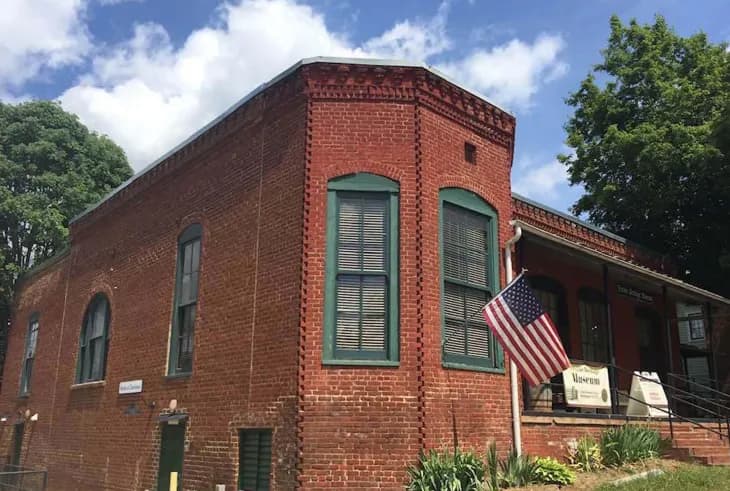
The most direct entry point is the Textile Heritage Museum at 2406 Glencoe Street in Burlington, inside Glencoe Mill Village just north of town. The museum is housed in the former company store and management office building, which was built around 1890, so the setting itself is part of the exhibit.
That location gives the museum a different feel from a conventional gallery. You are standing in a preserved mill landscape that includes the former mill, the museum building and rows of worker housing, which makes the county’s textile history visible in the buildings around it rather than only in displays on the wall.
The museum is also unusual in a statewide sense. One of its descriptions calls it the only museum in North Carolina dedicated solely to preserving and promoting the history of the textile industry, a distinction that matches the county’s unusually deep textile footprint.
Glencoe is the clearest surviving mill village
Glencoe Cotton Mill began in 1880 and was the last water-powered mill built in Alamance County, according to North Carolina State University’s Wilson College of Textiles. The mill sat on the Haw River north of Burlington and remained in Holt family operation until 1954.
After the mill closed, Glencoe became a ghost mill and ghost town until Preservation North Carolina acquired it in 1997. That preservation work changed the way visitors can experience the place now: most of the mill village homes and a barber shop have been restored and are occupied, which gives the village a lived-in quality instead of a frozen one.
The village is also one of the county’s best records of textile-era life because the workforce numbers were so compact and so clearly tied to the mill community itself. The museum’s Glencoe quick facts list the workforce as generally about 110 to 150 workers, with 133 workers in 1890 and 134 in 1924. In 1905, 500 people were dependent on Glencoe, though about half lived outside the village.
Those numbers show how a small mill could support a much larger social and economic world. The same quick facts note that in 1890, women and children made up 70% of the workforce, a reminder that textile production in Alamance County rested on family labor and on a work force that was far younger and more mixed than modern factory life.
What still feels intact when you visit
A trip through Glencoe still reads like a mill village because the structure of the place survives. Glencoe Street twists past the former mill, the museum and the rows of simple homes, and the spacing between those buildings still reveals how the village was organized around work, housing and daily routines.
The Burlington city historic district designation report calls Glencoe a remarkably complete mill village and says it exemplifies the post-Civil War development of the textile industry along the streams of Piedmont North Carolina. That is not just a preservation label; it is a description of why the village still matters as a local landmark and as a surviving example of how textile settlements were built.
- Textile Heritage Museum, 2406 Glencoe Street, for the former company store and office building and the museum’s textile focus
- Glencoe Mill Village, for the restored homes, barber shop and the cluster of buildings that still frame the old mill site
- The Haw River setting north of Burlington, where the water-powered logic of the village is still legible in the land itself
For a practical visit, the core stops are easy to connect:
The geography is part of the lesson. The museum’s own location materials place Glencoe on the Haw River, three miles north of Burlington, which helps explain why this stretch of river became such a dense industrial corridor in the first place.
Why this history still belongs in the present
Alamance County’s textile heritage lasts because it was built into the ground plan of the county. The mills were not isolated factories, but anchors for roads, houses, services and whole communities, and Glencoe remains one of the clearest places to see that system intact.
That is why the Haw River corridor still carries so much local identity. In Burlington and Glencoe, the county’s textile past survives in a museum building that once handled mill business, in restored worker homes still occupied today and in a village layout that still shows how water power shaped Alamance County’s economy for generations.
This article was produced by Prism’s automated news system from verified source data, official records, and press releases, then run through automated quality and moderation checks before publishing. The system is built and supervised by the people who set the standards it runs under. Read our full AI policy.
Did this article answer your question?