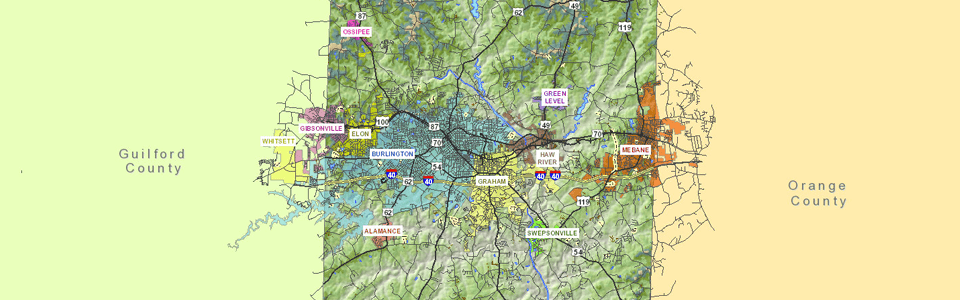
Burlington Stormwater Fee Overhaul Stalls Over Smaller Churches' Concerns
Churches' objections have stalled Burlington's nearly seven-year push to overhaul its stormwater "rain tax," though the city council did vote 5-0 on a separate project-prioritization policy.
A nearly seven-year effort to overhaul Burlington's stormwater fee has stalled after concerns from the city's smaller congregations halted adoption of a new fee structure proposed by Raftelis Consulting, the firm hired to redesign the program.
Over the past couple of months, objections from local churches have effectively frozen the proposed revamp of what is colloquially known as the "rain tax," a fee Burlington uses to bankroll infrastructure improvements and other measures addressing erosion and flooding caused by rainwater runoff. No individual congregations were identified in city discussions, but the collective concern over how the new fee structure would affect smaller houses of worship proved enough to pause the broader overhaul.
At the center of Raftelis' proposal is a concept called the "estimated residential unit," or ERU. The firm calculated the amount of impervious surface on a typical residential parcel and used that figure as the standard unit for measuring the impervious surface of non-residential properties, including churches. Under the proposed fee structure, a property with an ERU of 10 would carry the equivalent of 10 single-family homes' worth of pavement and buildings and pay 10 times the residential standard of $7 a month. That multiplication-based billing model is precisely what smaller congregations, whose properties may include large parking lots relative to their budgets, have found alarming.
While the broader overhaul remains in limbo, the Burlington City Council did advance one related measure. A council member identified only as Barber presented a scoring and prioritization system for stormwater upgrade projects, and the council voted 5-to-0 in favor at its next regularly scheduled Tuesday meeting. Barber told the council that the scoring system would allow city stormwater staff to work through six applications for upgrades currently in the queue and tie the city's financial contribution to each project's score. Depending on that score, the city could absorb 100 percent of a project's cost, split it through the traditional 80/20 arrangement, or share expenses equally at 50/50 with the property owner.
The prioritization vote represents incremental progress, but the central question of how Burlington structures fees for non-residential properties, and whether smaller churches will receive any relief or exemption, remains unresolved. With Raftelis' proposed ERU framework on hold and no timeline offered for resuming the overhaul, city stormwater staff will work through the existing project queue under the new scoring system while the fee restructuring debate continues.
This article was produced by Prism’s automated news system from verified source data, official records, and press releases, then run through automated quality and moderation checks before publishing. The system is built and supervised by the people who set the standards it runs under. Read our full AI policy.
Did this article answer your question?