Burlington's Rapid Growth Cements Alamance County's Rising Role in Piedmont Triad
Burlington's metro area outpaced Greensboro and Winston-Salem in population growth between 2024 and 2025, with Alamance County surging past 186,000 residents driven largely by domestic migration.
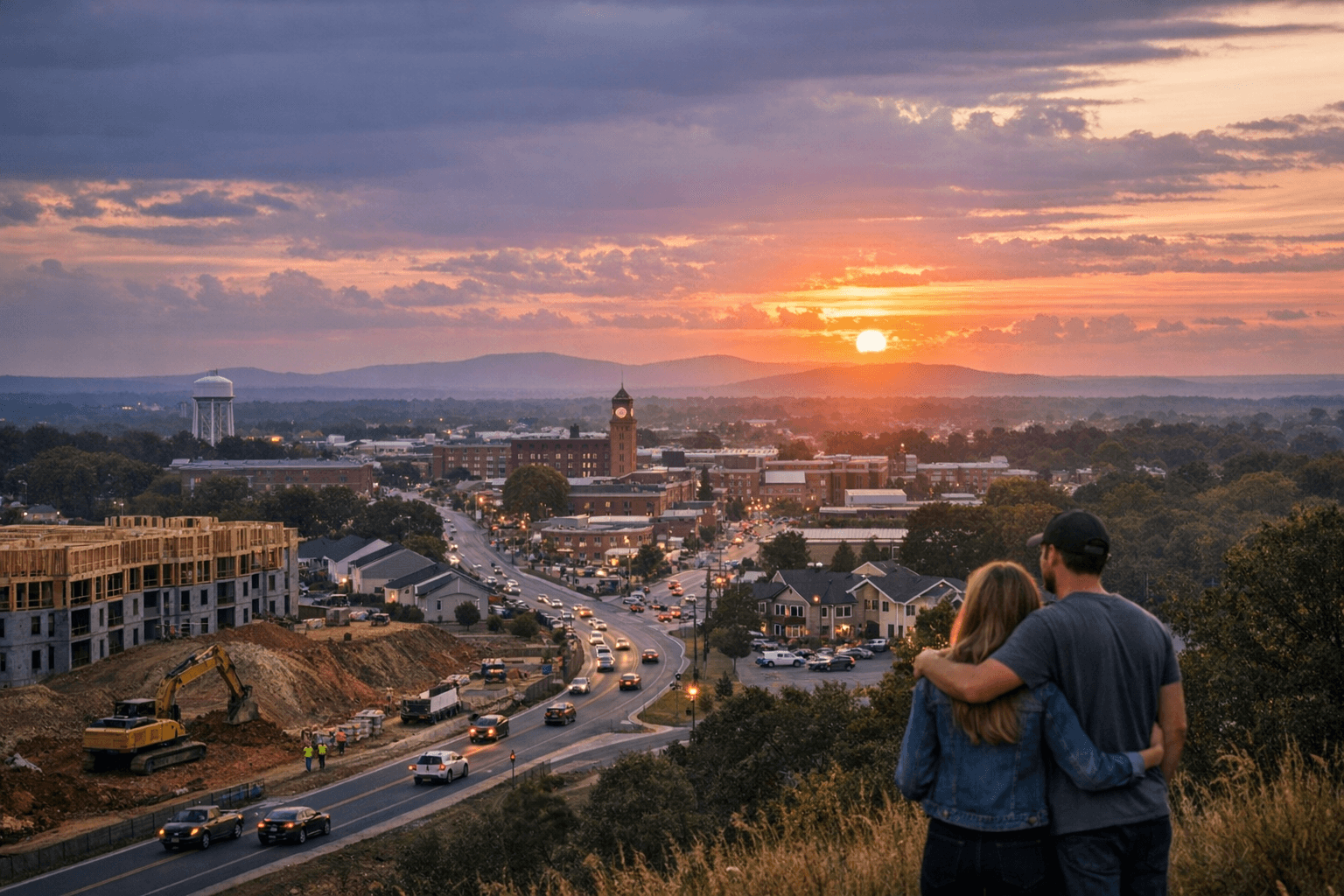
New U.S. Census Bureau estimates have confirmed what Alamance County residents have been watching unfold street by street: the Burlington metro area grew faster than every other major metro in the Piedmont Triad between 2024 and 2025, outpacing the larger Greensboro-High Point and Winston-Salem markets.
The Burlington metro area, which encompasses all of Alamance County, went from more than 170,000 people to more than 186,000, posting nearly 1.5% growth from 2024 to 2025. Winston-Salem and Greensboro-High Point also added residents over that period, but at slower rates.
The Census data shows Burlington's growth edge over its larger neighbors was driven primarily by people relocating from elsewhere in the United States, with international arrivals accounting for just a quarter of net new residents. That domestic migration signal distinguishes Burlington from many growing metros nationally, where international migration has been the dominant engine of population gains.
Burlington city proper has tracked a similar upward trajectory, rising from 57,303 residents at the 2020 census to more than 60,000 by 2024, a gain of nearly 5% in four years.
Keith Willis, who moved to Burlington in 2014, has watched the transformation unfold from the inside. "To move down here in 2014, it was 20 years behind," Willis said. "After the 12 years I've been here, I've seen a lot of improvement."
The population surge runs parallel to a wave of economic investment in the county. Burlington City Council approved Project Titan, an $860 million investment expected to generate more than 500 jobs by 2033. Labcorp committed to a $71 million fleet base at Burlington Alamance Regional Airport, and German manufacturer Ziehl-Abegg announced plans for a 225,000-square-foot facility projected to create 135 local jobs. That combination of corporate relocations and expansions has given Alamance County a more diversified economic profile than the textile-era identity the region spent decades trying to move beyond.
Statewide, Wilmington led all North Carolina metro areas in growth during the most recent measurement period, but Burlington's position atop the Piedmont Triad rankings reflects a meaningful shift in how growth is distributed across the state's interior. For a county that sits within commuting distance of both Raleigh and Greensboro, the influx of domestic migrants suggests Burlington is increasingly drawing residents who are willing to trade the congestion and cost of larger metros for a city that is, by most measures, still catching up to its own potential.
This article was produced by Prism’s automated news system from verified source data, official records, and press releases, then run through automated quality and moderation checks before publishing. The system is built and supervised by the people who set the standards it runs under. Read our full AI policy.
Did this article answer your question?