Elon seniors intern at Alamance County Family Justice Center
Two Elon seniors spent their internship inside Alamance County’s Family Justice Center, a one-stop hub where abuse victims can reach safety, legal help, and support in one place.
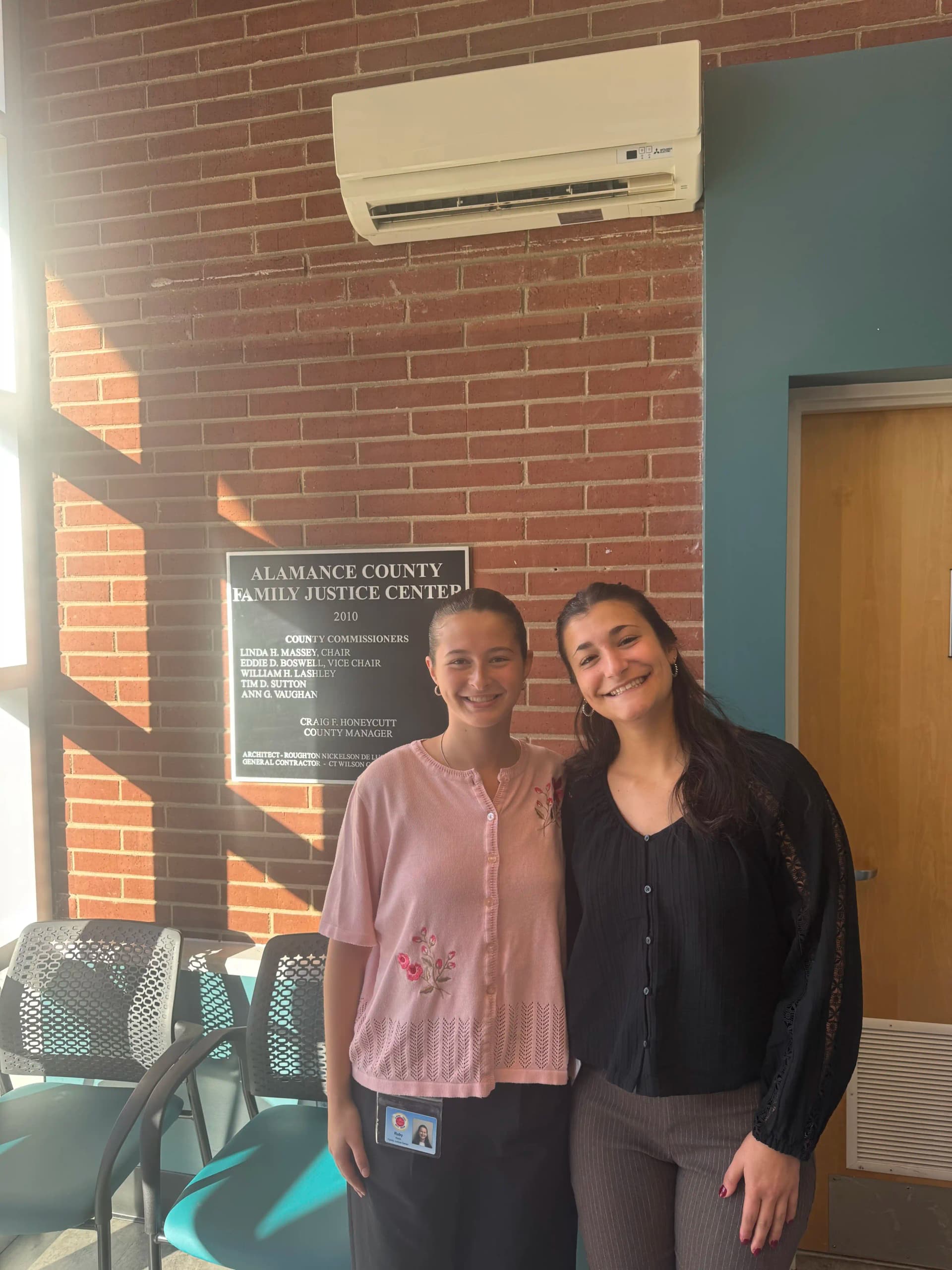
The Family Justice Center of Alamance County is where people facing domestic violence, family abuse, elder abuse, and other interpersonal crises can walk into one location and connect with criminal, civil, and social-service help. For two Elon University seniors, Izzy Greenstein ’26 and Ruby Radis ’26, that meant more than a campus placement. It meant spending their human service studies internship inside a frontline county institution that handles the practical reality of crisis response.
Their experience points to why the center matters beyond Elon’s campus. In Alamance County, the difference between a victim reaching help or falling through the cracks can come down to whether services are coordinated, familiar, and physically co-located in Burlington.
What the center does for residents
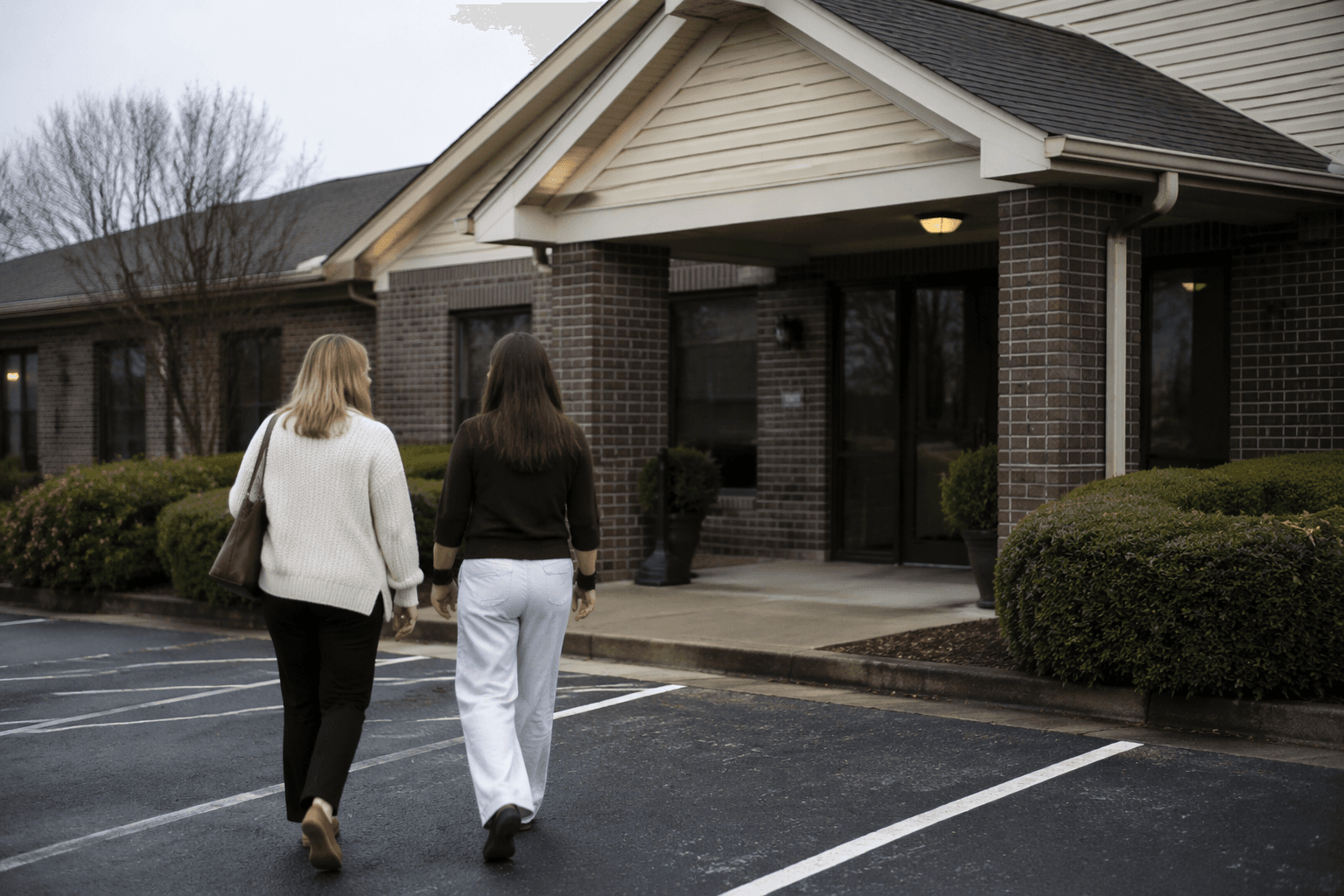
Alamance County describes the Family Justice Center as a single location where victims of violence can safely access the services of the criminal and civil justice systems and the social services community. That structure matters because people in crisis often need more than one office, one referral, or one phone number. They may need advocacy, protection, court-related support, safety planning, and access to partner agencies without being sent from place to place.
The center’s own public materials reinforce that broad mission. Its website includes pages for services, partner agencies, mission, awareness, FAQs, Camp HOPE, internship and volunteer opportunities, and impact, showing an operation built around both immediate response and long-term support. The center also says it provides one-stop services for victims of interpersonal violence, supports victims, and strengthens services for older adults.
Why the internship is more than a student story
Greenstein and Radis are not just classmates at Elon University Human Service Studies. They are roommates and best friends, and that shared background gives the internship a more immediate human frame. Their work inside the Family Justice Center connects classroom learning to the daily realities of victim services, where students see how crisis intervention, advocacy, and community support overlap in real time.
That matters in a county where service access can determine whether someone gets connected quickly to help. A placement like this also shows how local agencies are helping train the next generation of social-service workers while benefiting from the time, attention, and perspective students bring. The internship is not separate from the county’s safety network. It is part of it.
The model behind the center
The Family Justice Center model did not begin in Alamance County. Alliance for HOPE International says the framework was first established in San Diego in 2002 and is designed to bring professionals and services under one roof for adult and child survivors of domestic and sexual violence. That model is built around coordination, which helps explain why Alamance County has treated the center as a multi-agency hub rather than a stand-alone office.
County records show that Skye Sullivan, director of the Family Justice Center, and Detra Betts, executive director of Family Abuse Services of Alamance County, Inc., presented the collaborative model to the Alamance County Board of Commissioners on Aug. 7, 2023. That presentation underscored how the center works as a partnership, not as a single agency acting alone.
A local institution with deep roots
Alamance County’s center also has a local identity that reaches back years. A Family Justice Center of Alamance County Facebook post says it is the first Family Justice Center in North Carolina, and the same post references a 15th anniversary celebration. That history gives the center a long enough track record to show how the model has been embedded in the county’s response to violence.
Family Abuse Services of Alamance County adds another layer of history. The organization says it has been serving Alamance County since 1985, which places the Family Justice Center inside a broader local anti-violence network that predates the center itself. For residents, that means the system behind the center is not new or experimental. It is an established part of the county’s service landscape.
How the county tracks the work
The center’s impact is not treated as abstract. Alamance County performance-management materials track measures that include the number of clients served in person, client visits, referrals to on-site partner agencies, restraining orders filed on site, high-risk team staffings, and other service metrics. Those measures show that the center’s work is operationally complex and measurable, not just symbolic.
The county budget documents also show outside support remains part of the picture. In 2024, the Family Justice Center received two federal grants from the Office on Violence Against Women. That funding points to continued investment in a model built around coordinated victim services and interagency response.
Why this matters for Alamance County now
The internship by Greenstein and Radis is useful because it reveals the center as a working institution, not a name on a website. It is a place where local residents facing abuse or crisis can find multiple forms of support in one setting, where county and nonprofit partners work side by side, and where students are learning how that service system functions under pressure.
For Alamance County, that combination matters. It shows a local response to violence that is organized, measured, collaborative, and rooted in a network that has been serving residents for decades. It also shows that the county’s frontline institutions are not only delivering services today, but training the people who may help deliver them next.
This article was produced by Prism’s automated news system from verified source data, official records, and press releases, then run through automated quality and moderation checks before publishing. The system is built and supervised by the people who set the standards it runs under. Read our full AI policy.
Did this article answer your question?