Elon students help Piedmont Triad children with mobility disabilities drive toy cars
Violet Wilson finally had a way to move on her own as Elon students turned a toy car into a mobility device for six Piedmont Triad children.
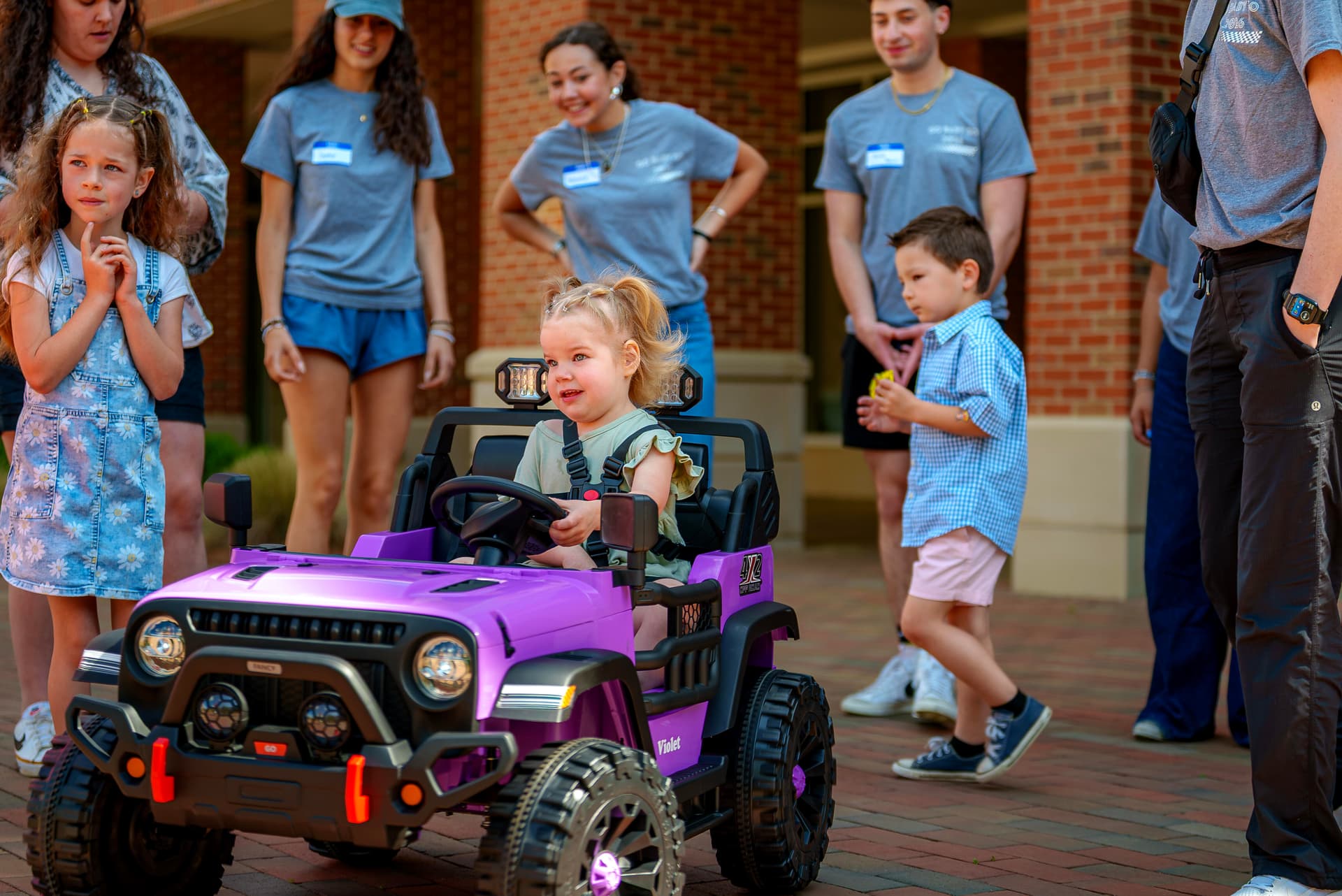
Violet Wilson’s small car did what bikes and playsets often could not: it gave her a chance to drive herself. For Jessie Wilson, watching his adopted daughter roll into the April 4 gathering at Elon University meant more than a classroom demonstration. Violet, a shaken-baby survivor who lives with cerebral palsy, epilepsy and a critical vision impairment, was able to join children who can already pedal away on bikes or race through a backyard.
That kind of independence is the point of Go Baby Go, a national program that modifies ride-on toy cars for young children with limited mobility. At Elon, six children took part in the project this spring, with students from the physical therapy program, engineering program and Phoenix Racing team working together to tailor each car to the child riding it. One car’s gas pedal was changed into a button on the steering wheel, and five-point harnesses were adjusted for comfort and safety.
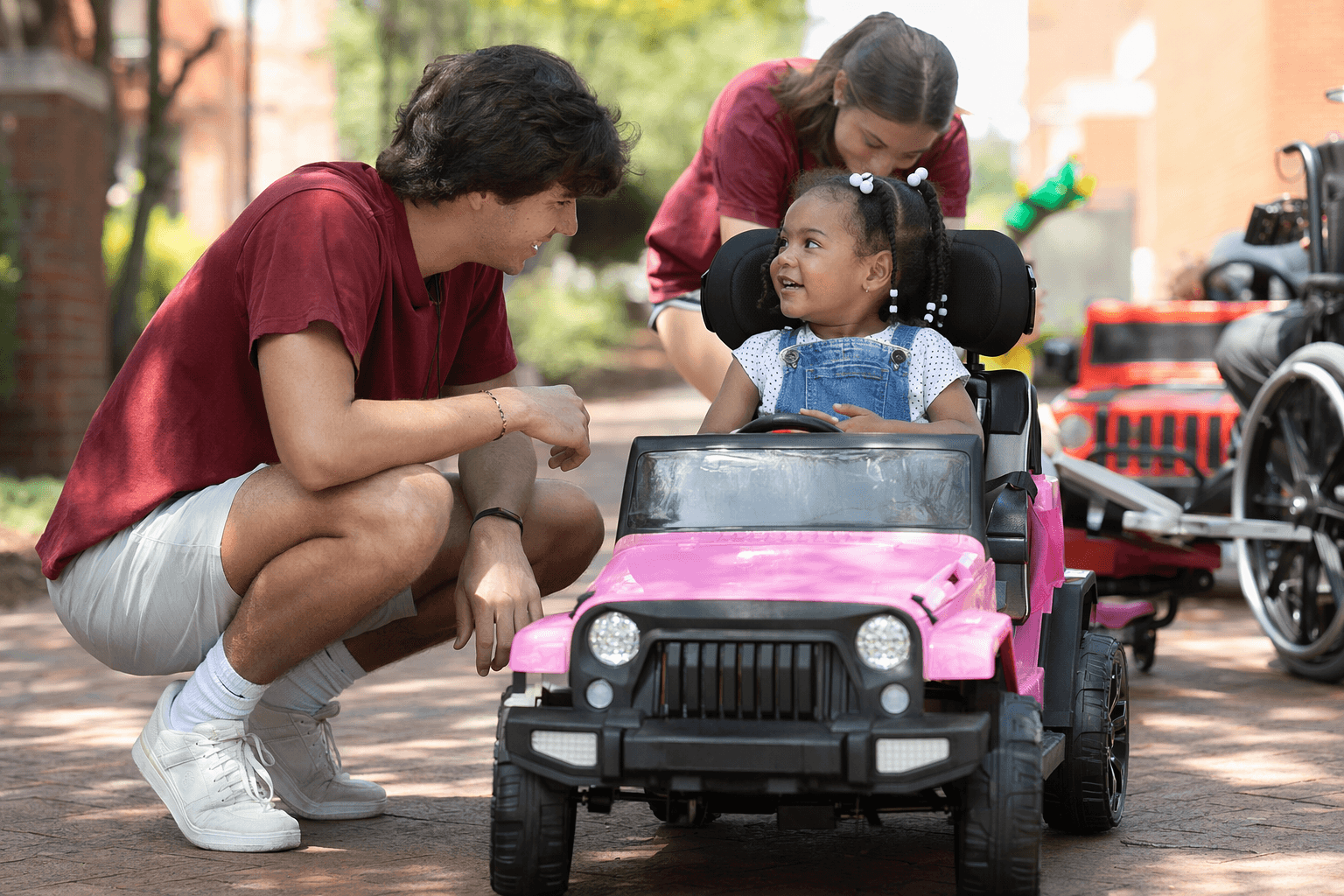
The work began in February, giving families and students time to meet, test ideas and refine the builds before the finished vehicles were rolled out. Jessie Wilson said Violet’s disabilities often keep her out of the everyday fun that her siblings get from riding bikes and playing outside, making the adapted car a practical way for her to be included. He said the effort showed a level of care that went beyond a university assignment and reflected the love the families felt in the finished product.
Go Baby Go began in 2012 at the University of Delaware with founder Dr. Cole Galloway and has grown into a community-based research and outreach effort. Program materials describe the modifications as an affordable alternative to powered mobility devices, with some adaptations costing about $200 in parts and changes. Those low-cost builds can matter in a bigger way, because independent mobility is linked to cognitive, social, motor, language and socialization benefits.
At Elon, the project came through the TOM Fellowship Program, a nine-month international program focused on solutions for disability-, aging- and poverty-related problems. Julianna Millett, Diego Hernandez and Abigail Johnson helped bring Go Baby Go to campus, with physical therapy professor Paula DiBiasio leading family recruitment and evaluations and Sirena Hargrove-Leak co-mentoring the effort. Before the children ever touched the steering wheels, physical therapy students assessed trunk stability, limb movement, safety needs, seating and switch placement, while engineering students handled electronics and fabrication planning.
Millett said conversations were already underway about continuing the program, suggesting the work could become a recurring part of Elon’s service and design efforts. For families like the Wilsons, the result was immediate: a child with serious disabilities got a chance to move under her own power, not just be carried along beside everyone else.
This article was produced by Prism’s automated news system from verified source data, official records, and press releases, then run through automated quality and moderation checks before publishing. The system is built and supervised by the people who set the standards it runs under. Read our full AI policy.
Did this article answer your question?


