Exceptional drought returns to Alamance County, water use restrictions urged
Exceptional drought has returned to Alamance County, covering all 151,131 residents and much of the county’s hay, corn and soybean land. State officials are urging water plans and possible rationing.
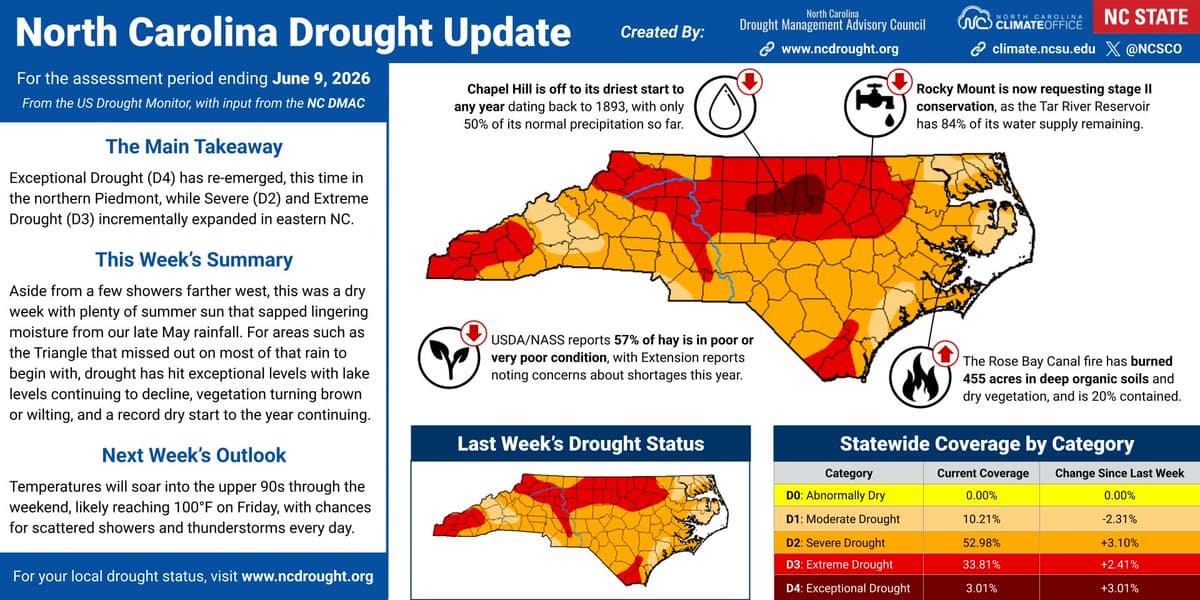
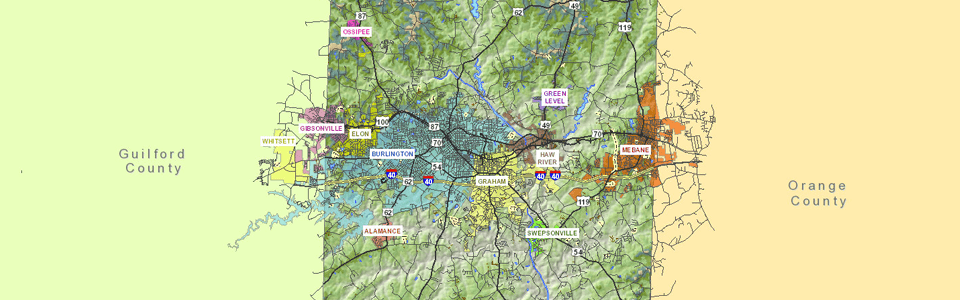
Exceptional drought has returned to Alamance County, including areas south of Burlington, and state officials are warning that the dry spell has reached the point where water-shortage planning matters now. The latest U.S. Drought Monitor map, released June 11 and based on June 9 data, put the county back in D4, the monitor’s most severe category.
North Carolina’s Drought Management Advisory Council updated its advisory to match those June 9 conditions and said all water users in D4 areas should follow their Water Shortage Response Plans and limit water use to essential public-health-and-safety needs. The council also warned that community water systems may need to prepare for rationing. State water-system data still listed Alamance County as not restricted as of May 4, but the new drought rating shows how quickly the county can move from normal operations toward tighter public controls.


The return of exceptional drought came after a brief improvement earlier in the week and after a two-week absence of the most severe drought category from central and northern North Carolina. Tom Green, a National Weather Service meteorologist, said recovery would likely take double-digit inches of rain spread over time, not one heavy storm. He also warned that a single 5-inch rainfall could still produce flash flooding because the ground cannot absorb that much at once. Nearby Greensboro, in Guilford County, had its third-driest spring on record, underscoring how widespread the strain has become across the Piedmont.
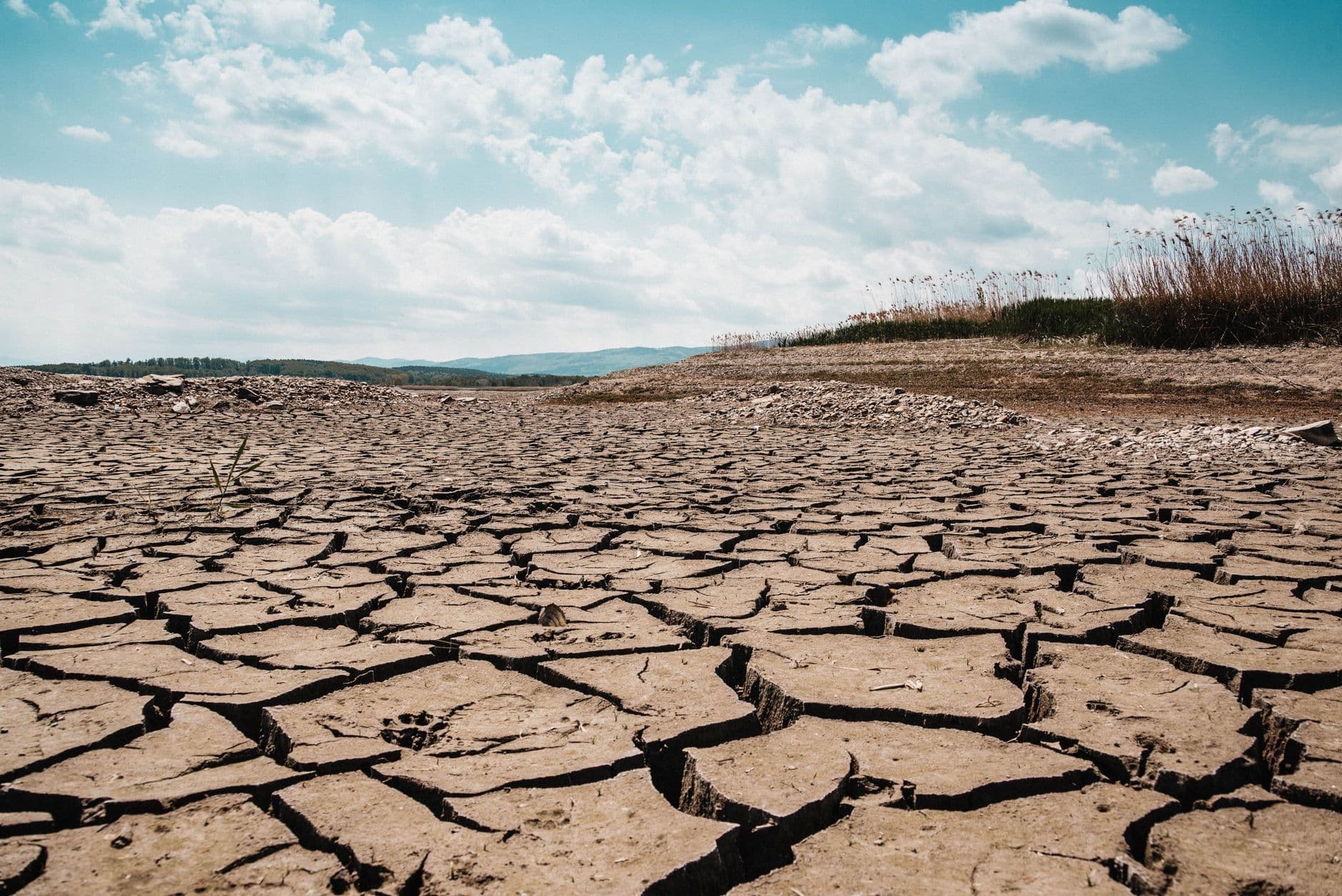
The numbers behind the drought are stark. Drought.gov says 151,131 people in Alamance County, or 100% of the population, are affected by drought. The county logged the 18th driest May on record over the past 132 years and the second driest January-through-May period on record, finishing 8.47 inches below normal.

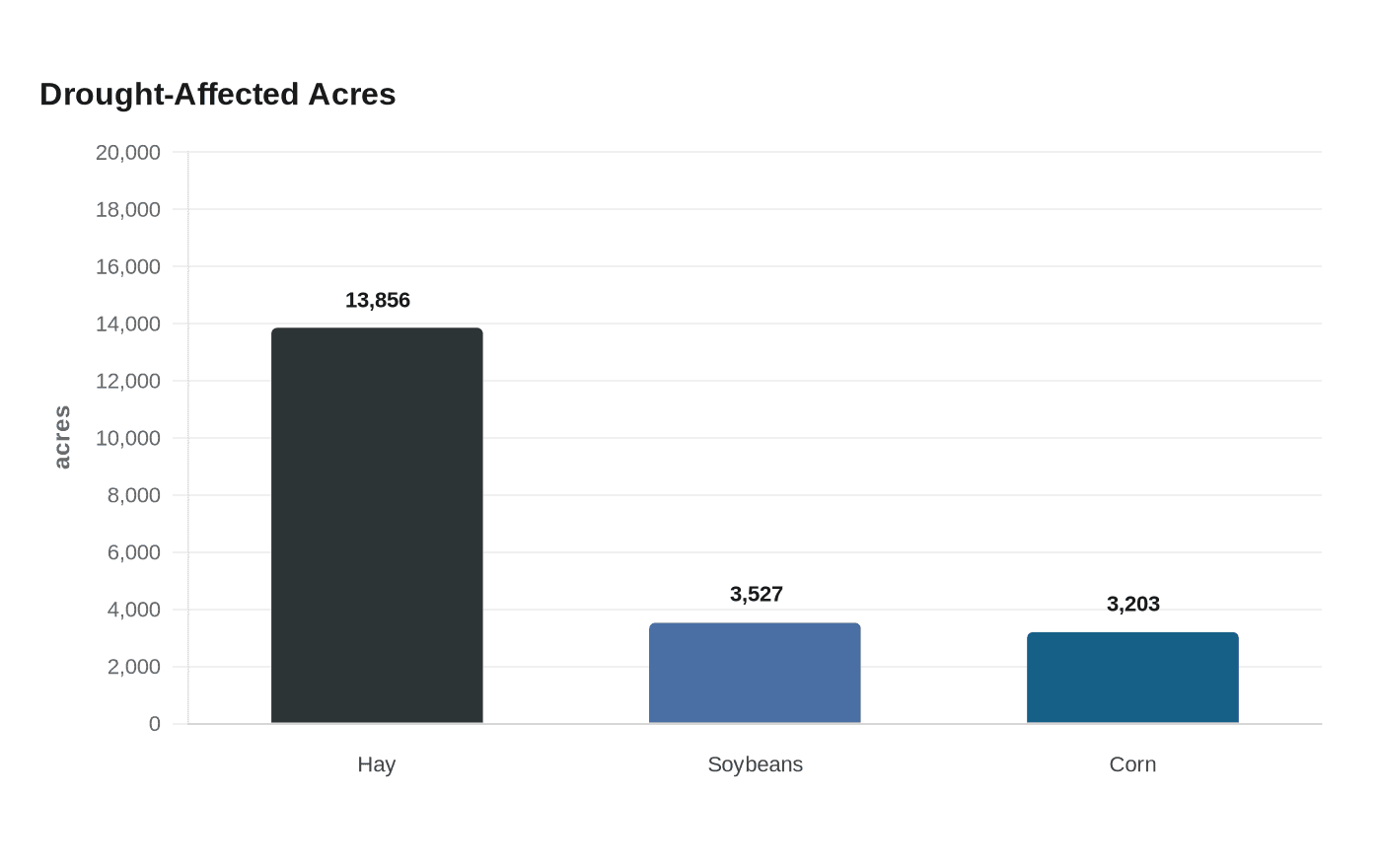
Agriculture is already in the crosshairs. Drought.gov estimates 13,856 acres of hay, 3,527 acres of soybeans and 3,203 acres of corn in Alamance County are in drought-affected areas, along with 8,233 cattle and 976 sheep. For farmers, municipal planners and water managers, the next step will depend on whether D4 conditions persist, and whether local systems have to move from conservation planning to rationing that residents will feel at the tap.
This article was produced by Prism’s automated news system from verified source data, official records, and press releases, then run through automated quality and moderation checks before publishing. The system is built and supervised by the people who set the standards it runs under. Read our full AI policy.
Did this article answer your question?