Landfill fight highlights Alamance County commissioners’ broad influence on daily life
The Phillippie landfill fight forced a 4-to-1 county vote and showed how much sway Alamance County commissioners have over land use, roads, taxes, and daily life.

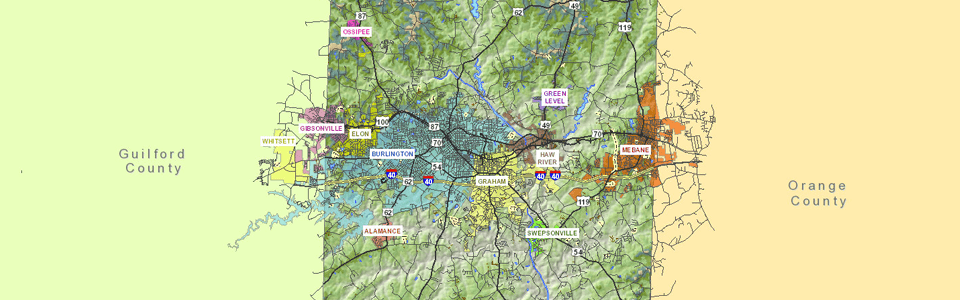
A 99-acre landfill proposal off 4115 Clapp Mill Road has already forced Alamance County commissioners to cast a split 4-to-1 vote, and it has put the board’s reach over daily life in plain view. From landfill traffic in Coble Township to school grants and health policy, the five commissioners decide far more than what happens in the meeting room.
The landfill fight that made the board impossible to ignore
The current flashpoint is the Phillippie landfill proposal, a land-clearing and inert debris landfill also described locally as a “stump dump,” in Coble Township near 4115 Clapp Mill Road. The site already had a state permit, but Alamance County still required its own “intent-to-construct” approval for heavy industrial development before the project could move ahead.
That county layer of control is what turned a landfill application into a broader test of local power. The Alamance County Planning Board voted 6-to-1 in March 2026 to recommend the permit request to commissioners, then county commissioners delayed a final decision in early April before approving the permit on April 21, 2026, by a 4-to-1 vote. The split showed that even when state regulators have acted, county officials can still shape whether a project actually takes root in a neighborhood.
Residents’ objections were not abstract. Planning board minutes show concerns about truck traffic, roadway classifications and public safety on local roads. Those are the kinds of details that affect whether a rural road feels passable, whether heavy vehicles will cut past homes and schools, and whether a neighborhood expects years of disruption or a new industrial use nearby.
Why five commissioners can shape so much of county life
The Alamance County Board of Commissioners is the county’s five-member governing body, and its members are elected at large to staggered four-year terms in partisan elections held in November of even-numbered years. The current board consists of Chair Kelly Allen, Vice Chair Steve Carter, Ed Priola, Sam Powell and Pamela Thompson. Allen was appointed in 2024 and is up for re-election in 2026.
That structure matters because the board does not just vote on isolated projects. County government materials say the county manager serves at the pleasure of the commissioners, which means the board influences both policy and county administration. In practical terms, commissioners help set the tone for how the county spends money, writes ordinances and responds to conflicts between landowners, developers, neighborhoods and county staff.
The landfill fight is a clear example of that reach, but it is not the only one. Commissioners also deal with education funding, health services, emergency response, and the rules that determine where certain kinds of development can happen. When voters see a commissioner race, they are not simply choosing a ceremonial figure. They are choosing the people who can steer the county’s biggest fights.
A board that residents can watch in real time
Commissioners have also made their work highly visible. County meetings have been videotaped and broadcast since April 2008, and they are now streamed live. That public record means residents can follow how their representatives handle controversial issues, whether the subject is a landfill in Coble Township, a budget choice or a policy change that affects a neighborhood.
The broadcast history matters because these votes are not hidden inside bureaucratic paperwork. They play out in public, and that visibility can intensify pressure on the board when residents believe a decision will shape traffic patterns, property values or the character of a road corridor. In a county like Alamance, where land use disputes often overlap with everyday concerns, the commissioners’ decisions are visible enough to become part of the local political conversation almost immediately.
Landfill rules are only one piece of the county’s power map
The Phillippie decision shows how county commissioners can act as the final local gatekeepers even after state approval. It also shows why zoning and ordinances matter so much in Alamance County: a permit can hinge on the county’s own development rules, not just state environmental review.
That same authority reaches beyond landfill debates. Recent commissioner actions have included approving Alamance-Burlington School System grant applications and considering a health department consolidation plan. Those decisions affect classroom support, public health administration and the county’s overall budget priorities, proving that the board’s footprint extends far beyond landfills and road fights.
The board’s agenda also reflects what voters expect it to handle. In October 2024, commissioner candidates publicly highlighted lowering taxes, funding education and increasing emergency medical services as priorities. Those are not niche concerns; they are the basic services and fiscal choices that shape whether families feel the county is affordable, responsive and stable.
What this says about daily life in Alamance County
For residents of Coble Township, the landfill dispute is immediate and local. For Graham, southern Alamance neighborhoods and communities near busy county roads, the stakes are broader: traffic, road safety, property use, county spending and whether local government leans toward conservation or development. The commissioners’ role reaches into those debates because they hold the authority to set county policy and ordinances, and to decide whether controversial projects can proceed.
That is why the Phillippie landfill vote mattered so much. It was not just a single permit decision. It was a reminder that in Alamance County, five elected commissioners can shape the rules, the roads and the daily friction points that define how people live where they live.
This article was produced by Prism’s automated news system from verified source data, official records, and press releases, then run through automated quality and moderation checks before publishing. The system is built and supervised by the people who set the standards it runs under. Read our full AI policy.
Did this article answer your question?