UNC School of Government Highlights Alamance County Court of Appeals Decisions
UNC School of Government’s NC Criminal Law blog on Feb. 23, 2026 summarized Court of Appeals opinions filed Feb. 18, 2026, flagging Alamance cases including State v. Alston and State v. Norman.
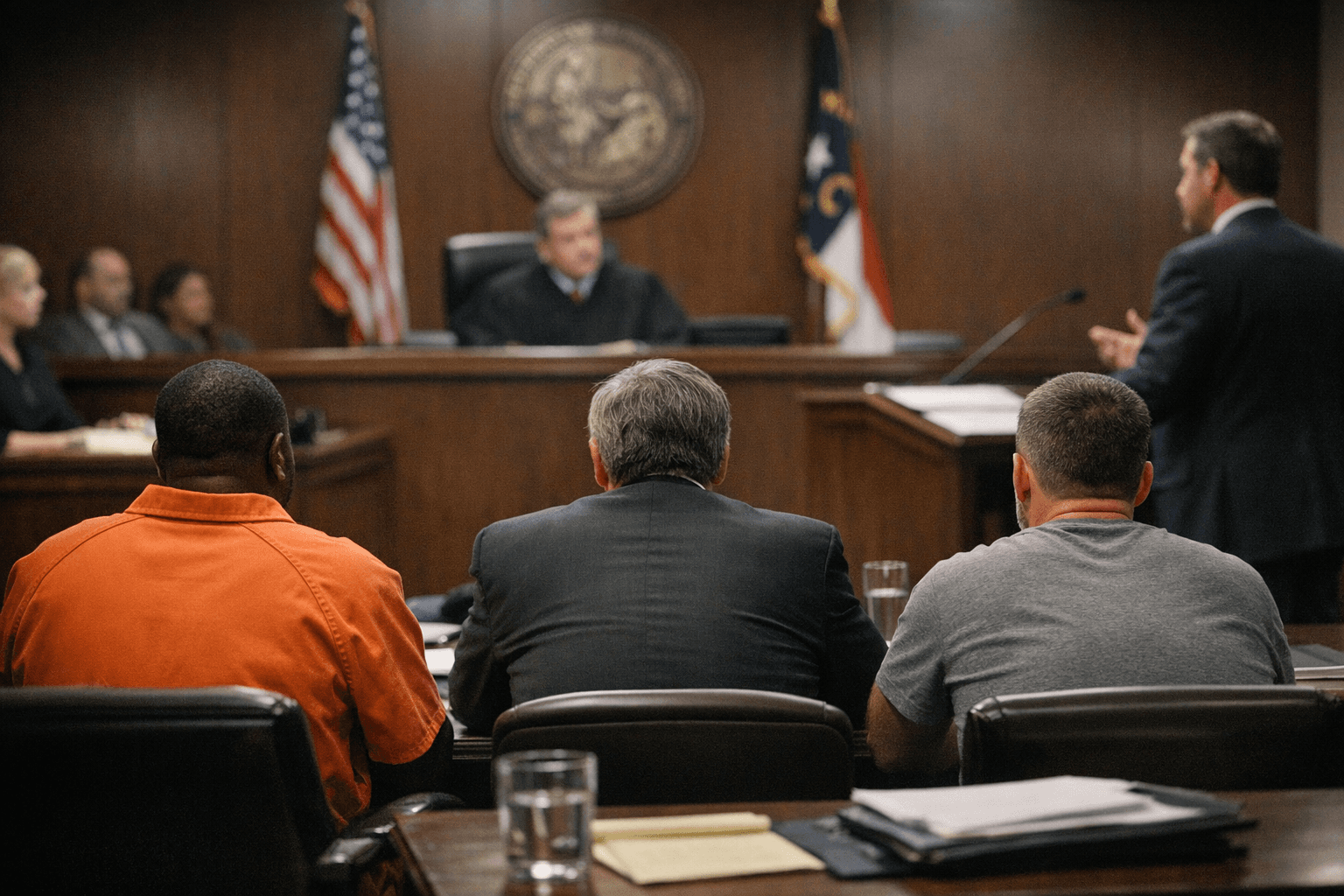
UNC School of Government’s NC Criminal Law blog published its regular summary on Feb. 23, 2026 of North Carolina Court of Appeals opinions issued Feb. 18, 2026 and identified several decisions tied to Alamance County. The post opens by saying, “Competent evidence supported the factual findings in the trial court’s denial of a motion to suppress; a defendant who pleads guilty has no right to appeal the denial of a motion in limine,” and notes that “Among the cases summarized were decisions originating in Alamance County that touch on criminal-procedure iss” (excerpt truncated).
One criminal matter originating in Alamance County appears as State v. Alston, No. COA25-291. The blog reports that the defendant “After nearly running an officer over outside a Burlington bar, the defendant was charged with impaired driving. She entered an Alford plea.” On appeal she challenged the denial of a pretrial motion to suppress and a motion in limine to exclude a toxicology report and other expert testimony. The Court of Appeals, the blog states, concluded “the trial court’s denial of the motion was supported by competent evidence of seven findings of fact indicating that the officer had probable cause to arrest.” Those findings included “the defendant’s bad driving, a strong odor of alcohol, and initial refusal to perform field sobriety testing.” The summary of the motion in limine cuts off in the blog: “As to the motion in limine, the appellate [...]” (excerpt truncated).

Another Alamance-originated opinion summarized is State v. Norman, COA22-812 (March 7, 2023), in which the appellate court reviewed convictions for human trafficking and sexual servitude. The blog recounts that “From 2015 to 2018, defendant operated a prostitution ring in the Alamance County area, operating at truck stops and using websites such as backpage.com to solicit customers.” It adds that “Eight to twelve women were involved in defendant’s prostitution ring, and paid him for drugs and hotel rooms that he provided, which were to be used for liaisons with paying customers,” and that one participant was the defendant’s ex-wife who “assisted him in doing whatever was needed to operate the prostitution ring.” The Court of Appeals “found no error” on a motion to dismiss for insufficient evidence, and applied the two-part due process inquiry for identification procedures cited in Rouse, asking whether identification was “impermissibly suggestive,” and if so whether there was “a substantial likelihood of irreparable misidentification” after a five-factor analysis. The blog’s quotation of the court’s factual finding is truncated: “’[the informant] seeing the photo of Defendant in the file during the trial preparation meeting was impermissibly” (excerpt truncated).
The blog’s digest also includes the appellate filing COA23-262 in NAACP v. Alamance County, a civil appeal concerning a Confederate monument “located in front of the Alamance County courthouse in Graham” that plaintiffs including the North Carolina State Conference of the NAACP, NAACP Alamance County Branch #5368, Down Home NC, and Engage Alamance sued on March 30, 2021. The caption lists defendants including Alamance County and commissioners Steve Carter, William Lashley, Pamela T. Thompson, John Paisley, and Craig Turner, Jr.; the Court of Appeals opinion was filed March 19, 2024 and identifies DILLON as Chief Judge. The printed excerpt ends mid-sentence: “Consequently, they” (excerpt truncated).
The UNC School of Government summaries underscore an active appellate docket that touches local law enforcement practices in Burlington, trafficking prosecutions tied to truck-stop and online operations in Alamance County from 2015 to 2018, and a high-profile municipal controversy over a Confederate monument in front of the courthouse in Graham. The state’s appellate portal lists over “36,329 Appellate Court Opinions,” and the COA docket numbers above indicate the specific appeals residents, attorneys, and county officials can track for full rulings and instructions affecting local courtroom procedure and county governance.
This article was produced by Prism’s automated news system from verified source data, official records, and press releases, then run through automated quality and moderation checks before publishing. The system is built and supervised by the people who set the standards it runs under. Read our full AI policy.
Did this article answer your question?