Albany County Faces Record March Warmth, Temperatures 25-35 Degrees Above Average
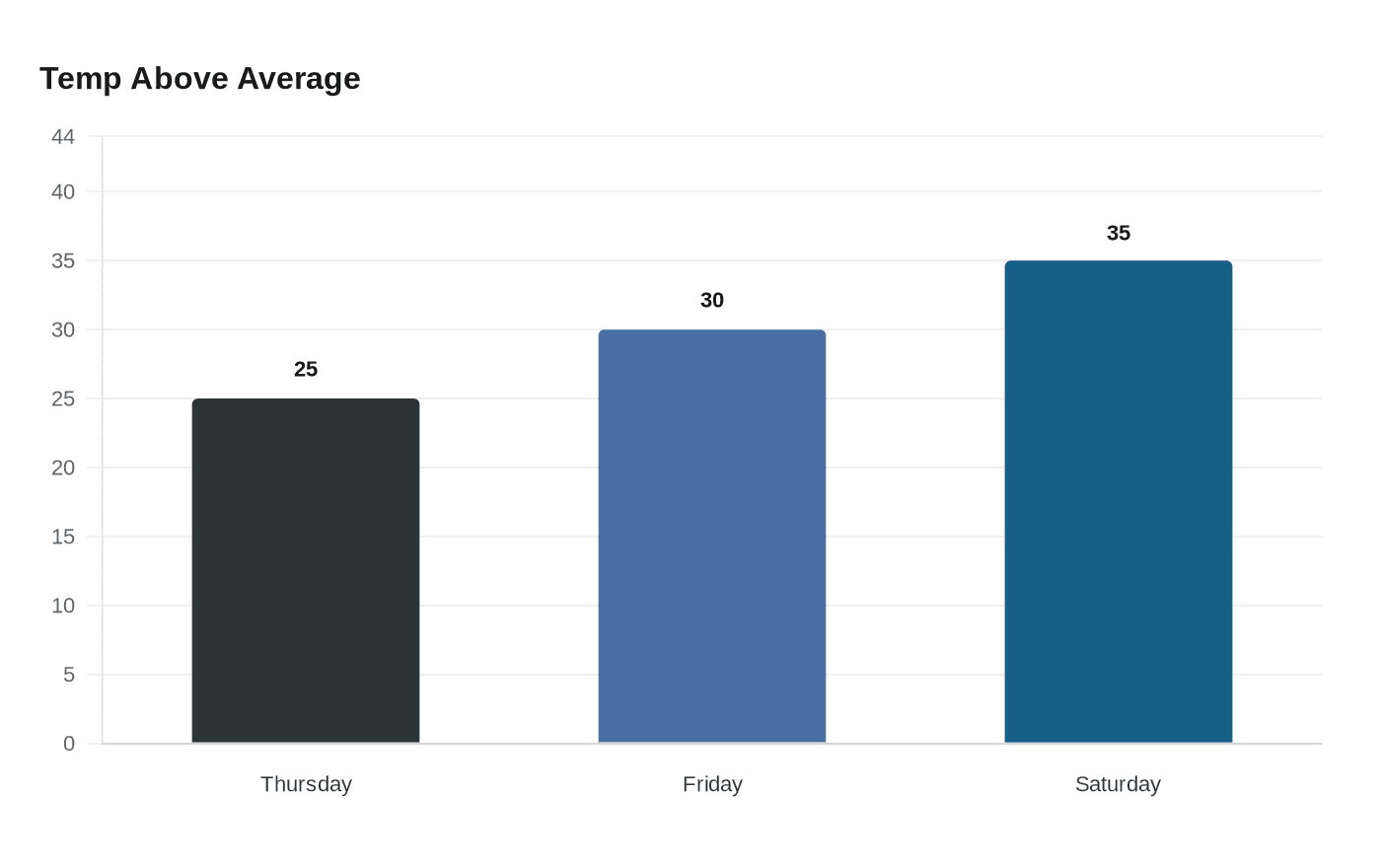
Albany County could break March temperature records this week, with NWS Cheyenne forecasting highs 25-35°F above average through Saturday.
Laramie Valley and Albany County are on track to shatter March temperature records this week as NWS Cheyenne forecast highs running 25 to 35 degrees above average Thursday through Saturday, part of a sweeping early spring heat event already pushing temperatures to historic levels across the Southwest.
The local forecast lands within a broader pattern the National Weather Service described as "an unusual early Spring heat wave" continuing "much above-normal temperatures over the Southwest U.S. through early next week," with the agency warning that "many locations are likely to set records for the highest-ever March temperature." NWS Cheyenne specifically flagged the possibility of "daily and potential monthly records in Laramie Valley and Albany County areas."

The warmth carries a secondary hazard. The National Weather Service warned that "periods of critical fire weather will persist from the central Rockies to the central Plains through Saturday as gusty winds and low relative humidity continue," a combination that significantly elevates ignition and spread risk across the region at a time when landscapes are transitioning out of winter.
The heat event arrives against a backdrop of a notable March across Wyoming. The Western and Central Wyoming Weather Forecast Office documented in its March Monthly Climate Summary that Casper recorded its wettest and snowiest March on record, logging 50.9 inches of total snowfall for the month. The office noted the liquid precipitation value for Casper carries an asterisk: "The liquid value is estimated due to some equipment issues at the airport." Precipitation totals were not uniform across the region; the summary noted that while most locations ran above average on the wet side, "a smattering of locations did see slightly below average liquid values for the month."
That contrast, record snow in Casper alongside a heat wave bearing down on the Laramie Valley, illustrates the volatility that can define Wyoming's late-winter and early-spring climate. Daily climate records and additional site-specific data for locations across the region are available through the National Weather Service Climate Page, accessible via the Western and Central Wyoming Weather Forecast Office.
This article was produced by Prism’s automated news system from verified source data, official records, and press releases, then run through automated quality and moderation checks before publishing. The system is built and supervised by the people who set the standards it runs under. Read our full AI policy.
Did this article answer your question?