Albany County towns, from Laramie hub to Centennial gateway
Albany County works as a network, with Laramie at the center and places like Centennial, Rock River, Woods Landing-Jelm and Buford filling very different roles.

Albany County reads less like one city and more like a countywide system built around rail lines, mountain roads and a university town. Laramie is the center of gravity, but the county also stretches into Centennial, Rock River, Bosler, Woods Landing-Jelm, Tie Siding and WyColo, with the 2020 census putting the county at 38,880 people. That spread matters because Albany County was created on Dec. 16, 1868, before Wyoming was even a territory, and its earliest shape came from the Union Pacific Railroad, the Overland Stage Line and, later, the University of Wyoming.
Laramie sets the pace
Laramie is the county seat and the largest community, and it is still the place where Albany County’s institutions concentrate. When the University of Wyoming opened there in 1886, it added a lasting anchor to a city that had already been chosen for county government, and the student body pushes Laramie’s population to about 32,000. In practical terms, that makes Laramie the place where county business, campus life and the county’s main service economy meet.
The city’s size also explains why so many outlying places are read in relation to it. For people living in Rock River, Centennial, Woods Landing-Jelm or the smaller highway communities, Laramie is the hub they move through for work, errands and official business, while the rest of the county provides the landscape, housing and identity that keep Albany County from feeling like a one-city county.
Centennial at the mountain edge
Centennial sits at the bottom of the Snowy Range Scenic Byway and has about 300 residents, which gives it a very different scale from Laramie. It was originally formed to support the railroad and timber industries, and that origin still shapes how the town feels: small, high-country and tied to the mountain corridor rather than to the university. The town lies in Centennial Valley between Sheep Mountain and the Snowy Range, so it functions as both a community and a threshold to the mountains.
Centennial also carries a long historic thread through the Mountain View Hotel, which has been tied to mining, railroad and early tourism for more than a century. The town is also a starting point for reaching the Snowy Range Mountains and the Nici Museum, which makes it one of the county’s clearest links between local history and mountain access. For residents, that means Centennial is not just a scenic stop, but a place where the county’s railroad past and recreation present still overlap.
The forest, river and high-country outposts
Woods Landing-Jelm shows another side of Albany County, one that is defined by forest edge, river access and elevation instead of a town core. It sits at the base of Medicine Bow National Forest and Jelm Mountain, and nearby fishing opportunities on the Laramie River help explain why the area matters to anglers and day visitors as much as to people passing through. The fishing access points near Jelm Mountain sit just up Highway 10 from Woods Landing Resort, so the road itself is part of the story.
WyColo pushes that high-country identity even farther. Located at nearly 9,000 feet in southern Albany County near the Colorado state line, it stands apart from the lower, more populated corridor around Laramie and the plains. Bosler and Tie Siding round out the county’s smaller communities, reminding residents that Albany County is built from more than the places with the most traffic or the most names on a sign.
The county’s land use still reflects that mix. Even with a university city at its center, Albany County remains good for livestock grazing, so the rural economy has not disappeared behind the highway and the campus. That matters because the county’s identity is not split between old and new life, but stacked: ranch land, forest access, rail history and a growing service economy all occupy the same map.
Rock River and the plains side of Albany County
Rock River brings the county back to the open plains. It is a rural plains town founded in 1898 when the Union Pacific Railroad moved west of Rock Creek Station, and it has roughly 250 residents. The town also traces its place in railroad history to the era of the notorious temporary railroad camps known as “Hell on Wheels,” which helps explain why Rock River feels so different from both Laramie and Centennial.
That contrast matters for anyone trying to understand Albany County as a whole. Rock River is not a mountain gateway or a university suburb; it is a plains town shaped by rail relocation, ranch country and the long stretch of Wyoming highway that runs east and west through the county.
Buford and the Sherman Hill corridor
Buford is the county’s most famous roadside outlier. It sits along Interstate 80 between Cheyenne and Laramie, and it was originally located along the railroad lines on the approach to Sherman Hill Summit and the Ames Monument. The town became a ghost town after its lone resident left in 2012, turning what was once a lived-in stop into a marker of how quickly settlement patterns can change along the interstate.
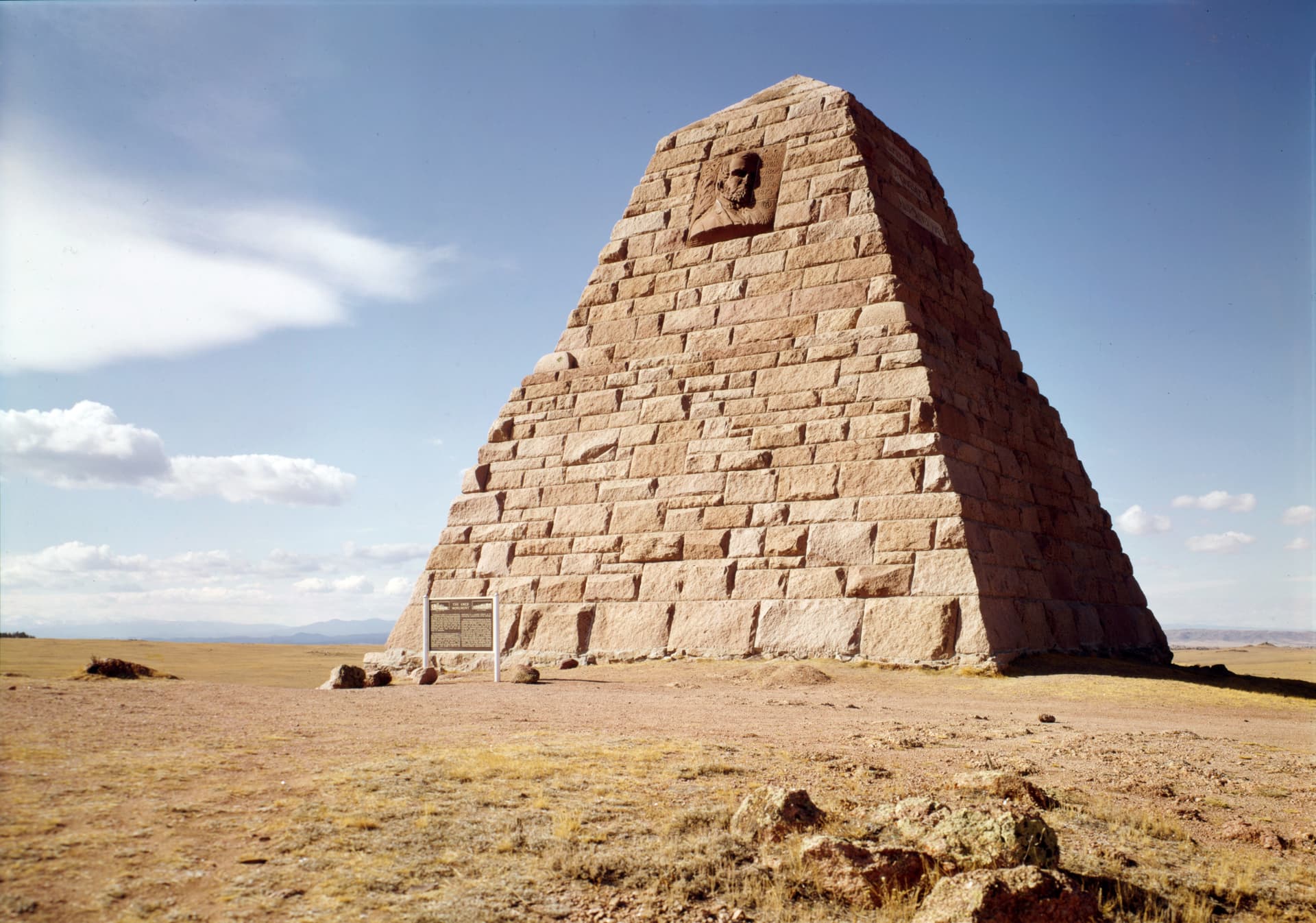
The Ames Monument gives that corridor additional weight. The 60-foot granite pyramid was built in 1881 to honor Union Pacific leaders Oliver Ames and Oakes Ames, even though the brothers were later tied to a railroad-funds scandal. Put together, Buford, Sherman Hill and the monument show how Albany County’s roadside geography still carries some of its deepest railroad history.
Albany County works best when read as a linked system: Laramie handles the county’s center of gravity, Centennial opens onto the Snowy Range, Woods Landing-Jelm and WyColo connect high-country land to river and forest access, and Rock River and Buford keep the county tied to plains and interstate travel. That map helps explain why one county can hold a university city, a mountain gateway, a ranching landscape and a ghost town all at once.
This article was produced by Prism’s automated news system from verified source data, official records, and press releases, then run through automated quality and moderation checks before publishing. The system is built and supervised by the people who set the standards it runs under. Read our full AI policy.
Know something we missed? Have a correction or additional information?
Submit a Tip