Ames Monument marks Union Pacific's highest point in Albany County
Ames Monument marks Union Pacific’s high point in Albany County, where a rail decision shifted freight, settlement, and access, and left Sherman behind.
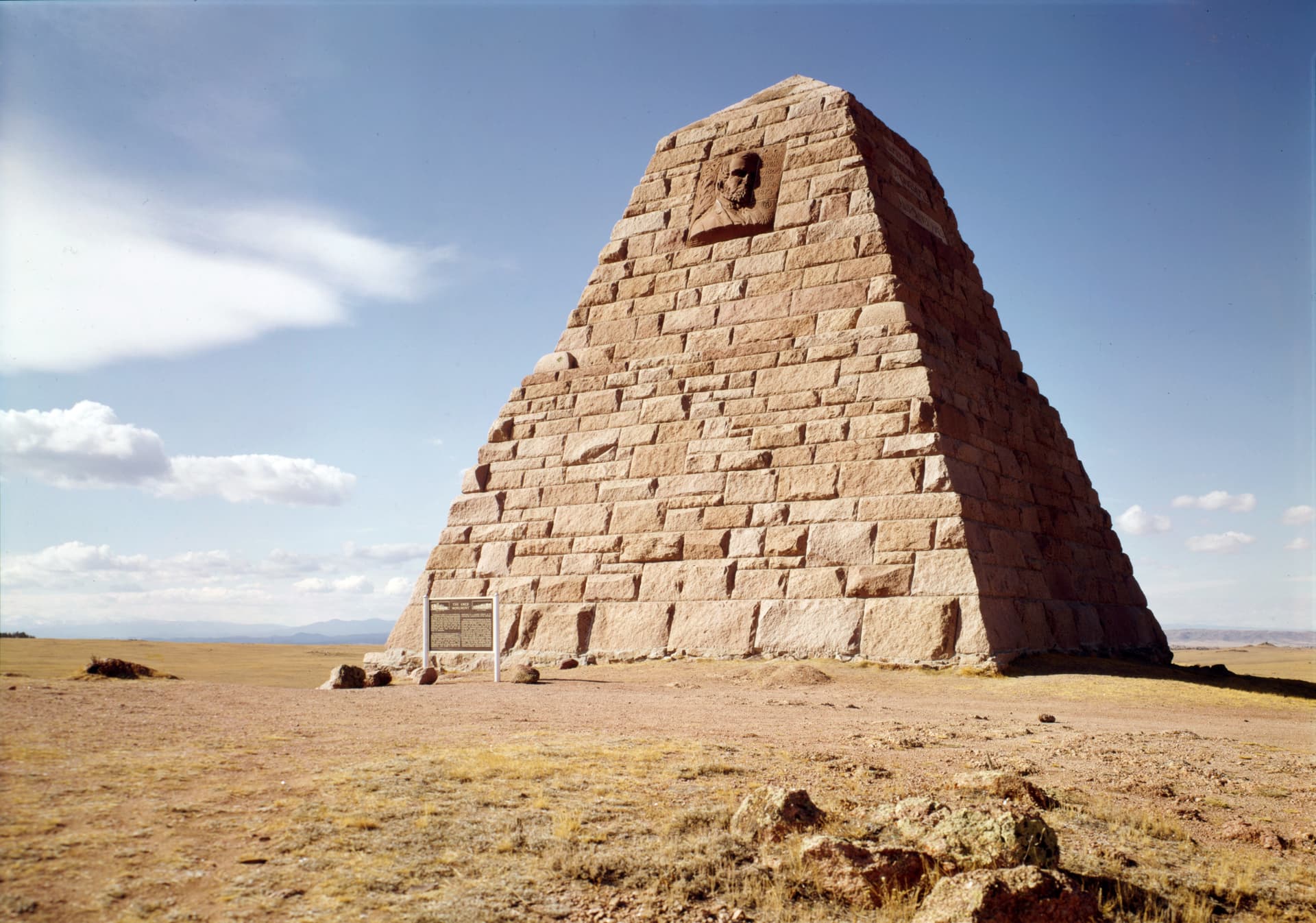
Ames Monument marks a place where railroad money, engineering, and geography all converged on a windswept plain east of Laramie. The 60-foot granite pyramid stands at 8,247 feet, the highest point on the original Union Pacific route, and it still makes clear how one rail company shaped Albany County’s economic map.
Why this spot mattered
The monument sits about 20 miles east of Laramie, south of Interstate 80 at the Vedauwoo exit, on ground the National Park Service describes as high, exposed, and sparsely vegetated. That location was not chosen for scenery. It sat on the original Sherman Hill railroad alignment, where elevation, grade, and freight movement determined which places gained traffic, labor, and investment.
Union Pacific later moved the tracks about three miles south in 1901. That change did more than alter a rail line. It shifted the county’s transportation spine, moved the flow of freight, and changed which places remained relevant once the railroad no longer climbed past the monument. The old railroad town of Sherman, which grew near the site after the original alignment, eventually became a ghost town after the tracks moved.
What remains on the ground today is a lesson in how infrastructure makes winners and losers. The monument still sits beside the old rail geography, while Interstate 80 now carries the region’s through traffic past the same high plain. The railroad is gone from the summit, but the site still shows where the line once controlled access across this part of Albany County.
A memorial built from railroad wealth
Ames Monument was completed in 1882, and historical accounts place its cost at $64,000 to $65,000. It honors Oakes Ames and Oliver Ames, the financiers and politicians who helped Union Pacific finance its portion of the transcontinental railroad at Abraham Lincoln’s request, when only 12 miles of track had been completed. In that sense, the monument is not just a memorial to two men. It is a fixed record of the political bargaining and private capital that made a national railroad possible.
The Union Pacific Railroad built the structure itself, and the decision to place such a large memorial on open ground near the original summit tells its own story. The railroad was not only moving freight and passengers. It was also choosing where to concentrate power, where to build access, and where to leave a permanent mark on the landscape.
The design, materials, and labor behind it
Henry Hobson Richardson designed the monument, and it was his only commission west of St. Louis. Augustus Saint-Gaudens created the bas-relief sculptures of the Ames brothers, giving the monument a level of artistic ambition that matched its industrial symbolism. The National Register nomination identifies Norcross Brothers of Worcester, Massachusetts, as the builder.
The monument was built from native granite quarried about one-half mile west of the site and transported by horse and derrick. Those details matter because they show the physical effort behind a structure that is easy to see from a distance but hard to appreciate up close. A 60-foot pyramid in this location was not a decorative afterthought; it was a heavy piece of construction assembled in a place defined by wind, elevation, and limited vegetation.
The result is one of Albany County’s most distinctive man-made forms. It is at once sculpture, engineering project, and corporate statement, tied directly to the railroad era that determined how people and goods moved across Wyoming.
What Albany County still sees now
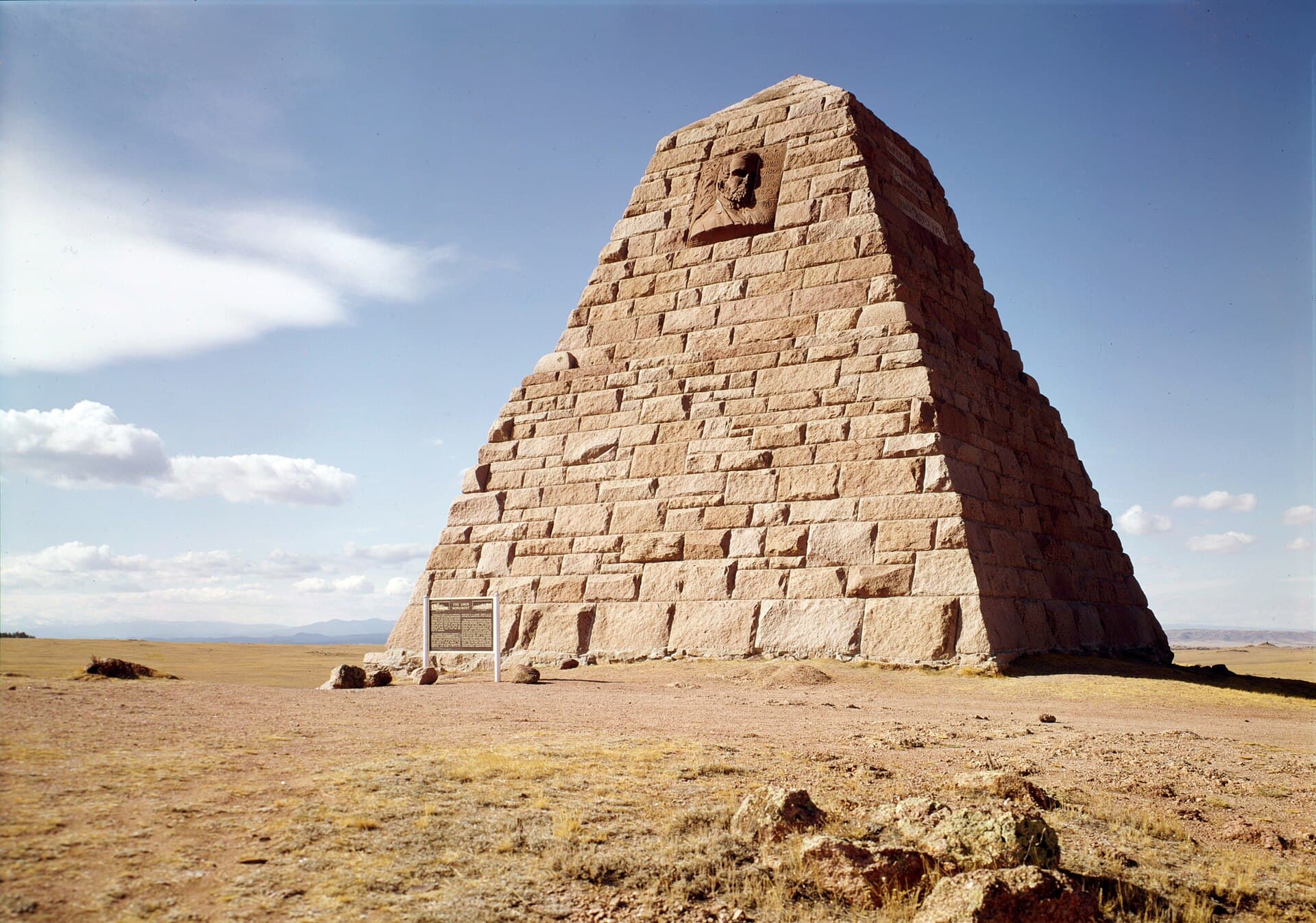
The monument is listed on the National Register of Historic Places and maintained as an Ames Monument State Historic Site. Union Pacific donated it to the State of Wyoming in 1983, which placed the site under public stewardship rather than private control. That change preserved a piece of railroad history that still anchors the county’s story of transportation and settlement.
State parks officials note that time and vandalism have damaged some of the bas-relief portrait details. That makes the site useful as a public-history stop, but also as evidence of how vulnerable outdoor monuments can be when they sit in exposed country rather than behind museum walls. The weather that helped define the location still shapes what visitors can see today.
The surrounding landscape also keeps the railroad story readable. From the monument, the old summit setting, the relocated railroad geography, and the highway corridor all point to the same conclusion: this was a place where movement was contested and re-routed. Sherman Hill once carried the original line over the top. After 1901, the line shifted south, and the landscape around the old route lost its railroad center of gravity.
For Albany County, Ames Monument is more than a landmark on a back road. It marks the point where Union Pacific’s earliest route, a transcontinental financing deal, and a high-elevation freight crossing all came together, then changed course. The monument stays in place because the railroad did not.
This article was produced by Prism’s automated news system from verified source data, official records, and press releases, then run through automated quality and moderation checks before publishing. The system is built and supervised by the people who set the standards it runs under. Read our full AI policy.
Know something we missed? Have a correction or additional information?
Submit a Tip