Albany County's LARC Center Connects Residents to Emergency Services Around the Clock
Albany County has exactly one 911 answering point for all of Laramie and the county's 4,300 square miles - and most residents don't know its non-emergency number.
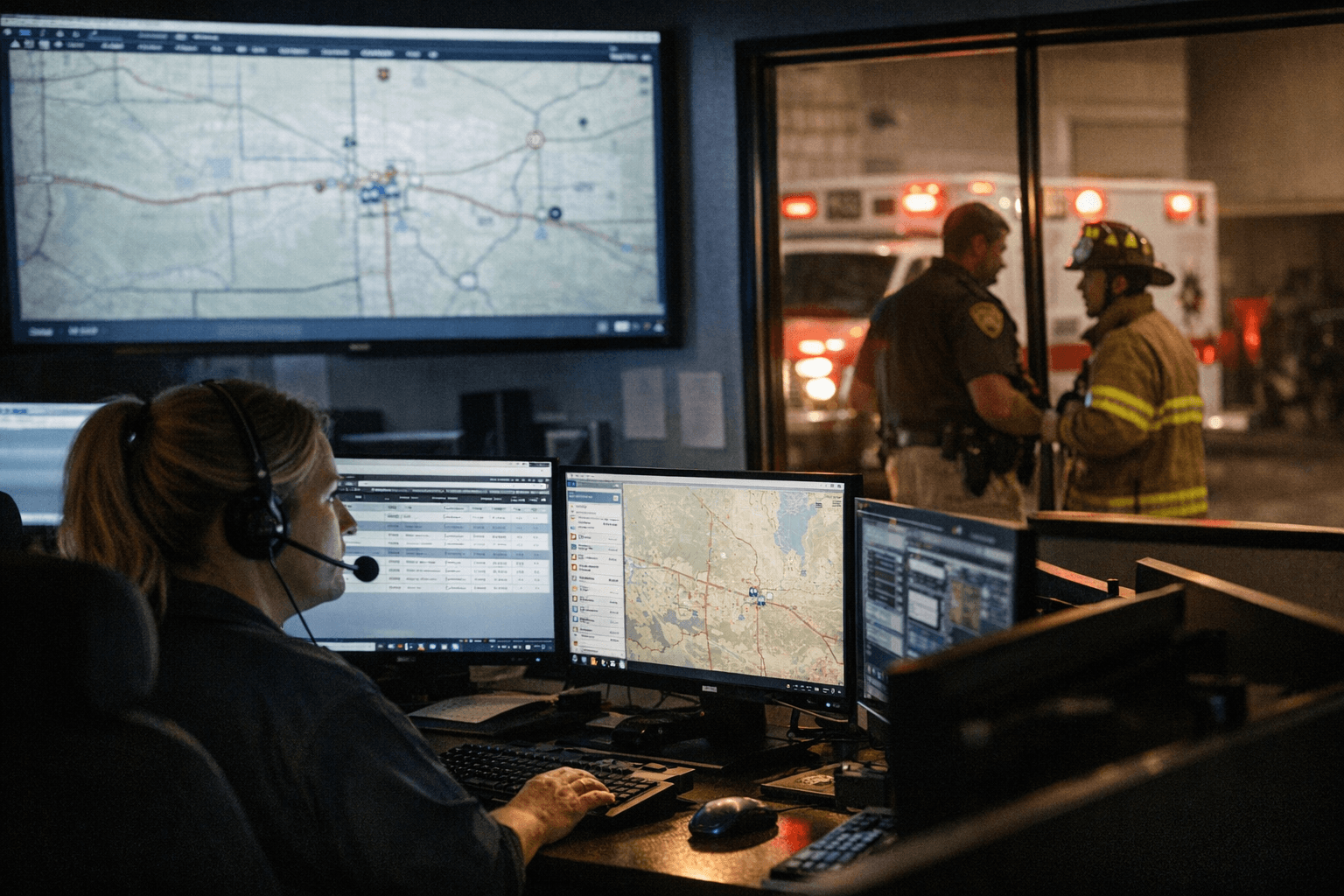
One building, every emergency in Albany County
Shots fired near the University of Wyoming campus. A crash with injuries on Snowy Range Road. A welfare check needed on Grand Avenue at 2 a.m. Every one of those calls routes to the same address: 420 E. Ivinson Ave., where the Laramie/Albany County Records and Communications Center, known as LARC, operates as the county's sole public safety answering point, 24 hours a day, seven days a week.
That last detail matters more than most people realize. LARC is not one of several dispatch centers you might reach depending on your address or your carrier; it is the only public safety answering point (PSAP) in Albany County. A team of up to 14 emergency communications operators and 2 supervisors handles every 9-1-1 call placed anywhere in the county, routing help to the Laramie Police Department, the Albany County Sheriff's Office, and the Laramie Fire Department, covering both fire suppression and emergency medical services. Campus emergencies are included: medical and fire calls originating on the University of Wyoming campus are also taken and dispatched by LARC.
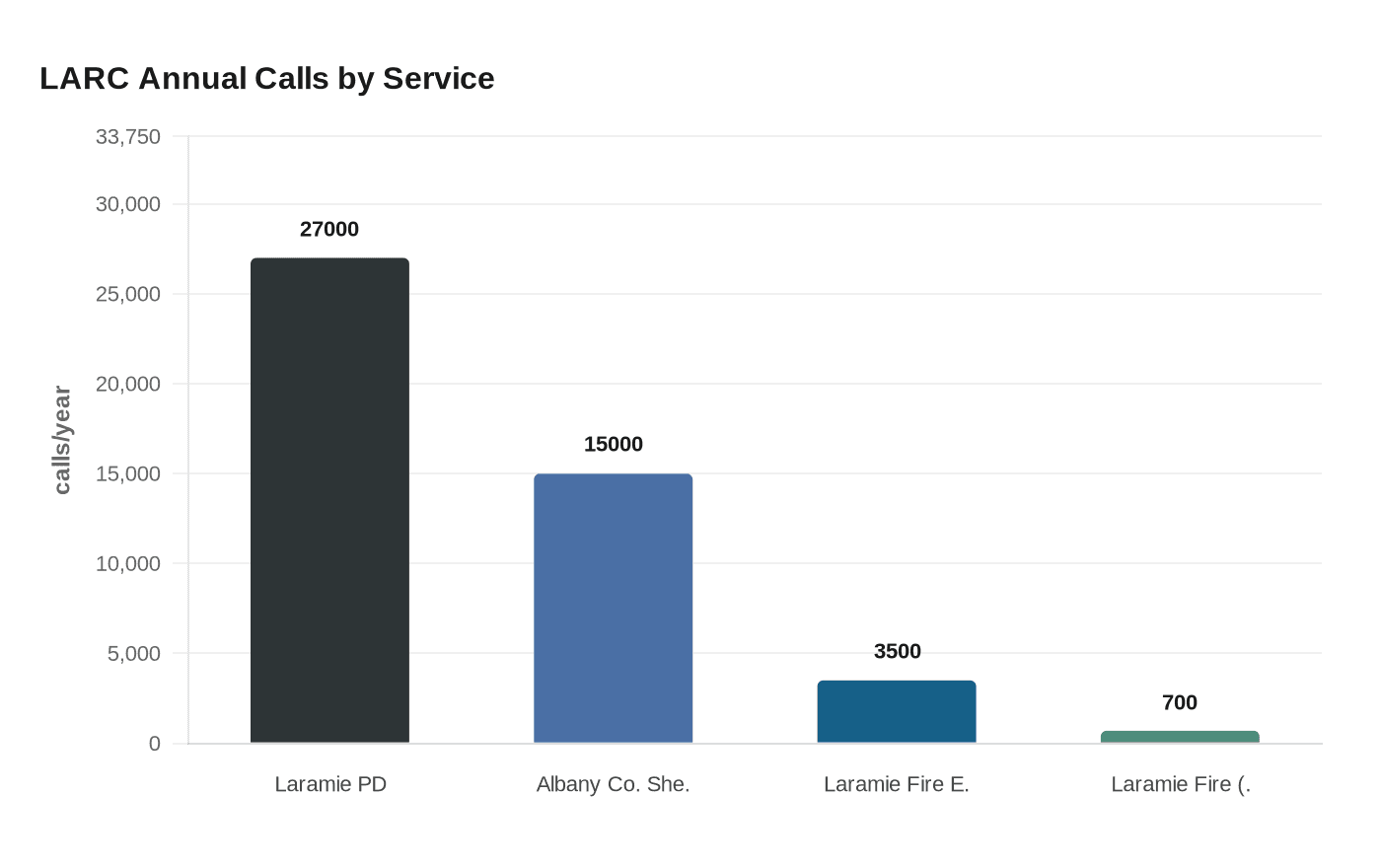
The call volume is striking. Each year, on average, LARC handles roughly 27,000 calls for service for the Laramie Police Department, 15,000 for the Albany County Sheriff's Office, 3,500 EMS calls for Laramie Fire, and 700 fire calls, totaling more than 46,000 dispatches annually through a single center.
When to call 9-1-1 and when not to
The clearest guidance is also the most overlooked: 9-1-1 is for situations that require an immediate, life-saving response. Active violence, a serious crash with injuries on I-80 or US-30, a structure fire, a person who is unconscious or not breathing, a missing child who may be in danger - these are 9-1-1 calls. If you are unsure whether your situation qualifies, call 9-1-1. Dispatchers are trained to triage and redirect if needed.
Everything else belongs on the non-emergency line: 307-721-2526. Minor fender-benders without injuries, noise complaints, follow-up questions about an incident, a suspicious but non-threatening situation you want documented, or a report you need to file after the fact. The non-emergency line is staffed through the same LARC dispatch center and reaches the same professional operators, but using it for appropriate calls preserves 9-1-1 bandwidth for the seconds-count situations that line is designed to handle.
A common and costly mistake: calling a precinct front desk or the University of Wyoming Police directly when a 9-1-1 response is needed. For any genuine emergency, dial 9-1-1 regardless of whether you are on campus, in the city, or in the unincorporated county. LARC handles the routing.
What to say when you call
The first 30 seconds of a 9-1-1 call are the most operationally critical. LARC operators need your location before anything else. On a landline, your address transmits automatically; on a cell phone, location data can be imprecise or delayed by several hundred feet, especially near building clusters on campus or in downtown Laramie. Do not wait for the dispatcher to ask. Lead with a street address, an intersection, or a reliable landmark. "I'm on Snowy Range Road just past mile marker 8" is more actionable than "I'm west of town."
After location, be ready to give:
- The nature of the emergency (crash, fire, medical, assault, etc.)
- How many people are involved or injured
- Whether weapons are present, if applicable
- Your callback number in case the call drops
For non-emergency calls, have the incident date and time, the location, vehicle descriptions or license plate numbers if relevant, and the names of any involved parties if known. The more specific the information, the faster LARC can route and document the call.
Text-to-911: when to use it and when not to
LARC has implemented Text-to-911 as a supplemental service, but it is not a substitute for a voice call. The technology is specifically designed for callers who are deaf, hard of hearing, or speech impaired, and for situations where speaking aloud could put you in danger, such as an active intruder scenario where silence may protect you. If you can make a voice call safely, do so; voice calls allow dispatchers to gather information faster and detect ambient cues. The rule used by dispatch trainers nationwide applies here: call if you can, text if you can't.
Spam calls, scams, and protecting dispatcher capacity
Dispatch centers nationwide lose significant operator time to nuisance and fraudulent calls. Laramie has addressed this directly by adding a phone-tree screening system to the non-emergency line, routing callers and filtering automated spam before calls reach a live dispatcher. The goal is to protect response capacity for legitimate service requests and reduce wait times for callers who genuinely need assistance.
Separately, phone scams impersonating law enforcement have been reported in the region. If you receive an unsolicited call from someone claiming to be a detective or officer and asking for money or personal financial information, hang up. Verify by calling LARC's published non-emergency number, 307-721-2526, or the Albany County Sheriff's Office directly at 307-755-3520. Legitimate law enforcement will never demand payment over an unsolicited phone call.
Requesting records through LARC
LARC's records division, reachable at 307-721-5325, is responsible for collecting, maintaining, and distributing police reports and related public safety records for agencies operating in the county. The division operates under Wyoming's Public Records laws, which govern what can be released and to whom. Routine requests, such as copies of incident or accident reports, can often be submitted through an online form on the City of Laramie's website. More complex or sensitive requests may require a written submission to the records division or the relevant agency. For Albany County Sheriff's Office records, check the Albany County government website for current forms and procedures.
Quick reference: numbers and what LARC can and cannot do
| Situation | Contact |
|---|---|
| Life-threatening emergency | 9-1-1 |
| Non-emergency police dispatch | 307-721-2526 |
| Albany County Sheriff's Office (admin) | 307-755-3520 |
| LARC Records Division | 307-721-5325 |
| Physical address | 420 E. Ivinson Ave., Laramie |
LARC can: dispatch police, fire, and EMS countywide 24/7; coordinate UW campus emergency response; provide certified pre-arrival medical instructions; receive Text-to-911 messages; and process public records requests.
LARC cannot: resolve civil disputes or administrative matters, serve as a substitute for legal processes, or function as a general-purpose information line.
For a county stretching 4,300 square miles from Laramie's city grid to the rural reaches near the Colorado border, those 14 dispatchers represent a resource most residents will need at some point. Knowing the right number to dial before an emergency happens is the one preparation that costs nothing and could matter enormously.
This article was produced by Prism’s automated news system from verified source data, official records, and press releases, then run through automated quality and moderation checks before publishing. The system is built and supervised by the people who set the standards it runs under. Read our full AI policy.
Did this article answer your question?
