Forest Service Begins Aerial Herbicide Spraying on 2,300 Acres at Pole Mountain
Helicopters began spraying 2,300 acres at Pole Mountain on April 10 to suppress cheatgrass, which accelerates wildfire spread near Laramie's most-used trails.
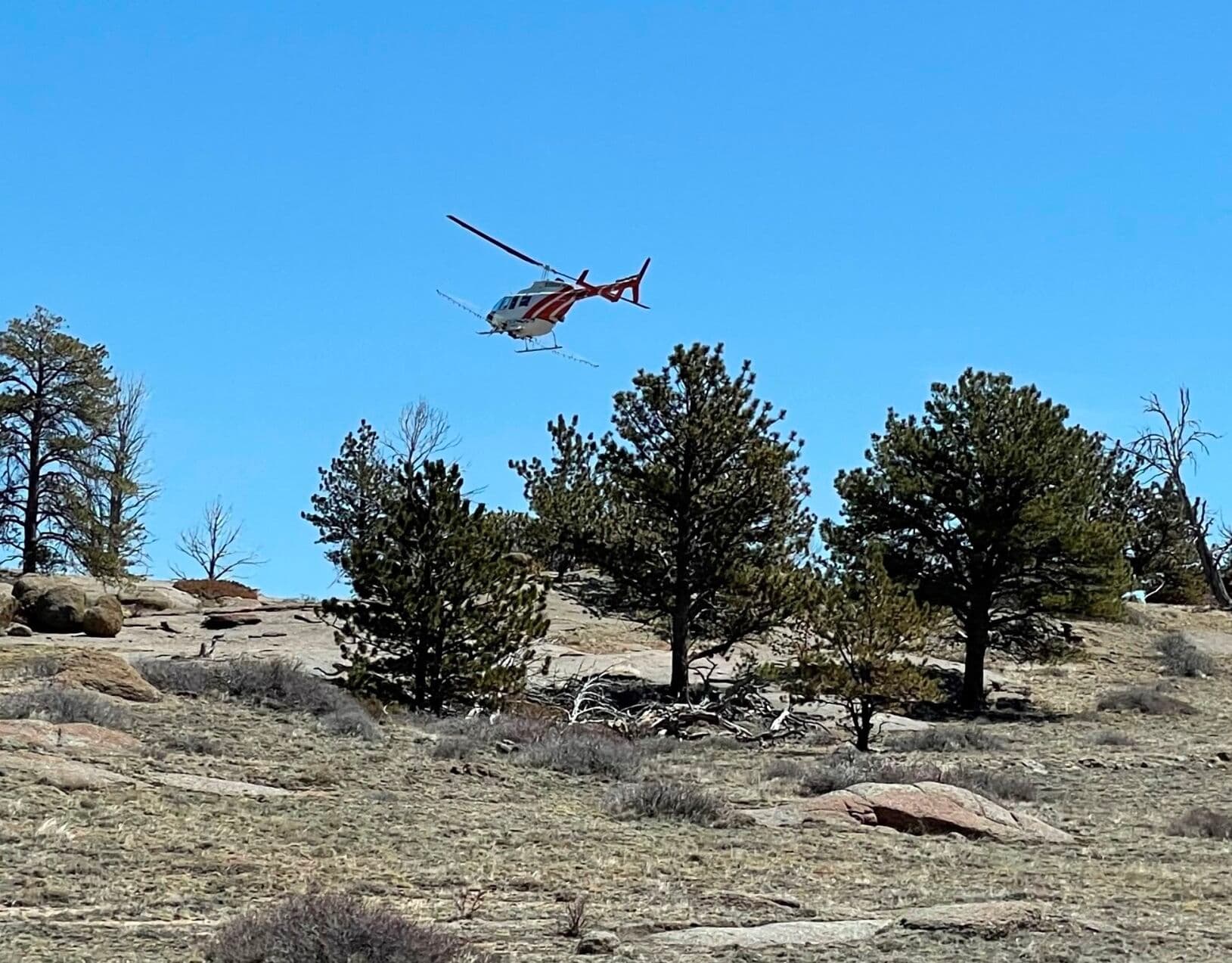
A helicopter began dispensing the herbicide Rejuvra across up to 2,300 acres of Pole Mountain on April 10, targeting cheatgrass, the invasive annual grass that burns faster and more continuously than native vegetation and has reshaped wildfire behavior across the American West.
The Medicine Bow Ranger District launched the aerial campaign as part of a multi-year effort to reclaim Pole Mountain from cheatgrass monocultures that crowd out native plants and create an unbroken mat of dry fuel by early summer. Weather permitting, helicopter operations will continue through April 20.
Anyone planning to hike, ride horses, or walk dogs on the Pole Mountain unit before April 20 should verify conditions before heading out. The Forest Service advised visitors to avoid active treatment areas, though specific avoidance zones can shift day to day depending on the weather windows the flight crew needs for safe, accurate application.
Cheatgrass completes its life cycle weeks ahead of native grasses, drying out in June and July just as fire season accelerates. Its dense, continuous growth connects patches of rangeland and forest in ways that native bunchgrasses do not, allowing fire to travel farther and faster. For the neighborhoods and recreation corridors adjacent to Pole Mountain, that translates directly to elevated risk on red-flag days.
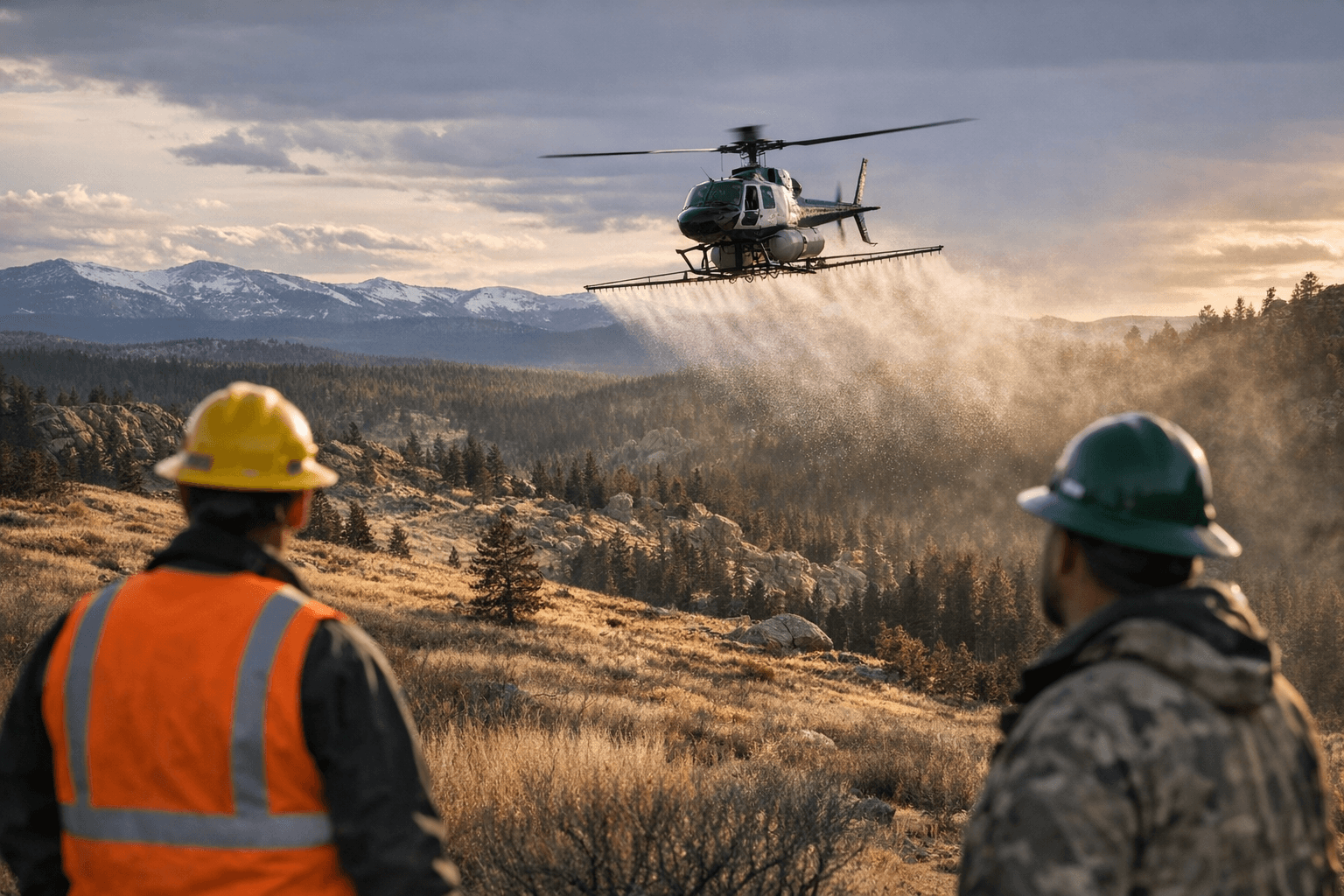
Rejuvra works as a pre-emergent, targeting cheatgrass seedlings before they establish. The Pole Mountain unit has received multiple seasons of treatment; this season's 2,300-acre application continues a landscape-level restoration strategy aimed at preventing full conversion to cheatgrass monoculture.
Residents with questions about treatment timing, mapped spray areas, or exposure and drift concerns can contact Jackie Roaque at the Laramie Ranger District at 307-745-2340. That number is the right call for horse owners and dog walkers who want to confirm whether a specific trail corridor falls within or adjacent to the spray zone before operations wrap around April 20.
Follow-up restoration work, including reseeding with native species, typically follows herbicide treatment to prevent cheatgrass from re-establishing in treated areas.
This article was produced by Prism’s automated news system from verified source data, official records, and press releases, then run through automated quality and moderation checks before publishing. The system is built and supervised by the people who set the standards it runs under. Read our full AI policy.
Did this article answer your question?
