Ivinson Mansion Preserves Albany County History Through Exhibits and Community Programs
Built in 1892 and rescued from demolition by a grassroots fundraising drive, the Ivinson Mansion at 603 Ivinson Avenue now anchors Laramie's cultural memory as home to the Laramie Plains Museum.
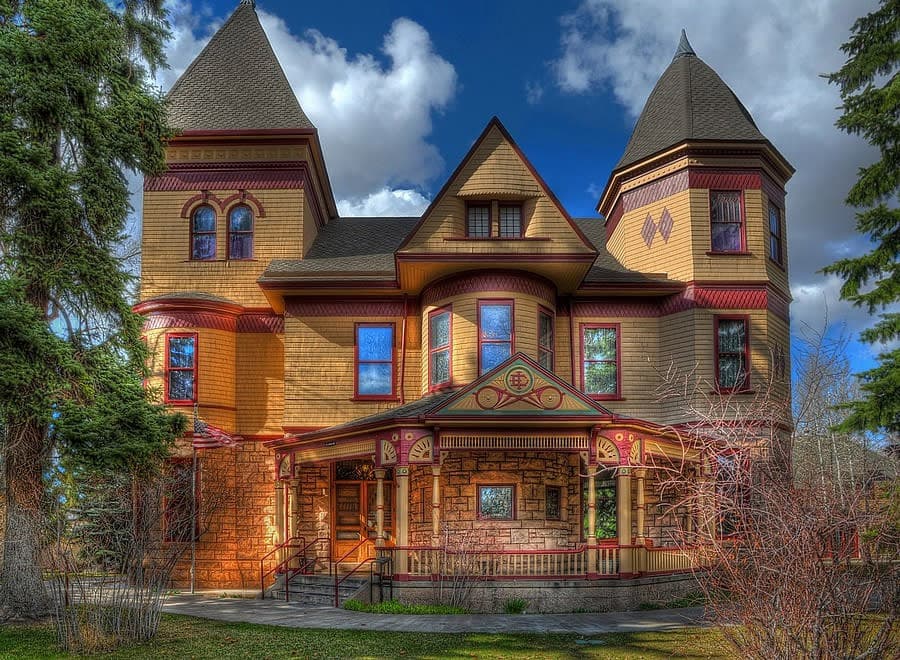
A sandstone Queen Anne mansion on Ivinson Avenue has stood at the center of Albany County's historical identity for more than a century, surviving neglect, a near-demolition order, and a remarkable community rescue to emerge as one of Wyoming's most distinctive historic house museums. The Ivinson Mansion, located at 603 Ivinson Avenue in Laramie, now serves as the permanent home of the Laramie Plains Museum, offering exhibits, archival collections, and public programs that interpret the region's settlement history and the lives of the people who shaped it.
A Mansion Built to Impress
Jane and Edward Ivinson commissioned the residence in 1892, and the result was immediately recognized as the most significant home in Laramie at its completion. Architect Walter E. Ware of Salt Lake City designed the structure in a Late Victorian Queen Anne style, with local contractor Frank Cook executing the build using sandstone, shingle, and wood. The mansion's architectural ambition was unmistakable: its materials and massing set it apart from anything else on the west side of Laramie, and it remained a landmark long after the Ivinsons themselves were gone.
Edward Ivinson donated the property to the Episcopal Church in 1921, at which point the interior and carriage house were remodeled and the mansion was repurposed as the Ivinson Hall School for Girls. A "Virginia Cottage" annex was added to the grounds in 1924. The church operated the boarding school until the late 1950s, with sources placing the closure at either 1957 or 1958. After the school shut down, the property sat vacant and untended for roughly fifteen years, falling into such disrepair that it was eventually slated for demolition.
From Closet Museum to Community Campaign
The story of how the Laramie Plains Museum came to occupy the mansion begins decades earlier and much more humbly. In the early 1920s, the Laramie Woman's Club, recognizing a pressing need to preserve Albany County's history, opened a museum inside the Albany County Library. The space was, by various accounts, either "small" or "in a closet" — a first, modest effort at institutional memory that would eventually grow into something far more substantial.
When the Episcopal Church signaled that the Ivinson Mansion was threatened, Alice Hardie Stevens, a founder of the Laramie Plains Museum Association, stepped forward to lead the effort to save it. Her goal, as the museum's own records describe it, was straightforward: "to provide a more spacious home for the museum while saving the Ivinson Mansion." The fundraising campaign that followed drew on both public generosity and federal support. The museum's records show that "Mrs. Stevens and the town of Laramie succeeded in raising over $100,000 in contributions and grants." A critical piece of that total came from Washington: a $50,000 grant from the Historic Preservation Act fund arrived exactly one week before the purchase proceeded, providing the financial foundation the acquisition needed.
On June 21, the deed to the Ivinson property was formally transferred from the Episcopal Church to the Laramie Plains Museum Association, completing a transaction that had seemed far from certain just months earlier. All sources confirm the purchase occurred in 1972, the same year the mansion was placed on the National Register of Historic Places (NRHP reference number 72001295, with an official listing date of February 23, 1972). The museum's collection was moved from its previous location into the mansion soon after the purchase closed.
Dedication, Restoration, and Recognition
The mansion was cleaned and repaired in the months following acquisition so it could physically house the collection, but the formal milestone came on July 10, 1973. On Wyoming Statehood Day, the Ivinson Mansion was officially dedicated as the permanent home of the Laramie Plains Museum. As historian Kim Viner wrote for the Albany County Historical Society, the mansion "remains there today, elegantly restored, as a proud example of how a community can pull together to preserve a window to its past."
The years since dedication have brought sustained investment. Ongoing fundraising, planning, and renovation work has aimed to restore every part of the building to what the museum describes as "their original opulence and functionality." In 2009, the mansion was recognized as a contributing property in the University Neighborhood Historic District, adding a second layer of historic designation to complement its long-standing National Register status. The property sits near the University of Wyoming campus, Laramie's West Side Neighborhood, and the Wyoming Territorial Prison, placing it within a dense cluster of historically significant sites in the city's core.
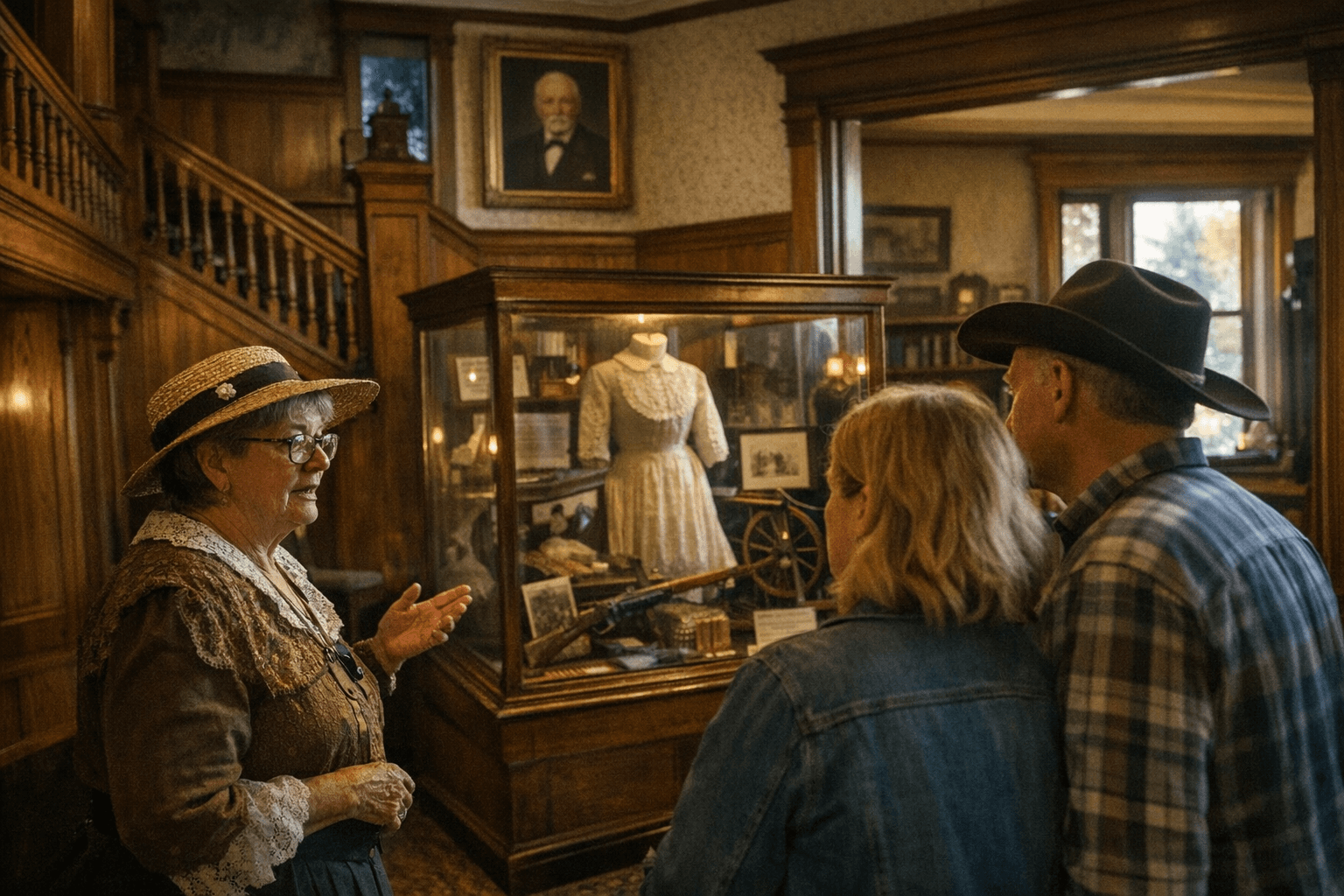
The year 2016 marked the 50th anniversary of the Laramie Plains Museum, a milestone that underscored how far the institution had traveled from its origins in a library alcove to a fully restored Victorian mansion housing a regional collection of genuine depth.
Programs That Bring History to Life
The museum's community engagement extends well beyond its exhibit galleries. Two programs in particular illustrate the institution's commitment to active interpretation rather than passive display.
The Docent Discourse series invites knowledgeable volunteers and historians to share stories, biographies, and artifacts from the collection. Three episodes demonstrate the range of the program:
- Sylvia Hansen explored her favorite objects inside the Ivinson Mansion itself, offering an intimate tour guided by personal knowledge of the collection.
- Historian Kim Viner presented a biographical portrait of Edward Ivinson, connecting the mansion's physical history to the man who built it.
- Historian Jerry Hansen examined Albany County's railroad history, situating Laramie within the broader transportation networks that defined the region's development.
The Docent Discourse series took on additional importance during the COVID-19 pandemic, when the mansion was closed to visitors. Curatorial staff and volunteers worked to keep patrons connected to the museum by producing and sharing these presentations remotely, sustaining the institution's relationship with its audience during an extended period of physical closure.
The People of the Past program takes a different approach, asking volunteers to portray historic characters from Laramie's early years in living history format. Together, the two programs reflect a philosophy that treats history as something to be inhabited and narrated, not merely catalogued.
A Living Record of Albany County
The Ivinson Mansion's trajectory from private home to boarding school to derelict property to restored museum is itself a story about how communities decide what to keep. The Laramie Plains Museum Association, the Albany County Historical Society, and dozens of named and unnamed contributors made a deliberate choice in 1972 to invest in preservation over demolition. The result is a building at 603 Ivinson Avenue that still carries the architectural ambitions of Walter E. Ware's 1892 design while housing a collection that documents the full sweep of Albany County life. For anyone seeking to understand how Laramie and the surrounding county developed, the Ivinson Mansion remains the most tangible place to start.
This article was produced by Prism’s automated news system from verified source data, official records, and press releases, then run through automated quality and moderation checks before publishing. The system is built and supervised by the people who set the standards it runs under. Read our full AI policy.
Did this article answer your question?