Ivinson Mansion tells how Laramie grew from railroad camp to civic center
The Ivinson Mansion shows how Laramie turned railroad wealth into civic identity. Its rooms still connect a Hell-on-Wheels camp, a banker’s fortune, and today’s museum visits.
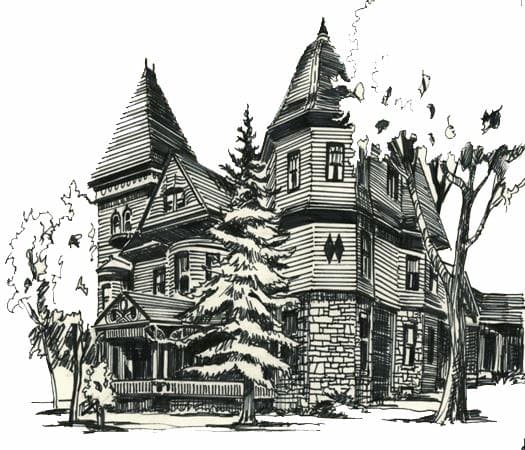
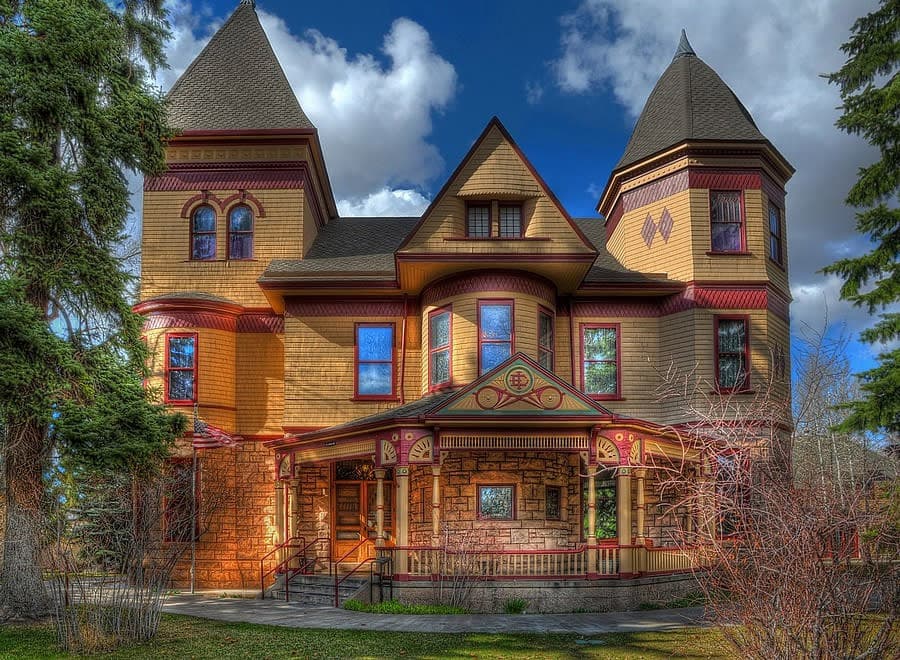
The Ivinson Mansion stands on a downtown Laramie block as more than a preserved Victorian house. It is one of the clearest physical records of how a railroad camp became a permanent civic center, and why Albany County still treats old buildings as part of its public identity. Built for Edward and Jane Ivinson, the mansion was finished by 1892 with central heating, electric lights, and running water, a level of comfort that said as much about Laramie’s ambitions as about the family’s wealth.
From end-of-track camp to town block
Laramie was founded in 1868 when the Union Pacific Railroad reached the city, and the first version of town was rough even by frontier standards. Edward Ivinson arrived in February 1868, when the place was still a mix of tents and temporary structures, and he bought the city block for the future mansion site in 1870. That timeline matters because the house rose during the exact moment Laramie was shifting from an end-of-the-tracks “Hell-on-Wheels” camp into something meant to last.
Ivinson’s own path explains why the house became such a durable local marker. Born in 1830 on St. Croix and educated in England, he came west, ran a store for three years, then bought Laramie’s only bank. He later chartered the Wyoming National Bank of Laramie in 1873 and served as the first treasurer of the University of Wyoming board of directors. In a town still deciding what kind of place it would be, his career linked retail, banking, education, and land ownership into the new civic order.
A mansion built to announce permanence
The mansion itself is a Victorian Queen Anne style historic house, and its scale still communicates the confidence behind it. The Laramie Plains Museum describes it as its largest artifact, with roughly 9,000 square feet spread across three levels. That size, plus the modern conveniences installed before the 19th century ended, made the house a sign that Laramie’s wealth was no longer temporary or purely extractive.
The building was not simply a private showpiece. It reflected the broader economy that made Albany County matter in the first place, where railroad commerce, ranching, and banking all intersected. By putting those ambitions into a single home, the Ivinsons created a structure that reads today like a ledger of late-1800s optimism: a railroad town no longer content to be a camp, but ready to present itself as a city with institutions, families, and staying power.
What the museum preserves inside
The mansion’s current value comes from what the museum has placed inside it. Its collections include Victorian furnishings, historic textiles and clothing, and material tied to early Laramie and ranch history. The broader archive spans the West, Victoriana, ranch history, immigration, and local pioneer families, which makes the house a compact way to understand how Albany County was built by business, migration, and domestic life as much as by rail lines and cattle.
Among the objects that sharpen that story are a barn door from the Wooden Shoe Ranch with Albany County brands, a Chickering piano made in 1860, and a $500 check to James Hunt of the Laramie Rolling Mill. Those pieces are not decorative extras. They connect the mansion to working ranches, early industry, and the people who turned Laramie into a regional center rather than a stopover.
Inside the house, two rooms and the entire third floor are dedicated to Laramie history, reinforcing the idea that the mansion itself is part exhibit, part archive. That approach helps explain why the building still matters in a county where preservation is tied to identity as much as aesthetics.
A house that became a civic institution
The mansion’s public life began long before it became a museum. The Laramie Plains Association was created in 1898 by the Laramie Women’s Club and the Albany County Historical Society, giving the property an early role in community memory. Later, the mansion was donated to the Episcopal Church and used for decades as a boarding school for girls, a chapter that turned the house from private residence into an educational space with a new civic purpose.

The building was listed on the National Register of Historic Places in 1972, and the Laramie Plains Museum has been based there since 1973. That continuity matters in Laramie, where preservation is not just about saving a single structure. It is about keeping visible the institutions and families that helped the town outgrow its railroad origins.
Plan a visit
Tours run Tuesday through Saturday from 1:00 to 4:00 p.m., and the last tour begins at 3:00 p.m. Groups are kept small, usually four to seven people, which gives the visit a more intimate feel than a large museum walkthrough. Admission is listed at $10 for adults, $7 for seniors, $5 for students, $5 for military visitors, and $25 for a family.
The house works as a visitor stop because it is active, not static. Seasonal teas, holiday open houses, evening fundraisers, newsletters, and rentals keep the mansion tied to community life at 603 East Ivinson Avenue rather than sealed off as a relic. In Laramie, that is the point: the mansion does not just preserve the story of railroad wealth, it shows how that wealth became part of a lasting civic landscape.
This article was produced by Prism’s automated news system from verified source data, official records, and press releases, then run through automated quality and moderation checks before publishing. The system is built and supervised by the people who set the standards it runs under. Read our full AI policy.
Did this article answer your question?