Laramie Conservancy Sues to Unseal Eagle Death Records Near Wind Farms
The Albany County Conservancy filed a federal lawsuit seeking unredacted U.S. Fish and Wildlife Service records about bald and golden eagle deaths near several southeastern Wyoming wind projects. The case challenges Interior Department redactions under FOIA Exemption 4 and could affect local wildlife oversight, wind-operator disclosure obligations, and regional conservation planning.
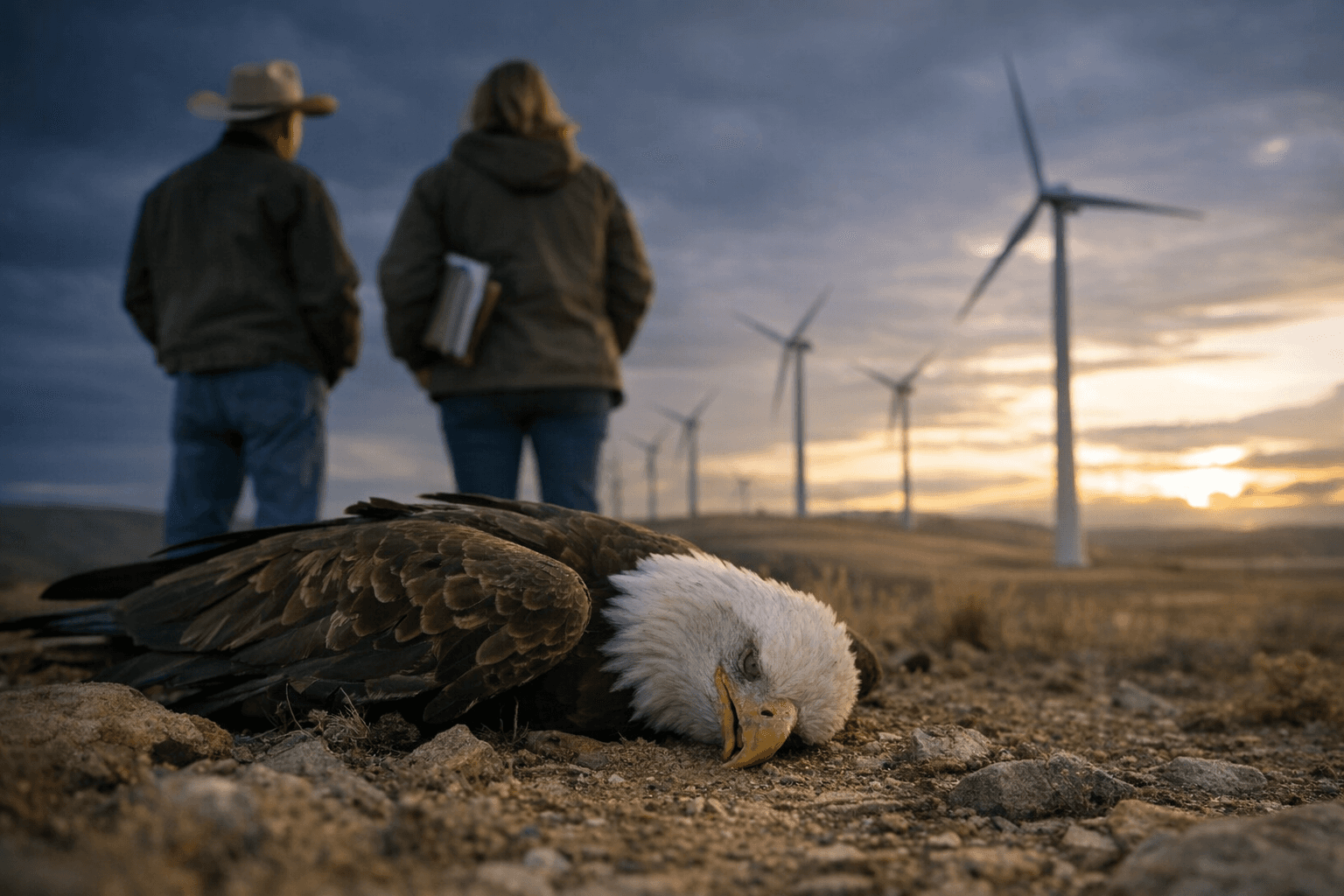
On Dec. 28, 2025 the Albany County Conservancy, a Laramie-based nonprofit, filed suit in the U.S. District Court for the District of Columbia after administrative appeals failed to obtain unredacted records from the U.S. Fish and Wildlife Service. The conservancy had sought records showing reported eagle deaths within two miles of the Seven Mile Hill I and II, Ekola Flats, and Dunlap wind installations in southern Wyoming. The Interior Department released many pages but withheld portions under Freedom of Information Act Exemption 4, which protects commercial or confidential business information.
The conservancy argues that mortality and "take" records submitted to federal eagle-permit processes are public and necessary for independent assessment of ecological impacts. Local biologists who tag bald and golden eagles have reported that many tagged birds disappear after entering turbine areas, raising concerns that turbine-related mortality may be undercounted when critical details are withheld. The litigation centers on whether data provided by operators as part of permit compliance should be treated as protected business information or as public environmental records.
For residents of Albany County and neighboring communities, the case touches on several practical concerns. Wind development is an important component of regional energy supply and economic activity, but transparency about wildlife impacts informs local land use decisions, recreation and wildlife-tourism planning, and the management of protected species. Unredacted records could change assessments of local population risks for eagles and influence mitigation measures such as turbine curtailment, siting adjustments, or additional monitoring requirements.
The suit also carries broader policy and market implications. If the court orders disclosure, wind developers could face increased scrutiny of operational data previously treated as confidential, potentially increasing compliance costs and the scope of required mitigation. Greater transparency could prompt regulators to tighten permit conditions or expand monitoring programs, while nondisclosure could fuel skepticism among conservation groups and some local stakeholders about the adequacy of existing oversight.
Statistically robust mortality data are pivotal for balancing renewable energy goals with species protection. The legal question before the D.C. court is essentially whether that information belongs to private business interests or to the public interest in wildlife conservation. The outcome will likely influence how federal agencies, developers, and conservationists approach eagle-permit reporting nationwide, and will determine whether Albany County residents and scientists gain full visibility into bird deaths linked to nearby wind development.
This article was produced by Prism’s automated news system from verified source data, official records, and press releases, then run through automated quality and moderation checks before publishing. The system is built and supervised by the people who set the standards it runs under. Read our full AI policy.
Did this article answer your question?