Laramie's Tiger Salamanders Begin Annual Spring Trek to LaBonte Park
Hundreds of western tiger salamanders are crossing North 9th and East Canby streets toward LaBonte Park's pond. UW's Biodiversity Institute needs volunteers — training is April 4.
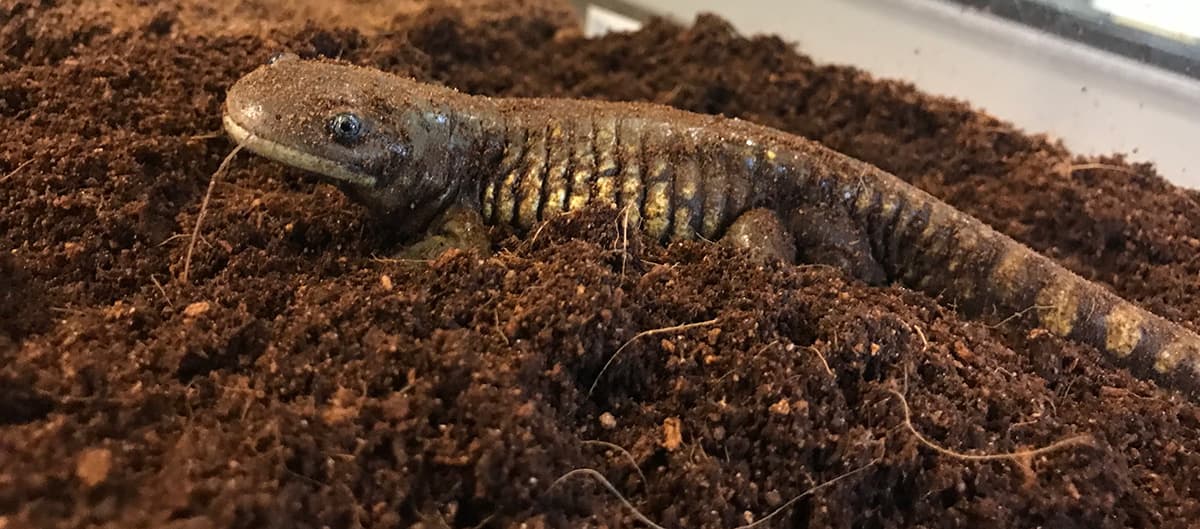
An incredible wildlife migration occurs in Laramie every spring on rainy nights: hundreds of Western tiger salamanders, Wyoming's state amphibian and a species of conservation concern, migrate en masse from the yards of neighborhood homes to LaBonte Pond. In Laramie, the amphibians cross over busy roadways, including North 9th and East Canby Streets, to reach their breeding grounds. Many adult salamanders are killed when they cross those roads in the spring.
The University of Wyoming's Biodiversity Institute is running the Laramie Salamander Migration Initiative again this year, starting with a volunteer training session from 10 to 11 a.m. Saturday, April 4, at UW's Berry Biodiversity Conservation Center. Volunteers will learn what to do during "Migration Nights" that will occur throughout April. At the training session, volunteers will learn about tiger salamander ecology, why salamanders need volunteer help in Laramie, and how they can help salamanders locally and around the state. They will also learn specific protocols to keep themselves and the salamanders safe while allowing Biodiversity Institute staff to collect necessary data. The training will not be live-streamed, but it will be recorded.
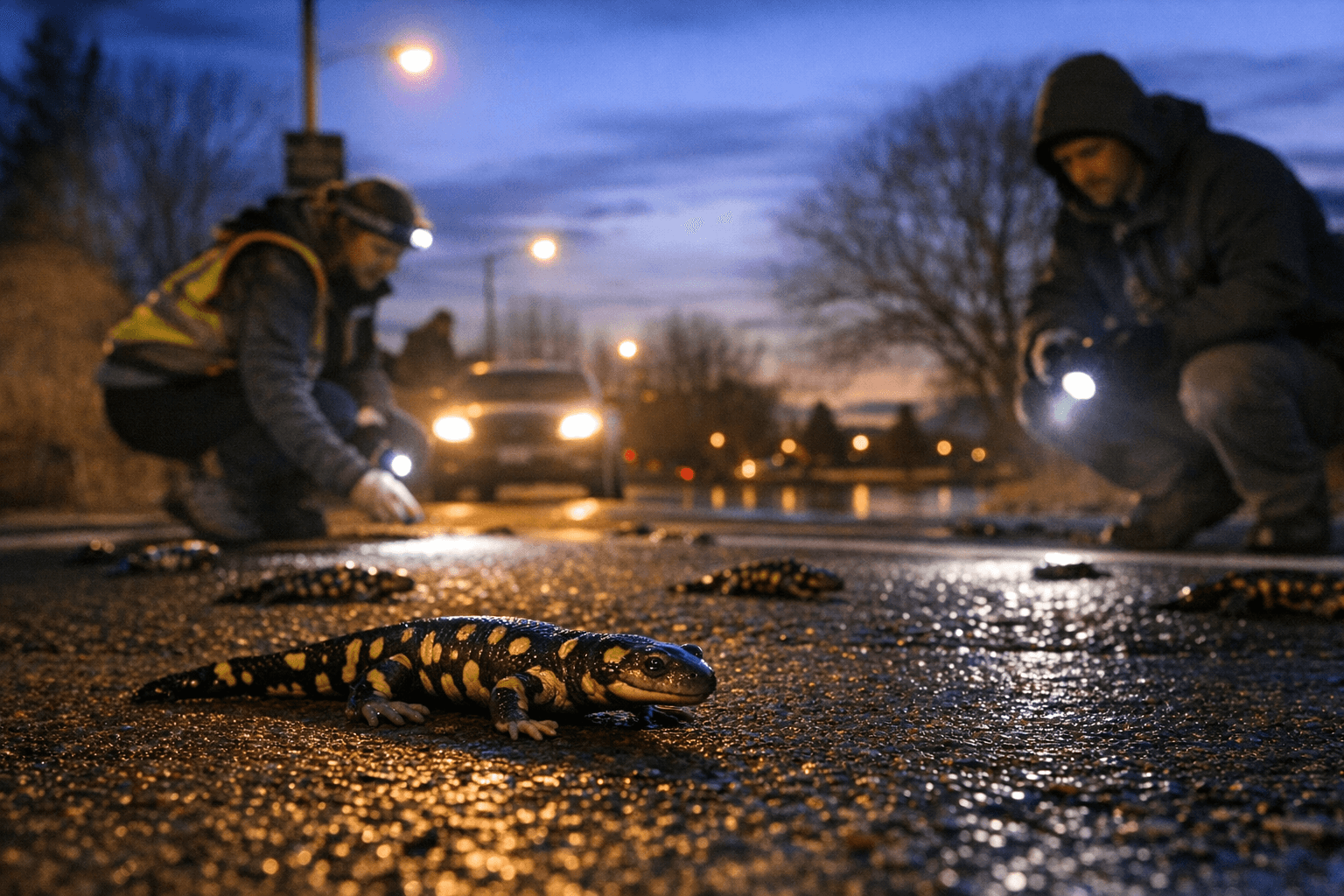
Each spring, volunteers patrol 9th and Canby Streets, picking salamanders up off the roads as they cross and bringing them safely to the edge of LaBonte Pond. The research team will be stationed at the LaBonte Park covered picnic shelter near Eighth and Canby Streets as well as the shelter just north of the Feeding Laramie Valley building on Ninth Street on the major migration nights. Researchers will collect information on the sex and size of the salamanders before releasing them, according to Mason Lee, the Biodiversity Institute's senior project coordinator.
Last year's migration presented unusual challenges. "2025 was a bit of an odd year for the migration. Our first mass migration occurred March 29, which was an entire month earlier than it has been in the last six-plus years," Lee says. "I believe we likely missed the second mass migration, which probably occurred late at night or in the early morning hours sometime between March 29 and April 24. We had a small migration April 24. In total last year, we collected data from 79 live salamanders." Lee noted the 2025 migration took place earlier than expected, resulting in more salamanders dying on the road to LaBonte Park.
Registration for the "Migration Nights" volunteer list is required of all volunteers, new and returning. Registered volunteers receive an email when the Biodiversity Institute's research team expects a large migration. The salamander migration typically occurs in wet weather when the ground is thawed and temperatures are above freezing; in Laramie, that means on any rainy night above freezing in early spring, salamanders might be on the move.
The "Report a Salamander" project is another component of the initiative. Citizens are asked to submit reports on salamander sightings in Laramie as well as around the state, and reports of live or dead adult salamanders and larval salamanders are welcome. Last year, the Berry Biodiversity Institute received 40 reports of salamanders from around the state, Lee says. The reporting project provides information about where tiger salamanders elsewhere in Wyoming may need help on their migration nights, where salamanders in Laramie are distributed, and can help determine whether a spring migration was missed, Lee says.
Western tiger salamanders typically grow to between 6 and 14 inches long and feature a greenish-yellow body with black spots. The species was designated Wyoming's official amphibian in 2019. While they are not endangered, the Wyoming Game and Fish Department classifies the species as a Species of Greatest Conservation Need. Window wells, Lee notes, "provide a nice area for salamanders to dig down into the soil for protection during winter" and are a good place to check for the amphibians heading into the migration season.
Those interested in volunteering or submitting sightings can reach Mason Lee at mlee37@uwyo.edu or visit wyomingbiodiversity.org for registration and reporting links.
This article was produced by Prism’s automated news system from verified source data, official records, and press releases, then run through automated quality and moderation checks before publishing. The system is built and supervised by the people who set the standards it runs under. Read our full AI policy.
Did this article answer your question?