Powerful Winter Winds Close Passes, Disrupt Travel Across County
A severe wind event on December 17 and 18 produced extreme gusts across Wyoming, including a 144 mile per hour reading near Mount Coffin and a 123 mile per hour reading at South Pass, forcing closures on Wyoming Highway 28 and disrupting major travel corridors. The storm prompted advisories from the National Weather Service in Riverton and WYDOT, and highlighted vulnerabilities in transportation safety and emergency preparedness that matter to Albany County residents.
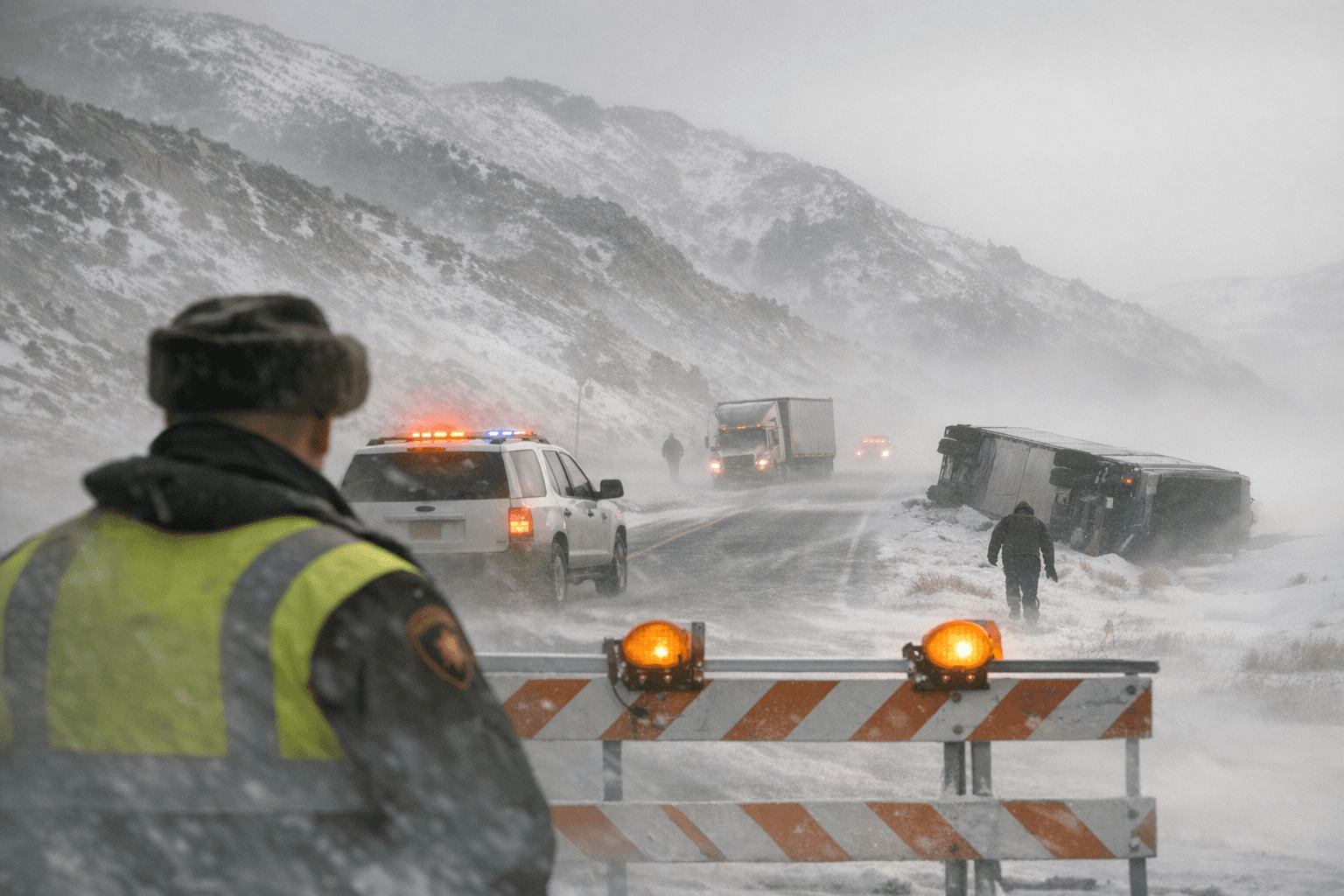
Strong winter winds swept Wyoming on December 17 and 18, producing multiple gusts in excess of 100 miles per hour and prompting road closures, blowovers, and travel advisories. The National Weather Service in Riverton logged a top observation of 144 miles per hour near Mount Coffin by Smoot, and a 123 mile per hour gust in the Red Canyon area on South Pass. WYDOT reported a semi blowover on South Pass shortly before the 123 mile per hour reading, and District 5 closed Wyoming Highway 28 for much of the morning and early afternoon because conditions were hazardous.
The event affected statewide travel corridors, including I 80 and I 25, and followed several recent days that saw multiple semi blowovers along high wind stretches. WYDOT and the National Weather Service issued advisories for motorists to monitor conditions and avoid travel when possible. Albany County travelers and emergency services were explicitly among those advised to follow updates as crews managed closures and roadway hazards.
Beyond immediate travel disruption, the December storm raises questions for local institutions about infrastructure resilience, traffic management, and emergency readiness. Recurrent wind related disruptions strain county emergency responders and complicate logistics for freight and commuter traffic. WYDOT District operations and county emergency management agencies play distinct but overlapping roles during episodes like this, and the event underscores the need for clear coordination on road closure protocols, advance warning systems, and resources for clearing incidents involving heavy trucks.
For residents the practical impacts included delayed travel, potential supply interruptions, and increased demand on emergency services. Events of this type can shape public priorities around transportation maintenance and emergency funding, and they often surface in local policy discussions and election debates because they directly affect safety and daily life.
County officials and residents should expect follow up reviews of the response and transmission of lessons learned into budgets and preparedness plans. In the near term monitor official WYDOT and National Weather Service channels before traveling, and contact county emergency management when local conditions deteriorate.
This article was produced by Prism’s automated news system from verified source data, official records, and press releases, then run through automated quality and moderation checks before publishing. The system is built and supervised by the people who set the standards it runs under. Read our full AI policy.
Did this article answer your question?