Practical road‑travel and safety guide for Albany County: checking conditions, avoiding winter hazards, and planning trips on I‑80 and state routes
A 20-vehicle I-80 pileup sent two by air ambulance in March; knowing WYDOT's wind thresholds and Albany County's deadliest corridors can keep you off the next crash report.
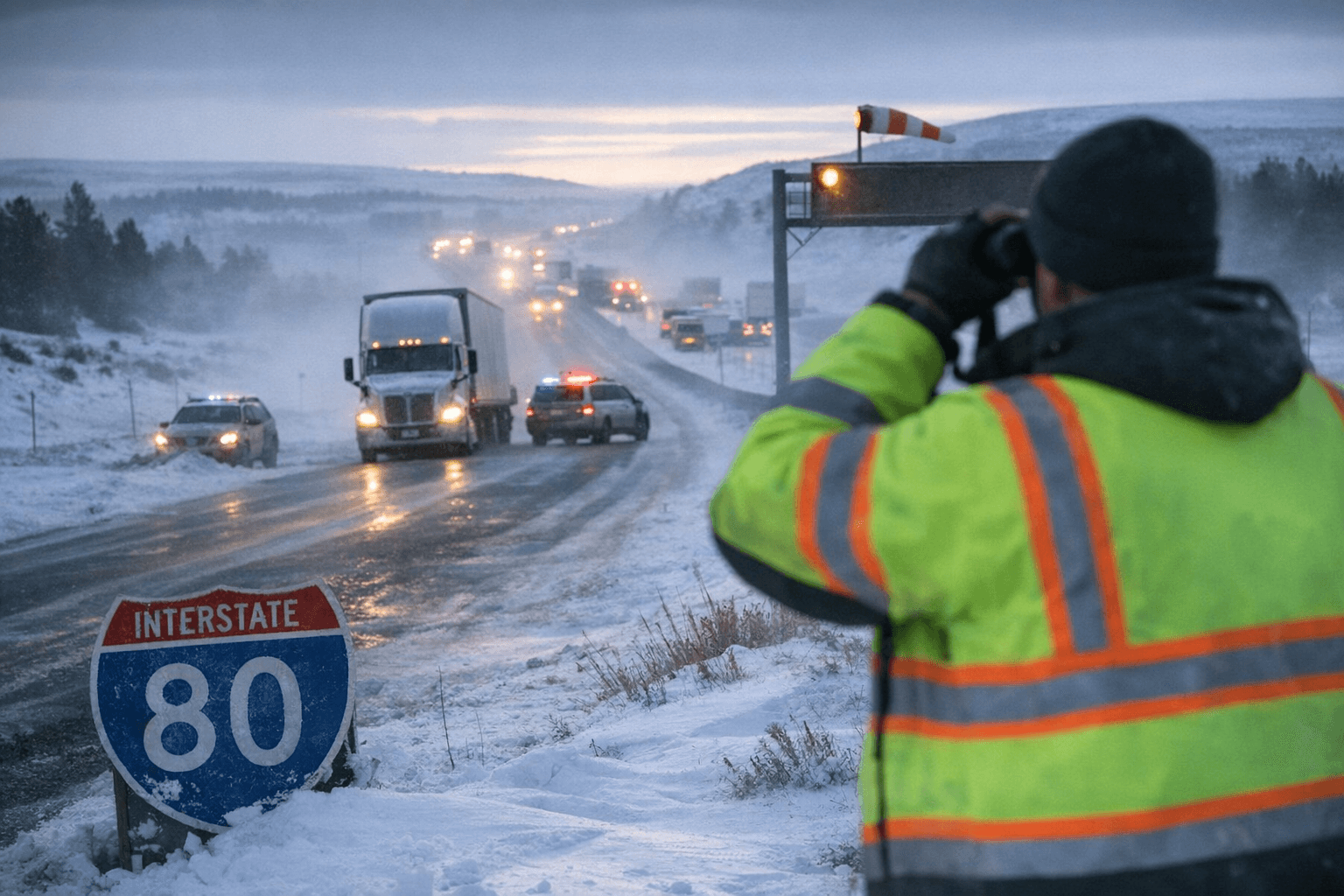
What went wrong on I-80 this March, and what it costs
A 20-vehicle pileup between Laramie and Sinclair shut Interstate 80 in both directions during a blizzard in March 2026 and sent two people by air ambulance to regional hospitals. Five days later, a flash freeze triggered a chain-reaction crash near Laramie involving 15 to 20 vehicles and multiple semi-trucks, killing one person, sending six more to area hospitals, and stranding 13 additional people at the Albany County Fairgrounds. Eastbound lanes stayed closed for more than 17 hours.
Wyoming Highway Patrol spokesman Aaron Brown described the second crash directly: "We believe it was a flash freeze. A couple of trucks crashed, and then more followed in a chain reaction."
That is the pattern Albany County roads produce: conditions that look manageable until they are not, and crashes that multiply because the next driver has no idea what just happened 200 yards ahead. Both incidents hit the same corridor within five days. Being stranded 17 hours on I-80 is not a freak outcome; it is what a flash freeze does to unprepared drivers traveling in convoy on a transcontinental interstate with nowhere to turn around.
Check conditions before you leave, not after
WYDOT's WyoRoad 511 system, accessible at wyoroad.info, is the authoritative real-time source for statewide road conditions. It lists lane closures, rolling closures, chain requirements, live camera feeds, and active blowover warnings on I-80, WY-130, and other routes through Albany County.
For any trip through the county in fall, winter, or spring, use a three-check approach:
1. Check WyoRoad 511 the evening before departure to assess overnight forecasts and any existing restrictions.
2. Check again the morning of travel once crews have had time to update overnight incident reports.
3. Check a final time immediately before you leave; conditions on I-80 can deteriorate within a single hour.
During active weather events, delay departure until WYDOT or the Wyoming Highway Patrol lifts advisories. A rolling closure means the highway is being temporarily shut so crews can clear wreckage or wait for visibility to return; driving into one puts you and first responders at risk and can lengthen closures for everyone behind you. Local news outlets and Wyoming Highway Patrol public alerts often relay WYDOT status in plain language and are useful for quick condition checks on WY-130 and WY-230 when you need fast confirmation before departure.
Wind thresholds and the blowover risk on I-80
The I-80 corridor west of Laramie, including the notorious stretch near Cooper Cove, ranks among the most wind-exposed highway segments in the American West. WYDOT implements blowover restrictions when sustained winds reach roughly 35 to 45 mph, with gusts above 75 mph triggering closure of lightweight, high-profile vehicles from the road. Under an "extreme blowover warning," vehicles under 20,000 pounds gross vehicle weight can be prohibited outright. On the Summit between Cheyenne and Laramie, gusts up to 90 mph are on record and are a seasonal regularity.
WYDOT updates restrictions on electronic signage along the corridor and at wyoroad.info. Proceeding past a restriction sign in a prohibited vehicle class transfers liability for any resulting crash to the driver. The department also cautions that wind sensors are not positioned at every gap in the terrain; drivers near a posted weight threshold should treat the number as a floor, not a clearance. For commercial operators, verify weight restrictions before entering the Laramie-to-Sinclair segment and build alternate routing into any schedule during high-wind advisories.
WY-130 and WY-230: know the seasonal rules
WY-130, the Snowy Range Scenic Byway, climbs from Laramie to Saratoga across a 12-mile high-elevation section (mile markers 36 to 48) that tops out above 10,800 feet. WYDOT closes that stretch every fall, typically in November, once snow accumulations make plowing impractical, and it reopens around Memorial Day. No amount of four-wheel drive or all-terrain tires makes it passable during closure; travelers routing through Saratoga in winter or early spring must plan an alternate.
During shoulder seasons when WY-130 is open, the same freeze/thaw dynamics that trap drivers on I-80 apply here: daytime melt pools on pavement and refreezes overnight into black ice, particularly on shaded curves and exposed bridge decks. Check WyoRoad for advisories before heading over the pass even when skies look clear in Laramie. WY-230 toward the southern border carries lighter traffic but faces the same blizzard and wind exposure as the broader region, and it is worth a WyoRoad check before using it as an I-80 alternate during a closure.
Winter kit: the non-negotiables
The goal is survivability if you are stranded for an extended stretch. The 13 people who wound up at the Albany County Fairgrounds after the March flash-freeze crash needed somewhere warm to go; the ones who came through without medical attention were the ones dressed for a long wait. Build a kit that covers at least 24 hours:
- Water and high-calorie food for everyone in the vehicle
- Extra warm clothing, gloves, and blankets
- A fully charged phone and a backup power bank
- A basic first-aid kit and a flashlight with spare batteries
- Traction devices, a small shovel, and a windshield scraper
- Visible warning triangles or road flares
- Traction chains or approved alternatives if crossing WY-130 or another mountain pass
If you get stranded or encounter a crash
Stay with your vehicle if you are safely stopped: it is far more visible to rescue crews in a blizzard than a person on foot, and it blocks wind. Run the engine intermittently to conserve fuel and generate heat, but confirm the exhaust pipe is clear of packed snow before every run; carbon monoxide buildup in a buried tailpipe has killed stranded drivers who did everything else right.
If you come upon a crash, move well off the roadway, activate hazard lights, and call 9-1-1 for any injury. If you stop to help, park entirely off the shoulder and use warning triangles to create a visible buffer before approaching. For hazards like debris or black ice that do not involve injuries, WYDOT's 511 system accepts user-submitted condition reports, alerting other drivers and crews faster than waiting for a patrol to spot the problem.
The two March incidents on I-80 together produced one death, eight hospital transports by air and ground, 13 people sheltered at a county fairgrounds, and a 17-hour shutdown of a major transcontinental artery. Checking WyoRoad 511 before departure costs five minutes. The corridor will not get less dangerous; the preparation can.
This article was produced by Prism’s automated news system from verified source data, official records, and press releases, then run through automated quality and moderation checks before publishing. The system is built and supervised by the people who set the standards it runs under. Read our full AI policy.
Did this article answer your question?