University of Wyoming design program trains students for fashion careers
UW’s design program is feeding Wyoming’s fashion economy, turning students into merchandisers, event planners and shop owners who can work far beyond campus.
A program built for work, not just the runway
At the University of Wyoming, Design, Merchandising and Textiles is being taught as a job path, not a hobby. The major sits inside the Department of Family and Consumer Sciences, and its three concentrations, apparel design and product development, interior design, and merchandising, are aimed at students who want to move into fashion, retail and related businesses with real workplace skills.

That practical focus runs through the coursework. UW says DMT students study retail buying, textile science, visual merchandising, product development, sustainability and fashion-show event planning, which means the program asks them to think like buyers, planners, marketers and producers as well as designers. Every major must also complete a three-credit internship, international study tour or study abroad experience, and merchandising students are encouraged to consider an entrepreneurship minor, a clear sign that the department is preparing graduates to launch or strengthen businesses, not just leave with a portfolio.
Family and Consumer Sciences frames that training in a bigger way. The department links clothing, food, shelter, human relationships and family to larger social systems, which places DMT inside a broader workforce and community-service mission. For Albany County, that matters because the payoff is not abstract. It shows up in the people who can stock a shop, run a boutique, handle alterations for a wedding season rush, or produce an event that brings customers and attention into Laramie.
The Kaleidoscope show is the program’s public test
The strongest evidence of that hands-on model is the annual Kaleidoscope Fashion Show. UW says the show is the capstone for Fashion Show Event Planning, FCSC 2210, and students are responsible for the parts that make a live event function: marketing, designer liaisons, facilities, music, technical production, model coordination and stage management.
That is not decorative coursework. It is the kind of training that forces students to manage deadlines, budgets, communication and production pressure at the same time, the same mix of skills that small employers value in Wyoming’s smaller business environment. UW describes Kaleidoscope as an annual spring fashion show built around original student designs, local retailers, professional-level production and community supporters, which gives students a public platform while also tying the event to real businesses and audiences.
The 2026 show underlined that pipeline. On Saturday, May 2, 2026, graduating senior Izzy Nichols, originally from Cheyenne, won three awards, including Best of the Show. UW said Nichols found the major after taking an introductory design class, a reminder that some students arrive without a fixed career plan and discover a field where classroom work quickly turns into public-facing performance and professional responsibility.
Lauren Carlson shows where the degree can lead
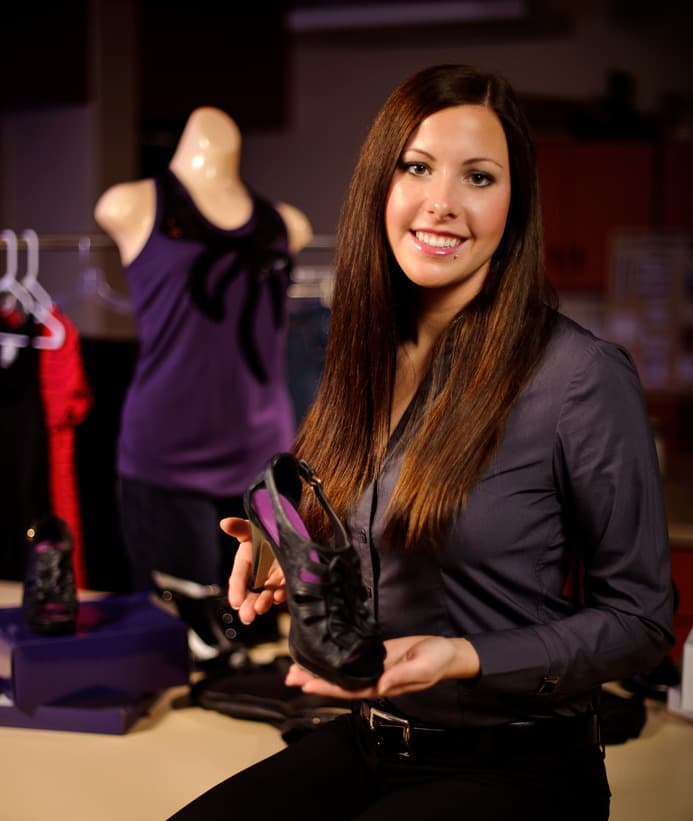
If Kaleidoscope shows the training, Lauren Carlson shows the outcome. Carlson, a 2017 graduate from Casper, owns Joyful Juniper Alterations, a business based in Evansville, Wyoming, where she specializes in bridal, prom, custom embroidery and personalized memory projects. Her path is the clearest proof in the story that the program can produce an independent business owner, not just a graduate looking for a desk job.
Carlson said the program taught her far more than stitching. She pointed to materials, weaves and the chemistry of fabric, and said the experience pushed her to be independent and vocal, traits that matter when a customer is relying on you to fit a wedding dress, handle a formalwear repair or manage the details of a one-person shop. Her business website says she has been sewing since age 9 and began sewing professionally at UW in 2015 in the Costume Department before graduating in 2017, a timeline that traces a direct line from campus work to a working Wyoming enterprise.
That kind of story matters in a state where specialized services can be spread thin across geography. Joyful Juniper’s Wyoming tailors page lists alteration and tailoring providers across the state, including Casper, Laramie, Mills, Riverton and Cheyenne, which suggests both a small market and a real one. In places like Albany County, that means a well-trained alterations specialist or small-shop owner can matter far more than in a dense metro market, because the nearest competent service may be several towns away.
Why Albany County should pay attention
For Laramie and the rest of Albany County, the local value of the program is not limited to fashion design on a campus stage. The major produces people who can do retail buying, visual merchandising, budgeting, marketing, event planning and production work, all of which translate into jobs that keep small businesses running and storefronts active. In a smaller market, workers who can cover more than one role are often the difference between a fragile shop and a stable one.
The program also strengthens the county’s broader cultural and commercial life by creating events that bring designers, local retailers and community supporters into the same space. Kaleidoscope gives students a chance to work with the pace and expectations of a live production, while businesses get exposure to a pipeline of young people trained to understand product, presentation and customer-facing work. That combination is the point: DMT is not just teaching students how to make clothes, it is preparing them to help build the businesses, services and event infrastructure that Wyoming communities actually use.
In a state where a single small business may serve weddings, prom season, alterations and custom work all at once, that is a practical form of economic development. For Albany County, the measure of success is not whether every graduate becomes a designer; it is whether the program keeps sending out people who can open shops, staff them well and make local fashion services viable outside a big-city market.
This article was produced by Prism’s automated news system from verified source data, official records, and press releases, then run through automated quality and moderation checks before publishing. The system is built and supervised by the people who set the standards it runs under. Read our full AI policy.
Did this article answer your question?