University of Wyoming tests fiber-optic Smart Roads to detect winter hazards
Fiber-optic cables and AI cameras are being tested along U.S. Highway 85 north of Cheyenne to detect ice and blowing-snow hazards and alert road operators in real time.
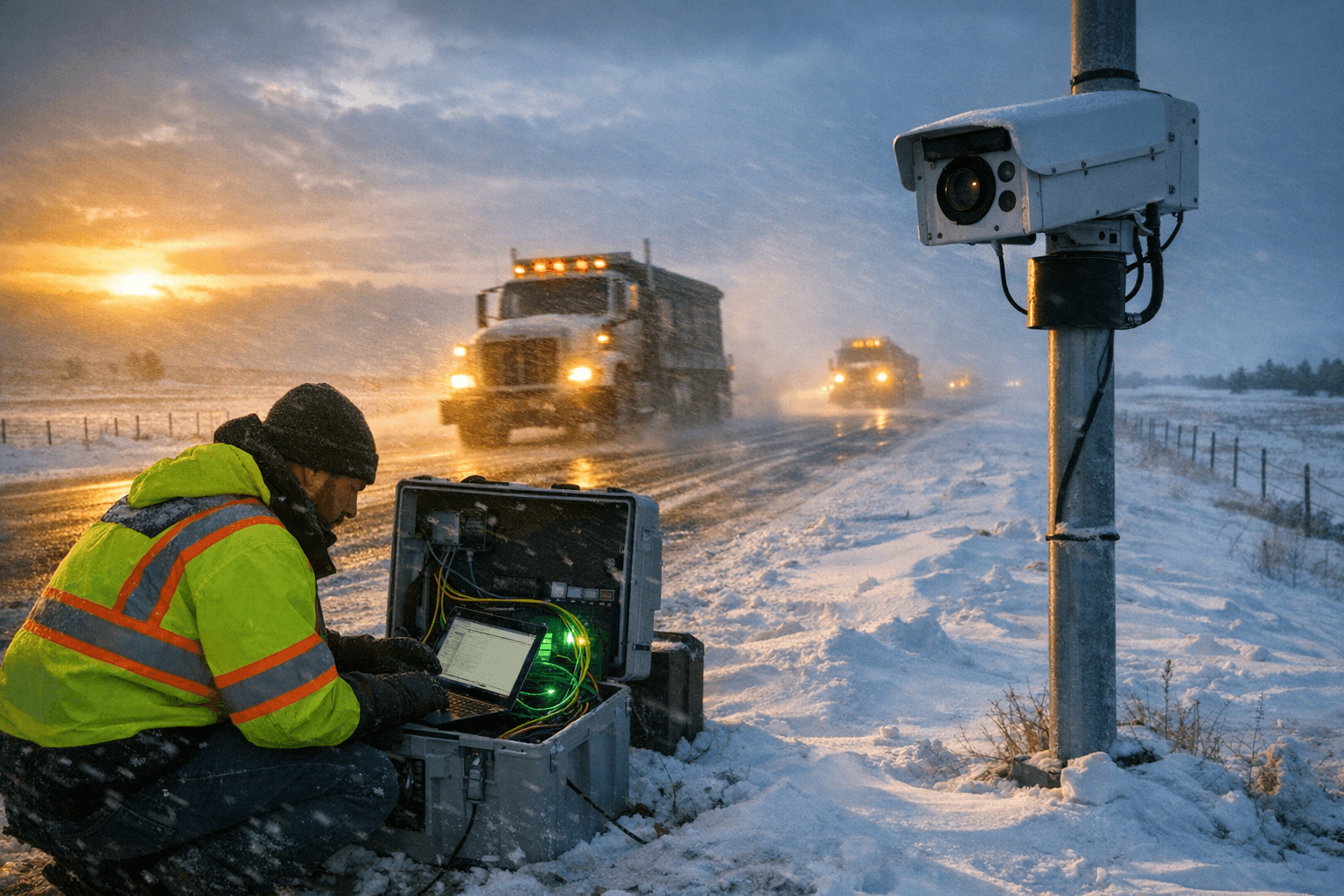
Sensors now line the shoulder of U.S. Highway 85 just north of Cheyenne as a University of Wyoming-led pilot aims to detect sudden winter hazards such as ice and blowing snow, officials say. The project converts buried fiber-optic cables into sensors and pairs them with artificial-intelligence powered cameras; a Wyoming fiber company called Range is helping run the equipment in the field and the Wyoming Department of Transportation is overseeing the work with federal funding support.
Project engineers say the system “can tell how fast traffic is moving, whether there’s congestion, or even if the road might be icy,” and combine that with live visual checks so operators get rapid condition updates. Project materials describe the installation as giving the road its own “eyes and ears,” and assert a privacy safeguard: “And importantly - no personal information is collected. Drivers likely won’t even notice the system is there.”
The study began in 2024, and materials describing the pilot state “the six-month test period is expected to finish in September,” a timeline detail that project coordinators provided without attaching a specific year. WYDOT is listed as the project overseer, the funding is described as federal, and Range is identified as the local fiber partner running field equipment; the team says a successful test could lead to expansion across Wyoming.
A separate technical summary described to project partners notes a forthcoming final technical memo that “describes the full data set and 17 selected case studies, along with recommended projects and policies, estimated costs, and benefits for each.” That memo, the project says, will be the primary deliverable for assessing scalability and cost-effectiveness across state corridors.
Related academic work elsewhere frames the technical approach: University of Washington researchers have developed a Mobile Unit for Sensing Traffic (MUST) and an ATS-MUST system intended as an AI-based, active transportation sensing platform. The MUST capability list includes “real-time transportation-related data, such as travel times, speeds, traffic volumes, vehicle types, pedestrian flows, and roadway surface and weather conditions,” and the ATS-MUST is described as working “as a transportation information center to connect diverse transportation users and elements…in support of various infrastructure-to-everything (I2X) applications.” Those University of Washington tools and the UW–SHRC research portfolio (including NSF CAREER award #1453949, NSF Award #1932452, and NCHRP Award #IDEA 246) illustrate the broader research methods and data types the Wyoming pilot is drawing on, though the University of Washington work is a distinct program from the University of Wyoming test.
For motorists on the Cheyenne corridor, the pilot promises faster alerts about rapidly changing winter conditions and, officials say, better information for traffic operations centers and emergency responders. Project communications sum up the local goal plainly: “Safer roads. Faster information. Smarter travel.”
This article was produced by Prism’s automated news system from verified source data, official records, and press releases, then run through automated quality and moderation checks before publishing. The system is built and supervised by the people who set the standards it runs under. Read our full AI policy.
Did this article answer your question?
