WYDOT outlines six-year road and bridge plan for Albany County
WYDOT’s draft six-year plan puts $9.403 million into a 0.33-mile Laramie rebuild on Bill Nye and Corthell avenues. The work could change commute, freight and winter travel patterns.
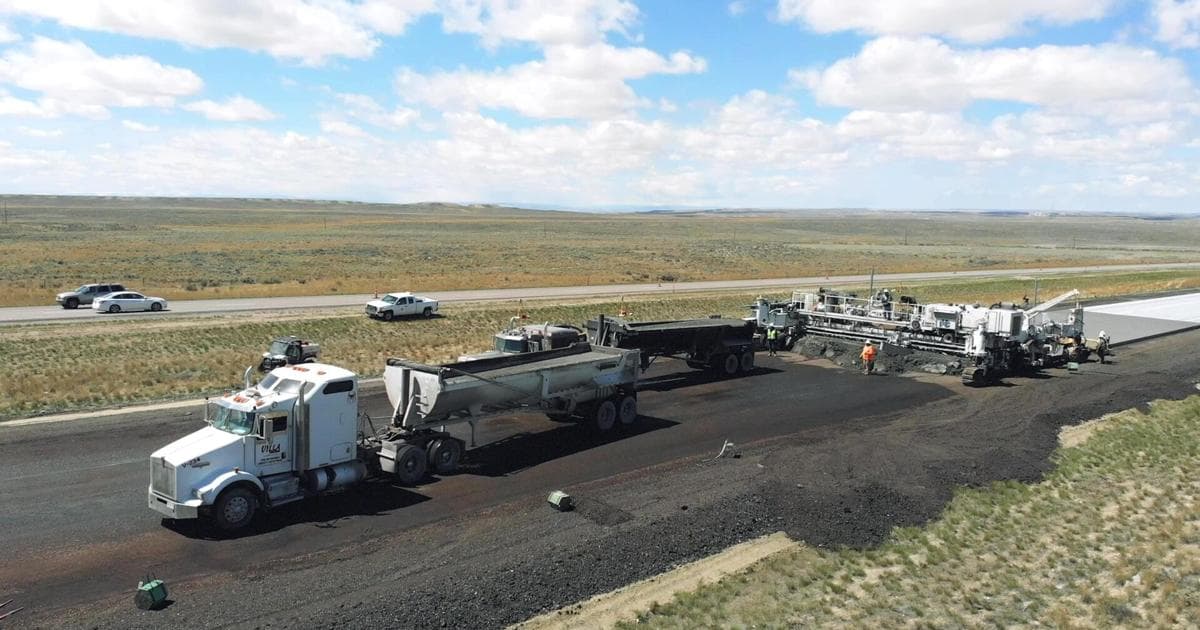
WYDOT’s six-year transportation schedule for Albany County puts a spotlight on a short but costly Laramie corridor: Bill Nye Avenue from Boulder Drive to 15th Street and Corthell Avenue from Whitman Street to Bill Nye Avenue. The draft 2026 State Transportation Improvement Program lists the 0.33-mile project as new construction with a total cost of $9.403 million.
That single project matters because WYDOT District 1 covers most of Laramie, Albany and Carbon counties and the I-80 corridor from Creston Junction to the west. In practical terms, that means the agency’s work plan can shape commute times for University of Wyoming traffic, freight movement through town, construction delays near neighborhood streets, and the reliability of winter travel on the routes people use to reach work, school, businesses and rural roads.
The State Transportation Improvement Program is WYDOT’s six-year project schedule, and the agency has said for years that it is shifting from a transportation improvement program toward an asset preservation program. That change puts more emphasis on maintaining existing roads and bridges instead of expanding capacity, a distinction that matters in Albany County because it can determine whether the next round of state dollars goes to resurfacing, bridge work, safety fixes or new construction.
For the Bill Nye and Corthell project, the draft divides the cost into $924,000 for preliminary engineering and $8.479 million for construction and engineering. The route sits in a part of Laramie that connects city neighborhoods with commercial areas and university traffic, so any lane restrictions or detours would ripple beyond the immediate work zone.
Local planning documents show why the state schedule is being watched closely. The City of Laramie and Albany County adopted a 10-Year Strategic Public Transportation Plan on Jan. 20, 2026, alongside the (Re)Connect West Laramie Plan. Albany County’s comprehensive plan says transportation and land use must be coordinated so the road system matches anticipated land uses, and it notes that transportation can influence development patterns by opening access to areas with development potential.
That makes WYDOT’s six-year plan more than a maintenance list. It is part of the county’s growth map, especially when local leaders are also asking voters to weigh a proposed $95 million raise over the next 10 to 12 years by keeping the local sales tax at six cents. State and local funding decisions will have to line up if Laramie is going to keep roads, transit, and growth moving in the same direction.
WYDOT has held annual STIP meetings in Laramie, Albany and Carbon counties in prior years, underscoring that the plan is meant to be revisited as priorities change. In Albany County, the key question is not whether roads will need work, but which corridors get it first and which parts of town have to live with delays while the county’s main travel routes are rebuilt.
This article was produced by Prism’s automated news system from verified source data, official records, and press releases, then run through automated quality and moderation checks before publishing. The system is built and supervised by the people who set the standards it runs under. Read our full AI policy.
Did this article answer your question?