Wyoming Fails Again to Pass Anti-SLAPP Law, Bill Stalls in Committee
A Rock Springs mother's testimony wasn't enough: Wyoming's anti-SLAPP bill died in Senate committee for the second year running, leaving the state among a dwindling minority without free-speech lawsuit protections.

Legislation seeking to curb lawsuits intended to deter public critique and scrutiny died for the second year in a row in Wyoming's 2026 budget session, leaving ranchers, local newspapers, and citizens who speak at public meetings with no statutory shield against retaliatory litigation.
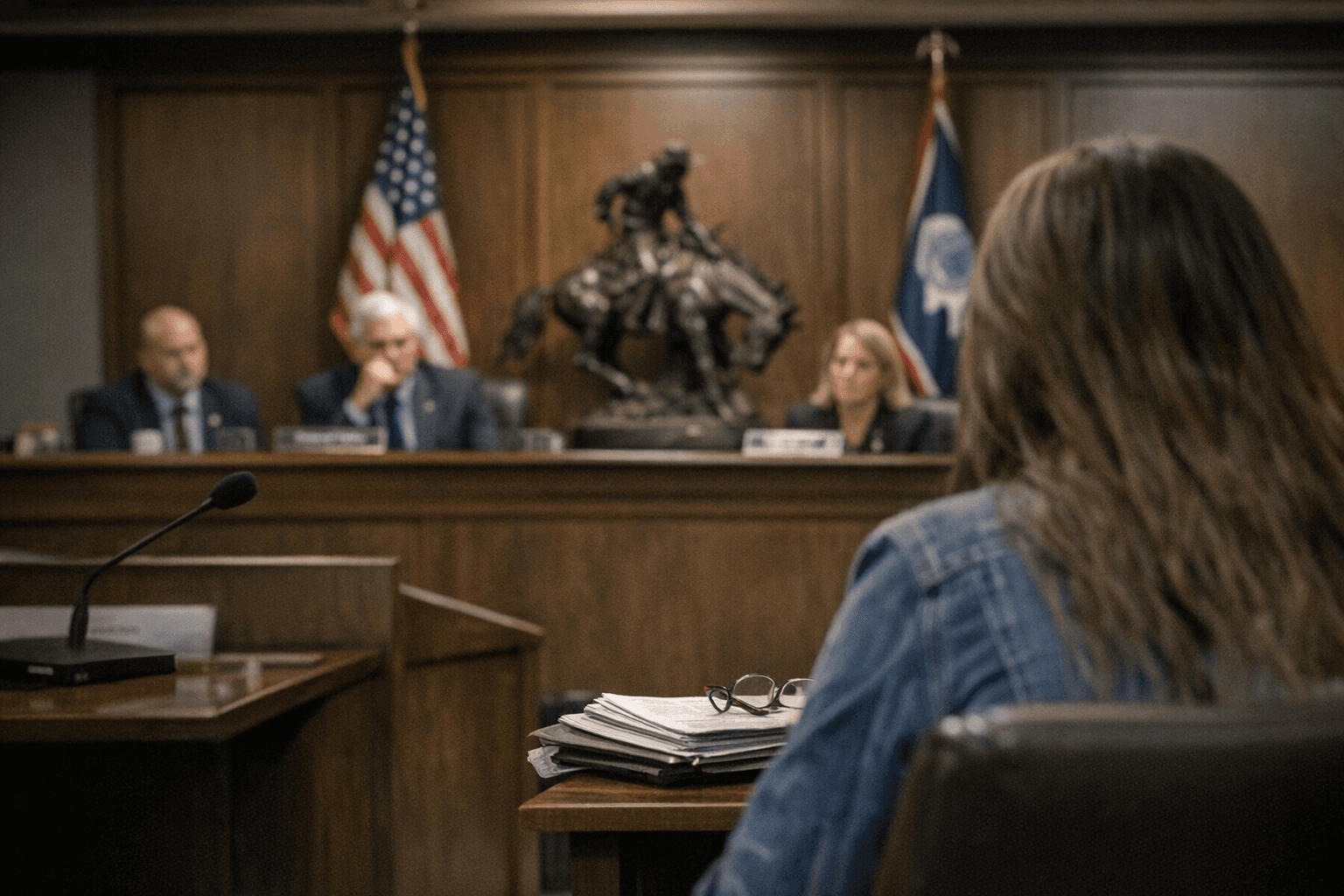
These laws are seen as tools to protect not only journalists, but private citizens who face retaliatory litigation for questioning those in public office or other powerful positions. While many legislators agreed Wyoming would benefit from such a law, the Senate Judiciary Committee ultimately decided on March 2 the measure before them wasn't the one for the job. The bill passed the Wyoming House but was never considered by the full Senate.
According to Rep. Pepper Ottman (R-Riverton), the goal of these suits is to impose enough legal costs and stress on someone until they stop speaking. "A rancher who testifies against a proposed industrial operation, a small newspaper that covers local government, a citizen who speaks out at a public meeting — all are vulnerable to SLAPPs under current Wyoming law," Ottman said at a Feb. 16 committee meeting.
Kari Cochran, a mother from Rock Springs, told the committee about how losing her teenage son to suicide motivated her to speak out about her school district's "failures to address bullying and mental health." Cochran believes her activism at public meetings and on social media is why two school district workers filed restraining orders against her. "I was stunned and overwhelmed," Cochran told the committee. "I didn't have an attorney and I was expected to be in court in less than two weeks. All because I dared to speak out against a district that failed my son."
Senate Judiciary Committee Chair Jared Olsen, R-Cheyenne, acknowledged the need but rejected the draft. "I definitely see the need for this type of legislation in Wyoming," Olsen said, "but as I talked to various stakeholders, if you will, that are involved in our court system, there's pretty much unanimous consent that this bill was not the vehicle to do it." A central objection was the bill's origin: Olsen said he would "rather write our own laws than an attorney from Nevada write our laws," referring to attorney Marc Randazza, who drafted the bill sponsored by Ottman.
The bill's architecture also drew scrutiny from legal experts. According to Laura Prather, an American Bar Association advisor to the Uniform Law Commission's Model Anti-SLAPP Committee and advisor to The SLAPP Back Initiative, substantive state laws can be applied in federal court, while state laws that conflict with federal procedures will not be applied. Prather warned that "the immunity provision could be problematic since other states have found similar provisions unconstitutional," and that she was concerned "there were no guardrails in the bill to ensure active case management by the judiciary at the outset of the case to ensure that constitutional rights are being protected." The legislation lacked strict timelines and deadlines for filing, allowing a case to sit on a docket rather than being resolved quickly.
Despite those divisions, the bill drew bipartisan support in the House. Rep. Mike Yin (D-Jackson) voted in favor. "No one should be able to use the court as a weapon rather than actually trying to achieve justice," Yin told the Mountain West News Bureau.
Wyoming is one of 10 states without legislation to prevent "strategic lawsuits against public participation." Forty states, Washington D.C., and Guam have statutes of varying quality. There were 500 alleged SLAPPs decided in 2024, according to research from The SLAPP Back Initiative, a database created by New York University's First Amendment Watch. The Initiative found that nearly half of the cases filed in states with anti-SLAPP laws were dismissed. Montana and Idaho passed similar laws last year; Colorado and Utah in the years before that.
Olsen proposed further study of the issue during the upcoming legislative offseason to craft Wyoming-specific legislation. The bill is considered a likely interim study topic when the Management Council reviews priorities on April 1. Whether the Joint Judiciary Committee, which placed anti-SLAPP legislation as its No. 2 offseason priority, can produce a Wyoming-drafted bill before the next session remains the open question heading out of Cheyenne.
This article was produced by Prism’s automated news system from verified source data, official records, and press releases, then run through automated quality and moderation checks before publishing. The system is built and supervised by the people who set the standards it runs under. Read our full AI policy.
Did this article answer your question?
