Wyoming Law Requires 5% Hand Audit of Ballots in 2026 Elections
Wyoming Gov. signed Senate File 113 on March 10, requiring county clerks to hand-count 5% of ballots in 2026 elections to verify machine accuracy.

Wyoming's governor signed Senate File 113 on March 10, putting every county clerk in the state — including Albany County's — on notice that hand-count audits of roughly 5% of Election Day ballots will be required for both the 2026 primary and general elections.
The law, sponsored by Sen. Barry Crago (R-Buffalo), directs clerks to physically count a sample of ballots and compare those tallies to the results produced by their electronic tabulation equipment. A non-codified portion of SF 113 spells out the mandate: "To complete a physical examination of as close to 5% of the total number of ballots cast on Election Day per county as possible, and to compare the results of the hand-count audit to the results tabulated by the electronic equipment."
Crago framed the legislation as a direct response to public skepticism about voting machines. "There's a group of citizens that are worried about the accuracy and integrity of our voting machines," he said. "I'm not one of those people, but I do understand the concern." He described SF 113 as essentially a one-time exercise. "This is sort of a test run, if you will," Crago said. "It does it in a very simple way so that we can actually show people whether the machines work or not. I believe it'll show that, but if not, we will prove other people right. And that's really the point of the bill. Let's find out the answer to this question once and for all."
Because much of the bill is non-codified, it is not written into permanent Wyoming statute. Crago said future lawmakers could make the audit a standing requirement if the 2026 results revealed problems.
The measure passed the Senate on third reading February 24 before heading to the House and receiving the governor's signature two weeks later. A companion measure, HB 52, appropriates $300,000 to the Secretary of State to provide training for county clerks, staff, and election volunteers ahead of the new requirement.
SF 113 gives clerks nine days after the county canvass to complete the audit, a considerably more flexible window than the 72-hour timeline contained in HB 52. The bill also allows clerks to appoint audit boards without adhering to the June 30 deadline that governs the appointment of regular election judges. Platte County Clerk Malcolm Ervin, president of the Wyoming County Clerks Association, said those changes made the bill workable. "The audit doesn't change results, it just confirms whether the system works correctly or not," Ervin said, stressing the legal distinction between an audit and a recount that can alter certified tallies.
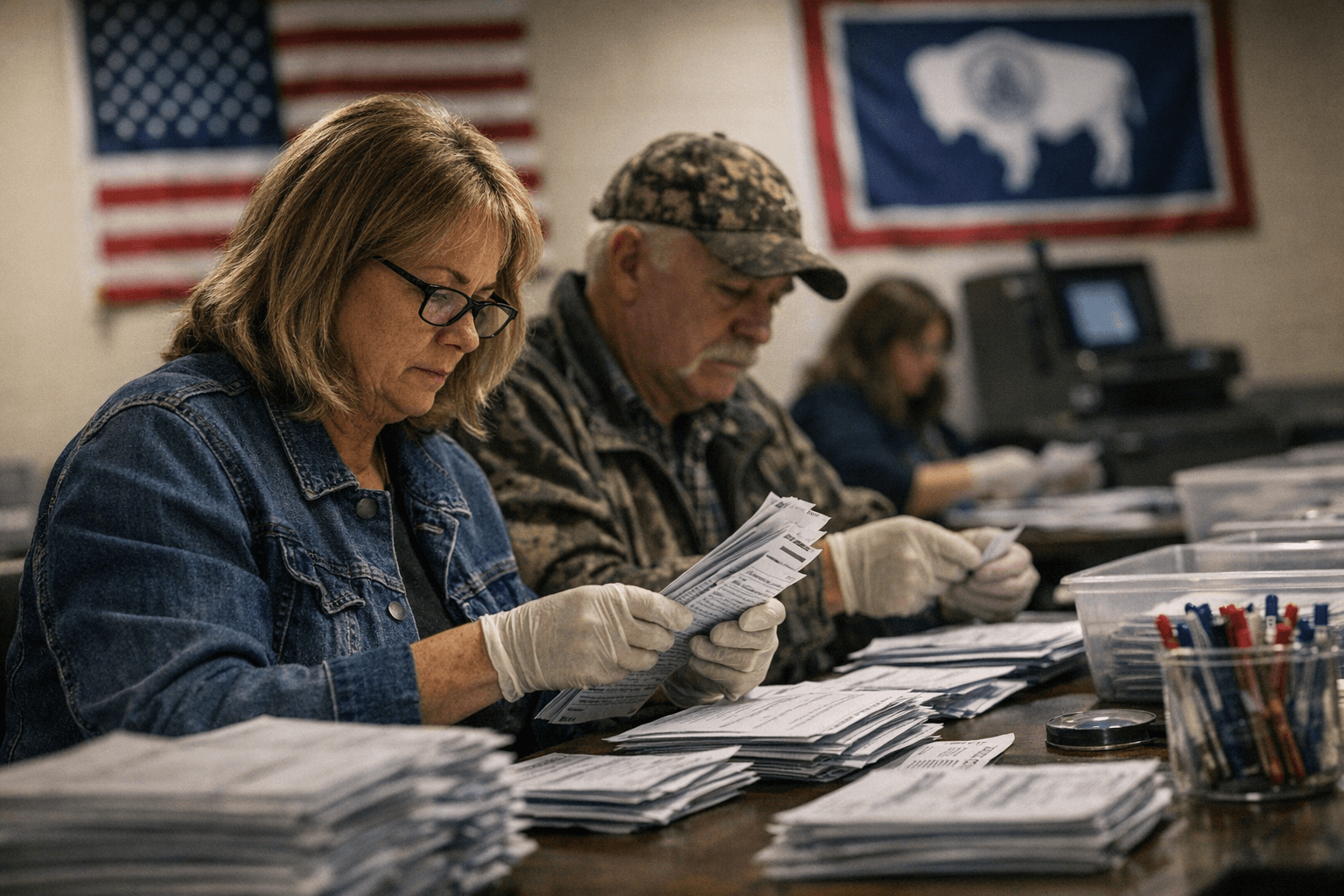
Not everyone was persuaded. Marguerite Herman, testifying for the League of Women Voters of Wyoming, called the hand-count approach "fatally flawed" and cited testing by the Campbell County clerk that "found stark differences between machine and hand-count accuracy." Some lawmakers also questioned the need. Sen. Dan Dockstader (R-Afton) said simply, "We're not hearing a lot of request for this." Fremont County Clerk Julie Freese noted before the session that hand-count audits are "incredibly rare" among Wyoming's county clerks, though she did not oppose legislation that would make them more common.
Secretary of State Chuck Gray offered a different assessment, telling the committee he was in "complete support" of SF 113 and calling it "probably one of the most vetted election bills in this session."
SF 113 is part of a broader wave of election legislation this session, some of it prompted directly by miscounts in Weston County's 2024 elections. Other bills moving through the legislature would raise the penalty for defying a legislative subpoena and impose new post-election audit requirements on county clerks statewide.
Albany County Clerk has not yet commented publicly on how the 5% audit will be implemented locally, including how the sample will be selected, how many ballots that figure translates to in raw numbers, or whether early and absentee ballots fall within SF 113's "Election Day" language. Those operational details will shape exactly what the new law demands of Albany County's election administration before voters head to the polls this August.
This article was produced by Prism’s automated news system from verified source data, official records, and press releases, then run through automated quality and moderation checks before publishing. The system is built and supervised by the people who set the standards it runs under. Read our full AI policy.
Did this article answer your question?
