Wyoming Legislature Concludes 2026 Budget Session, Leaving Schools Uncertain
Albany County School District 1 must pass its budget without knowing how much state funding it will receive after Wyoming's first school funding recalibration in 15 years.
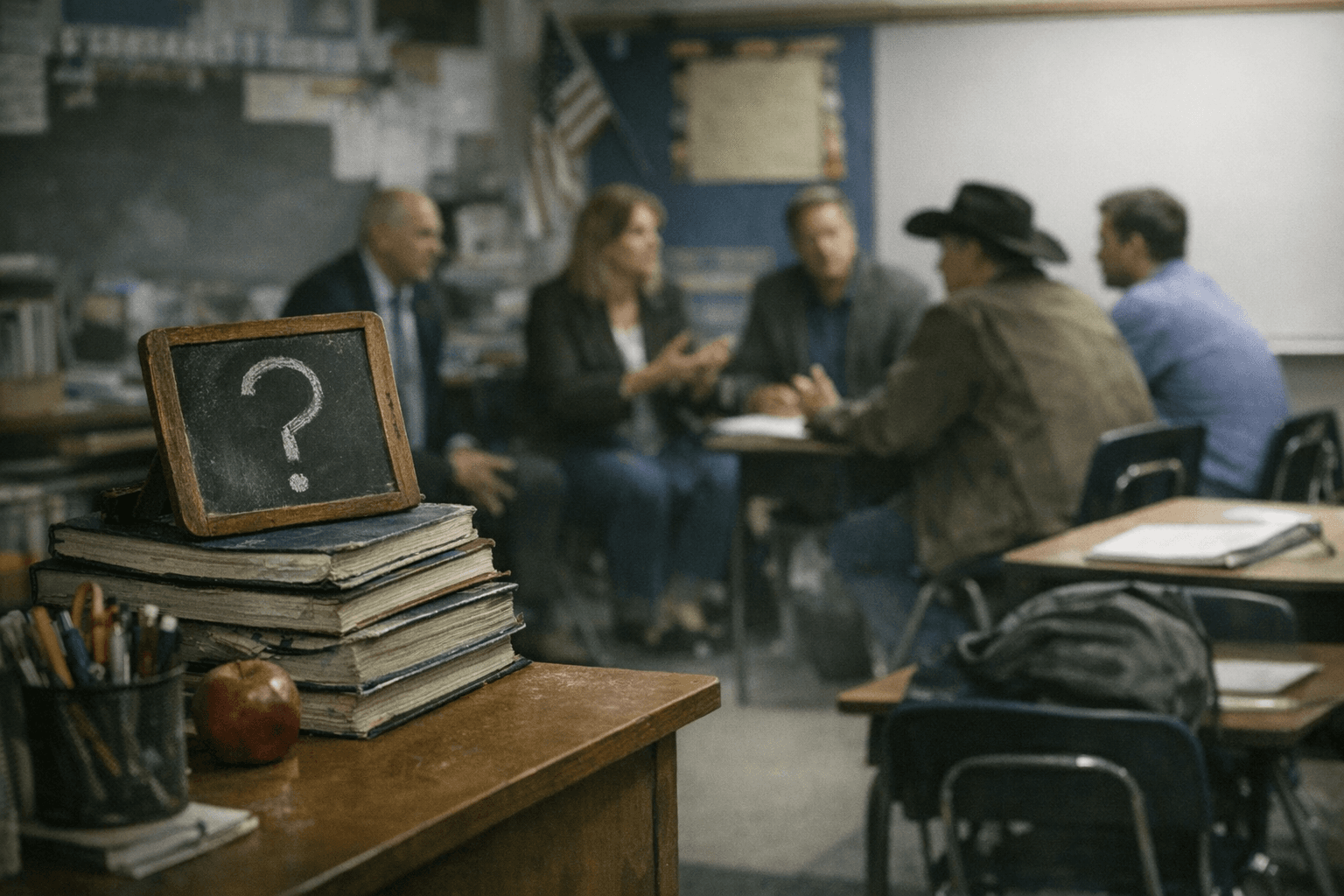
Albany County School District 1 Chief Financial Officer Trystin Green had a blunt assessment when trustees asked about the district's upcoming budget: "This might be the shortest budget discussion ever because my answer is 'I don't know.'"
Uncertainty surrounding proposed changes to Wyoming's school funding system is forcing the district to adopt its next budget without knowing how much state funding it will receive, a situation that emerged from the recalibration of Wyoming's school funding model approved during the 2026 Budget Session of the Wyoming Legislature, a first in about 15 years. The changes carry potential consequences for salaries, insurance, facilities funding, and extracurricular programs across the district.
At the heart of the confusion is a structural overhaul of how the state calculates what each district is owed. Green explained that "the Wyoming Legislative Service Office has taken the existing model and dumped it on its head to create a whole new model," creating "a silo for a categorical grant for funding of salaries that can cover the underfunding or benefits, but that's unclear," and that the district must now wait both for a model from the Wyoming Department of Education and for rules governing the new categorical grant. Green said the district will be lucky to know the final stance of all the bills by the end of March, and that the Wyoming Department of Education's model, which has final say, may not arrive until July: "So, we will pass a budget blind."
The district does have a cushion: "We've got a healthy enough reserve that we should be able to ride this wave for a year and we will pull from reserves," Green said. Trustee Janice Marshall noted that a March 10 meet-and-confer session focused on the recalibration bill's impact on salaries and health insurance, with employee groups asked to provide input ahead of a March 31 follow-up meeting where updated insurance cost projections, including a projected 7% increase, are expected.
The school funding uncertainty was one of several consequences from a session that, from the start, seemed destined to be defined by cuts. When Gov. Mark Gordon delivered his State of the State address on Feb. 9, budget cuts appeared set to dominate the gathering, and in some ways they did, with the House and Senate passing two budgets with key differences, while a check-passing controversy dominated proceedings and produced multiple investigations and rule changes.
The Wyoming Business Council absorbed the sharpest single blow. A 27-33 House vote against an amendment to restore the agency's funding left it facing a near-total loss of operational dollars; the failed amendment, brought by Rep. Trey Sherwood of Laramie, had sought to reinstate the agency's standard budget and preserve 38 full-time employees and two intern positions. The final budget reduced the council's two-year appropriation from Gov. Gordon's recommended $54.6 million to about $15 million, enough to sustain the agency while lawmakers reexamine its role. The council's Small Business Innovation Research program has been idled, and the Business Ready Community grant and loan program received no new appropriation for the upcoming biennium, though it will continue operating on leftover dollars from prior years. No staffing decisions had been made at the agency as of the session's close.
Along the way, lawmakers agreed on a public school recalibration bill for the first time since 2010. Observers raised concerns about how that debate unfolded on the House floor. Jess Johnson, government affairs director for the Wyoming Wildlife Federation, said the process was troubling. "What was alarming is that the discussion was only coming from people that brought the amendments," Johnson said. "This bloc voting — a thing that we've started to see, especially in the House — really showed itself during this budget discussion."
Albany County residents will have a chance to put those questions directly to their lawmakers on Thursday, March 26, when the local delegation hosts a public town hall at The Collective in Laramie. At least four of the community's six local lawmakers have confirmed they will attend: Reps. Ken Chestek, Trey Sherwood, and Karlee Provenza, as well as Sen. Chris Rothfuss. Sen. Gary Crum and Rep. Ocean Andrew have also been invited. Jeff Victor of The Laramie Reporter will moderate, drawing questions from submissions the public can file in advance through an online form at The Laramie Reporter's website. Similar questions may be combined, and organizers advise constituents to be ready to ask their question in person in case time runs short.
"This is a chance for Albany County voters to connect with their elected officials," Victor said. "The 2026 Budget Session, which just ended, saw plenty of debates about topics important to Laramigos. University funding. Housing. Public lands. Abortion. Education policy and funding. Even a proposed book ban."
For the district's schools, though, the more pressing question may not be what happened in Cheyenne, but what happens next in Laramie once the Wyoming Department of Education finally delivers a model that tells ACSD1 how much it actually has to spend.
This article was produced by Prism’s automated news system from verified source data, official records, and press releases, then run through automated quality and moderation checks before publishing. The system is built and supervised by the people who set the standards it runs under. Read our full AI policy.
Did this article answer your question?
