Wyoming Territorial Prison reveals frontier law and prison reform
The Wyoming Territorial Prison still shapes Albany County because it is both a preserved frontier institution and a working museum at the edge of downtown Laramie.

The Wyoming Territorial Prison still shapes Albany County because it is both a preserved frontier institution and a working museum at the edge of downtown Laramie. Built in 1872, it opened first as a federal prison, then became Wyoming’s state penitentiary in 1890 and held about 1,200 prisoners before closing in 1903. Today, the site at 975 Snowy Range Rd. remains a public landmark, listed on the National Register of Historic Places and run as a Wyoming State Parks historic site.
A landmark that outlived the territory
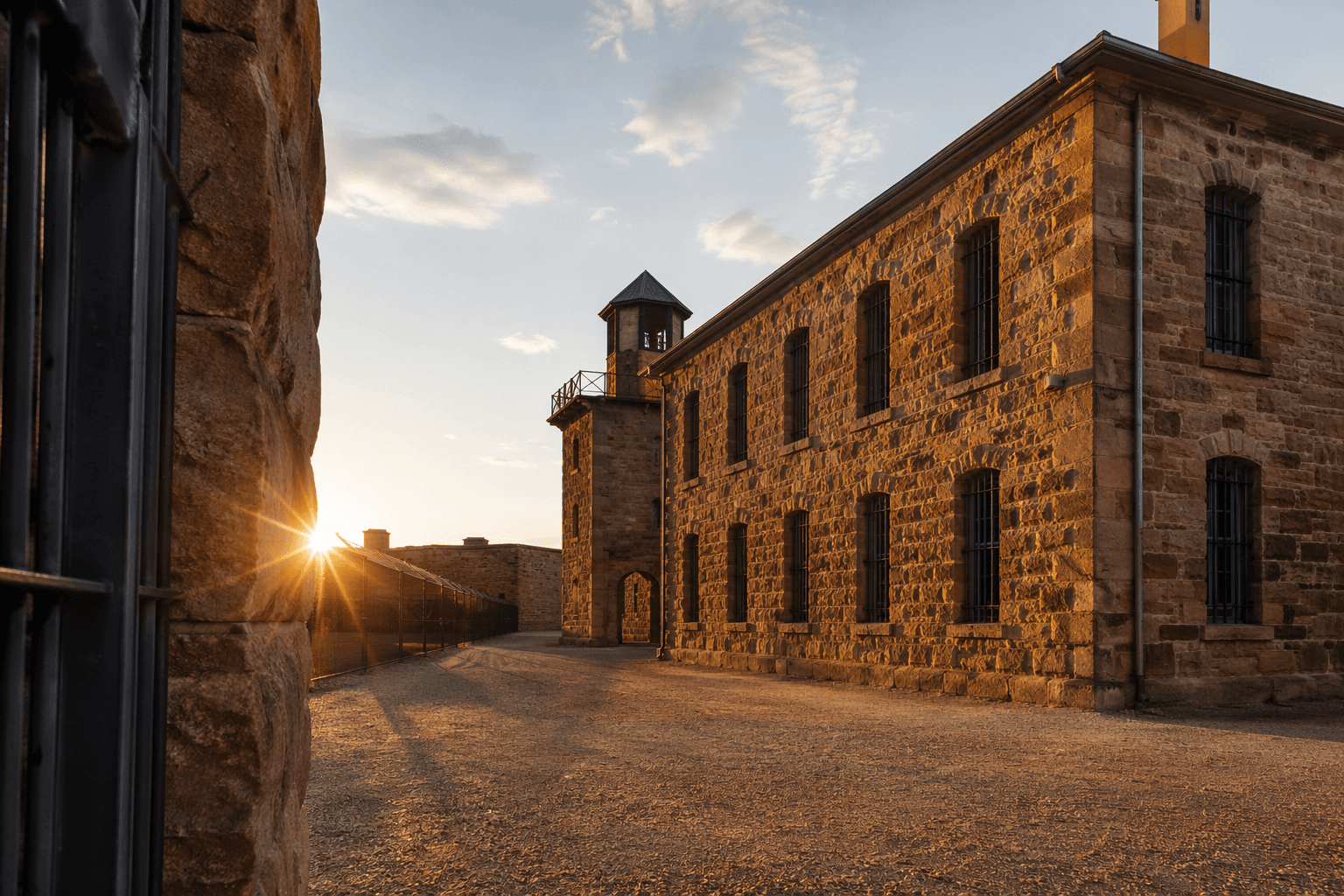
The prison’s setting explains part of its power as a local landmark. A National Park Service nomination describes it as standing west of the Big Laramie River, apart from town and separated by a prison preserve that once covered hundreds of acres. That physical isolation was deliberate, and it still gives the site a distinct edge-of-town character that residents of Laramie know well.
The preservation status matters just as much as the architecture. The National Register of Historic Places is the federal program the National Park Service uses to identify and protect historic places, and the prison’s listing gives the site a permanence that goes beyond outlaw lore. It is not just a remnant of the 19th century; it is an officially protected piece of Wyoming’s public history, maintained as a museum for everyday visitors, school groups, and anyone tracing the state’s territorial past.
Frontier law, prison reform, and the Auburn system
The prison tells a harder story than a simple Old West stop. Its interpretive focus reaches into frontier law, prison reform, and the agricultural history of Wyoming, which is why the site is more useful than a single outlaw legend. The prison operated during a period when state power was still being built in Wyoming, and the institution reveals how officials tried to impose order in a new territory.
Inside, the prison reflected the Auburn prison system, with hard labor, enforced silence, uniforms, and numbers replacing names. Those methods were meant to reshape prisoners as much as to punish them, and they show how incarceration was tied to reform as well as discipline. Guided tours cover the prison’s history, architecture, notorious prisoners, prison management, and Wyoming history, so the site can be read as a working lesson in how punishment, labor, and state-building fit together.
The people who make the story specific
Two inmate stories keep the prison from dissolving into a generic frontier narrative. Butch Cassidy, born Robert LeRoy Parker, was incarcerated there from 1894 to 1896 for grand larceny, specifically horse theft. The prison’s convict records make clear this was the only prison that ever held him, which gives the site a firm place in the larger history of Western outlaw mythology.
Arthur Hinman tells a different, and more unsettling, story. He was 14 when he entered the prison after stealing a horse and saddle, was convicted of grand larceny, and served from 1901 to 1903. His profile identifies him as the youngest convict ever put behind bars there, a fact that sharpens the human scale of the institution and shows how wide the prison’s reach was, from notorious adults to a child barely into his teens.
From penitentiary to university outpost
The prison’s second life is one of the most important reasons it still matters to Albany County. After the prison closed in 1903, the site spent most of its next chapter as an experimental stock farm station for the University of Wyoming, continuing in that role until 1989. That shift from punishment to agriculture and research ties the prison directly to the university community in Laramie and to the way Wyoming reused older state property for public purposes.
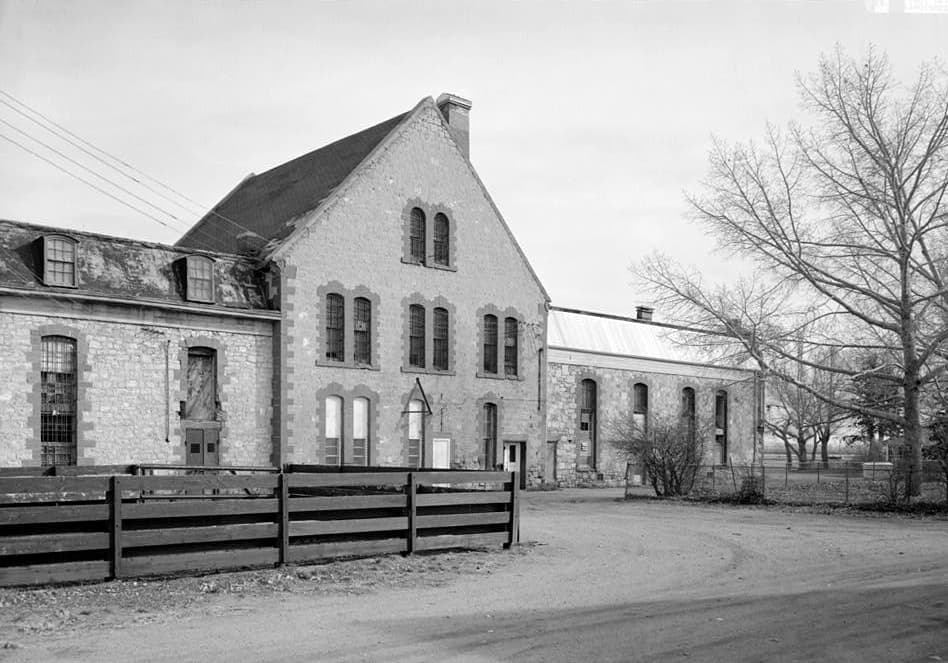
The Prison Industries Building, also called the broom factory, helps explain that transition. It was built to raise revenue, manage the prison population, and keep a workshop running year-round, which makes it a practical artifact as well as a historic one. The museum’s exhibits also include the historic horse barn display called Science on the Range, underscoring the site’s agricultural and research chapter rather than treating it only as a crime museum.
What visitors find now
The prison is still organized for public use, and the logistics are straightforward. The museum is open May through September from 9 a.m. to 4 p.m. daily, then October through April from 10 a.m. to 3 p.m. Thursday through Saturday. Last admission is sold one hour before closing, and the site notes that parts of the historic complex, including Frontier Town, Ranchland, and the Boxcar House, close during winter.
A visit also has a clear price structure. Adult and senior admission is $9, youth ages 12 through 17 pay $4.50, and children 11 and under are free. Wyoming State Parks annual day-use permits and Wyoming Lifetime Veteran permits are honored for free admission, which keeps the site accessible to residents who already use the state parks system.
- Address: 975 Snowy Range Rd., Laramie, WY 82070
- Hours: May through September, 9 a.m. to 4 p.m. daily
- Hours: October through April, 10 a.m. to 3 p.m. Thursday through Saturday
- Last admission: one hour before closing
- Admission: $9 adults and seniors, $4.50 youth ages 12 through 17, free for children 11 and under
- Free admission: Wyoming State Parks annual day-use permits and Wyoming Lifetime Veteran permits
Why it still belongs in Albany County’s civic life
The Wyoming Territorial Prison matters now because it does more than preserve a building. It preserves a controlled landscape, a record of how Wyoming used punishment to build authority, and a record of how the state later turned that same property toward education and public history. In a county where Laramie, the university, and the historic core of the state all overlap, the prison remains one of the clearest places to see how frontier law became civic memory.
This article was produced by Prism’s automated news system from verified source data, official records, and press releases, then run through automated quality and moderation checks before publishing. The system is built and supervised by the people who set the standards it runs under. Read our full AI policy.
Did this article answer your question?