Allendale exhibit spotlights Topper Site and ancient Americas debate
USC Salkehatchie’s Topper exhibit brings a global debate about the first Americans into Allendale County, with artifacts, audio-visual displays, and a rare local glimpse.
A small county site with a worldwide reach
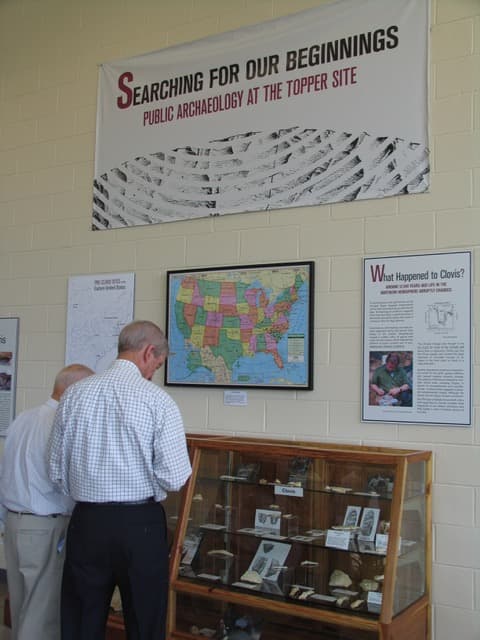
The Topper Site exhibit at USC Salkehatchie turns one of Allendale County’s most distinctive heritage resources into something residents can walk into, study, and talk about face to face. The display, Searching for our Beginnings: Public Archaeology at the Topper Site, does more than show old artifacts. It places Allendale County inside one of archaeology’s most important debates: when people first reached the Americas.
That matters close to home because the site itself is not far away. USC says the Topper Site sits on the bank of the Savannah River in Allendale County, about 15 miles from the USC Salkehatchie campus. The exhibit in the USC Salkehatchie Campus Library is the first permanent display of artifacts from the site, which means a local discovery that once lived mainly in scholarly discussion now has a public home in the county.
What the exhibit lets visitors see
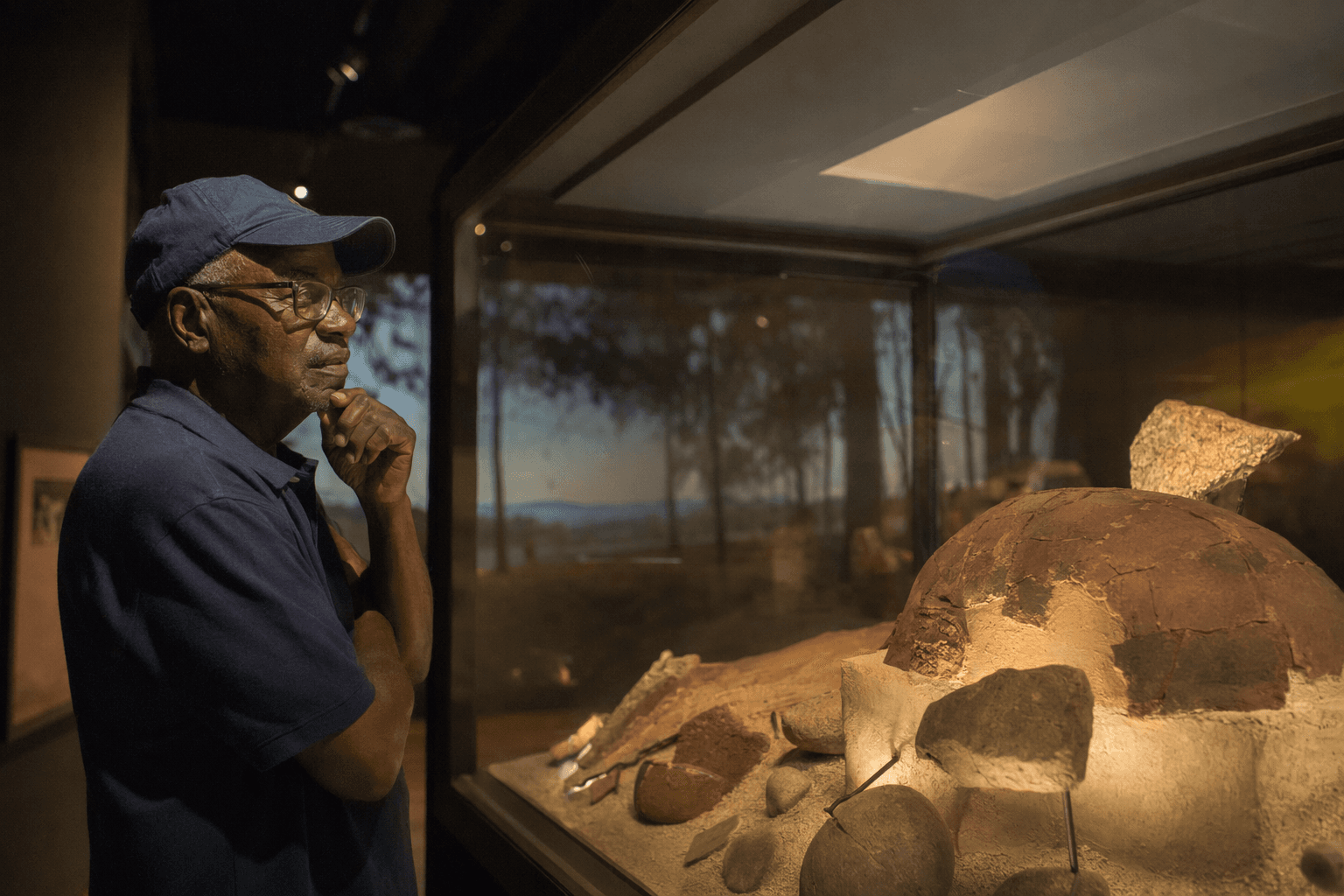
The exhibit includes stone tools made by people long ago, explanatory posters, and a kiosk with interactive audio-visual presentations. That mix makes it useful both as a historical display and as a teaching tool for students, families, and teachers who want a clear entry point into a complicated scientific story. In practical terms, it gives local visitors a chance to see evidence, not just hear about it.
USC says the exhibit was prepared by the South Carolina Archaeological Public Outreach Division under the direction of Dr. Al Goodyear of the South Carolina Institute of Archaeology and Anthropology, in consultation with Dr. Ann Carmichael, then dean of USC Salkehatchie. That partnership matters because it ties the research side of archaeology to the campus side of public education. The result is a display that connects scholarship, outreach, and community access in one place.
For Allendale County, that accessibility is part of the value. The county’s historic-sites page places Topper alongside churches, plantations, bridges, train depots, and public buildings across the county, showing that local heritage is not just about preserved structures. It also includes a nationally recognized archaeological site that adds educational value, a stronger sense of place, and potential interest for visitors who may not otherwise look toward Allendale County as a destination.
Why the Topper debate captured attention far beyond South Carolina
The Topper research drew worldwide attention because it challenged a long-held idea about the first people in the Americas. USC says the prevailing opinion had been that humans first arrived about 13,000 years ago, the basic framework tied to the Clovis model. The Topper findings suggested human presence in the Americas much earlier, with USC describing the claim that people may have been here 50,000 years ago as the reason the site became a global story.
That is an extraordinary gap. If the older estimate was about 13,000 years and Topper suggested 50,000 years, the difference is roughly 37,000 years, enough to force archaeologists to rethink a major chapter of North American history. For a county of modest size, that kind of scientific stakes gives the site an influence far beyond its borders.
The debate was not just academic theater. USC’s own publications show that the Allendale-Topper conference was held on January 25 and 26, 2002, at the University of South Carolina campus, bringing researchers together around the site’s significance. The conversation intensified again in 2004, when radiocarbon tests on carbonized plant remains from the Topper dig indicated that the sediments containing artifacts were at least 50,000 years old.
Even then, skepticism remained part of the story. CNN reported in 2004 that more conclusive evidence would be needed to verify a 50,000-year occupation, which is useful context because it shows Topper was influential precisely because it was contested. That tension between bold interpretation and scientific caution is one reason the exhibit remains meaningful: it shows how archaeology works, not just what archaeologists have concluded.
Why this matters to Allendale County now
The strongest local value of the Topper exhibit is that it turns a world-class scientific question into something residents can encounter without leaving the county. A site that once fueled debate among archaeologists now sits inside the USC Salkehatchie Campus Library, open to the public and available on a regular weekday schedule. That makes the exhibit especially important for teachers looking for local material, students learning about South Carolina history, and families who want a reason to connect what they see on campus with what lies along the Savannah River.
The exhibit also strengthens the case that heritage can be a living part of local life, not only a preserved memory. Allendale County is already rich in sites and stories, but Topper gives the county something rare: a place where local land meets one of the biggest questions in human prehistory. That combination can deepen civic pride because it shows that a county often defined by its familiar landmarks also has a role in a story that reaches across continents.
There is also a practical educational payoff. The posters and interactive kiosk make the exhibit approachable for visitors who may not have background in archaeology, while the stone tools and research framing invite deeper study for those who do. That balance is exactly what public archaeology is supposed to do: translate specialized research into shared knowledge that people can actually use.
How to experience the exhibit
The Topper exhibit is open to the public Monday through Friday from 8:30 a.m. to 5 p.m. Visitors will find it in the USC Salkehatchie Campus Library in Allendale. Because the display sits on campus and is tied directly to the Topper Site, it works as a convenient stop for anyone who wants to understand why one archaeological site near the Savannah River has carried so much weight in the study of the ancient Americas.
For Allendale County, the exhibit does more than preserve artifacts. It gives the county a visible link to a debate that shaped archaeology worldwide, and it makes that debate available to the people who live nearest to it. That is the real significance of Topper at USC Salkehatchie: a local exhibit with a global argument inside it, and a point of pride that can be studied close to home.
This article was produced by Prism’s automated news system from verified source data, official records, and press releases, then run through automated quality and moderation checks before publishing. The system is built and supervised by the people who set the standards it runs under. Read our full AI policy.
Did this article answer your question?