How Allendale County records begin with its 1919 creation
Allendale County’s paper trail starts in 1919. If a deed, marriage, or estate predates the county, the search often has to move back to Barnwell or Hampton.
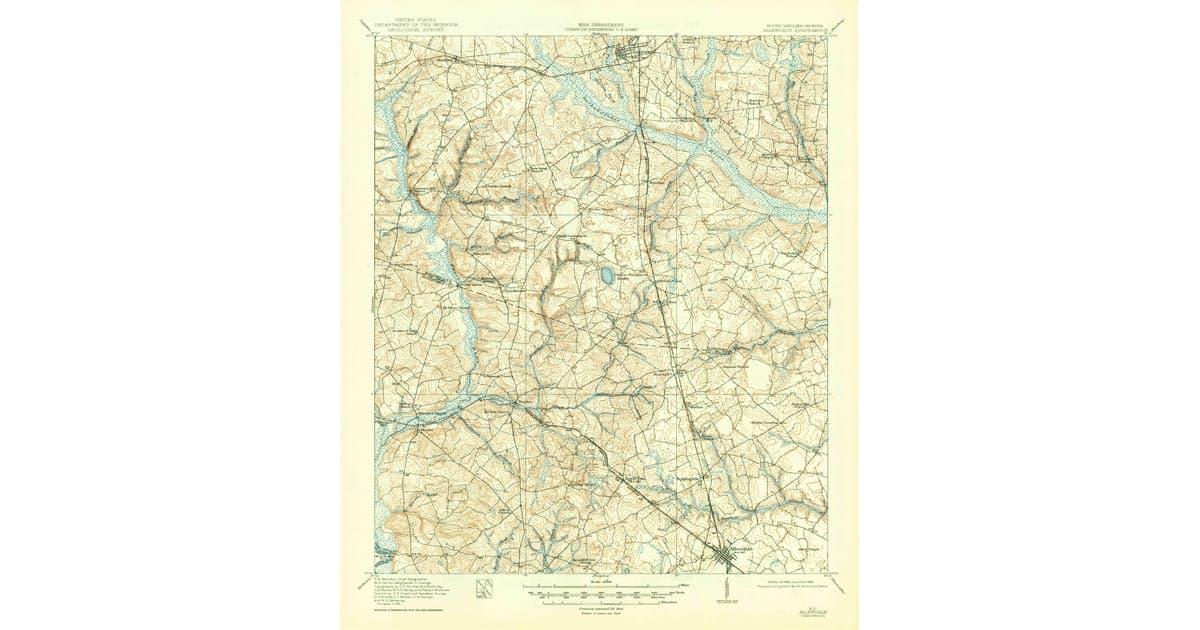
Allendale County’s records do not reach into the county’s pre-1919 past because the county itself did not exist before then. Its official paper trail begins with formation from parts of Barnwell and Hampton counties, which means the first stop for many local searches is the post-1919 Allendale record set, and the second stop is often one of the parent counties.
Where the county record trail begins
The South Carolina Department of Archives and History places Allendale County’s core record series at the point of its creation. Conveyance books begin in 1919, probate estate papers begin in 1919, marriage books begin in 1919, marriage licenses begin in 1919, and treasurer tax duplicate books run from 1919 onward. For anyone tracing land, family, or estate history tied to property now inside Allendale County, that date is the dividing line between records that should be in Allendale and records that may still sit in Barnwell or Hampton.
That matters because a search can fail for a simple reason: the county record book you want may not exist yet. A deed for land now in Allendale that was signed before 1919 may have been recorded when the tract was still under Barnwell or Hampton jurisdiction. The same logic applies to marriages, probate matters, and tax records connected to families who lived in the area before the county was carved out.
The state archives’ summary guide is especially useful because it sits inside a much larger statewide system. It includes records from all 46 counties, six districts, and ten parishes, and it is updated quarterly as new accessions are transferred. For researchers, that means Allendale is not an isolated file cabinet. It is one piece of a statewide archive where the record trail can move backward through older jurisdictions.
Why 1919 is the key date for research
The practical rule is simple: start with Allendale County records for anything from 1919 forward, then step outward to Barnwell County and Hampton County for earlier material. That sequence fits the county’s history and helps avoid dead ends when a family line, land transaction, or estate file predates county formation.
The county’s own historical setting makes that split even more important. The South Carolina Encyclopedia describes Allendale as South Carolina’s youngest county, yet also the place with the oldest known human habitation in the state. Archaeological investigations have found evidence of settlement more than 16,000 years old, and prehistoric people in the area used Allendale Chert in stone tools. In other words, the land is ancient even though the county government is young.
European settlement began in the 1750s, with early communities at Matthews Bluff on the Savannah River and Jackson’s Branch. By the antebellum era, the area that became Allendale made up the southern third of Barnwell District. Those older layers explain why a family history search can outlast the county line itself: the geography stayed put while the government map changed.
A county built after the landscape was already full of history
Allendale County’s courthouse tells the same story in brick and mortar. The courthouse was constructed in 1921-1922, shortly after the county emerged in 1919 from parts of Barnwell and Hampton counties. Its plans began with the act creating the county, so the building itself reflects the new government that followed.
That courthouse also carries the mark of a later crisis. An arson fire in May 1998 badly damaged the building’s interior. The reconstruction project was later listed in the National Register on August 1, 2007, a reminder that the county’s institutional history includes both loss and restoration. For researchers, the courthouse is more than a symbol. It is part of the record chain that grew out of the county’s post-1919 government.
The South Carolina Association of Counties adds another layer of identity. It says the county covers 408 square miles, had a 2020 Census population of 7,990, and an estimated population of 7,369 in 2023. Those figures matter because they show the scale of the county’s records work: a small population, a modest land area, and a local government whose paper trail still anchors family and property searches across generations.
Names, places, and the people behind the county
Allendale and its county seat were named for the Allen family, and Paul Allen was the town’s first postmaster. That naming detail connects government records to the family history embedded in the place itself. It also gives local researchers one more anchor when tracing older references in deeds, postal records, or community histories.
The county’s social history is just as rooted in migration and agriculture. The area was settled in the mid-eighteenth century by English, German, and Scotch-Irish farmers, and it remains primarily agricultural. That continuity helps explain why land records matter so much here. When farms, family plots, and inherited parcels stay central to local life, conveyance books and estate papers become the backbone of community memory.
The landscape also includes names that recur in older histories and local memory: Matthews Bluff, Rivers Bridge, and Bufords Bridge. Those places remind you that county lines came late, but roads, churches, battle sites, and river crossings came first.
How to use the records the right way
A clean Allendale search usually follows this path:
1. Start with Allendale County records for 1919 and later, especially conveyance books, probate estate papers, marriage books, marriage licenses, and treasurer tax duplicate books.
2. If the person, deed, or estate appears earlier than 1919, move into Barnwell County and Hampton County records.
3. Use the older place names and landmarks, such as Matthews Bluff, Jackson’s Branch, or the Savannah River corridor, to match the geography before the county boundary existed.
4. Treat the county line as a records boundary, not a family-history boundary, because people, land, and institutions were already there long before Allendale was formed.
That approach fits the county’s history exactly. Allendale’s government is young, but the land, the families, and the paper trail that surround it are much older. For anyone tracing deeds, marriages, or estates in this corner of South Carolina, the county’s 1919 creation is not just a date. It is the point where the search begins to split between Allendale and the counties that came before it.
This article was produced by Prism’s automated news system from verified source data, official records, and press releases, then run through automated quality and moderation checks before publishing. The system is built and supervised by the people who set the standards it runs under. Read our full AI policy.
Did this article answer your question?