USC Salkehatchie exhibit spotlights Allendale County's ancient Topper Site
A USC Salkehatchie exhibit turns the Topper Site into Allendale County's rarest asset: a world-class claim to the earliest Americans, now ready for classrooms and visitors.
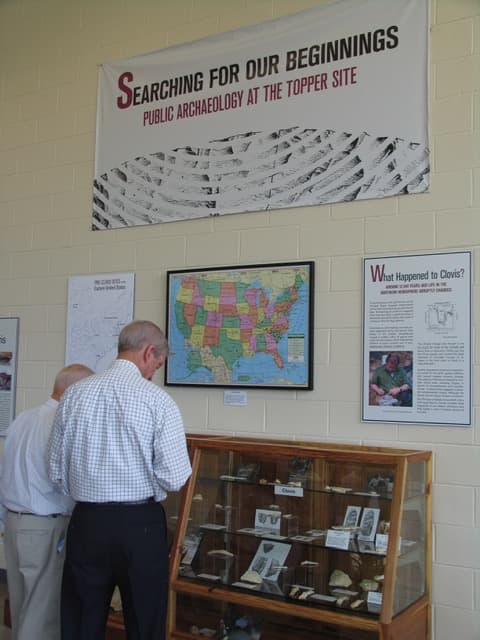
Allendale County is usually introduced through its churches, farms, courthouses and Civil War sites, but USC Salkehatchie is putting something much older on display. At the West Campus library, the exhibit “Searching for our Beginnings: Public Archaeology at the Topper Site” turns a local dig into a public asset for the county, one that can shape classroom trips, heritage tourism and the way residents talk about where they live.
The reason it lands so strongly is simple: the Topper Site is not just another archaeological stop. It sits along the Savannah River in Allendale County, it is named for its finder, David Topper, and university material says research there points to people being in the Americas 50,000 years ago, far earlier than the long-accepted estimate of about 13,000 years ago. That gap is why the site has drawn worldwide attention from scholars and news media, and why a small county in South Carolina keeps showing up in conversations that reach far beyond the Lowcountry.
A place-based claim with global reach
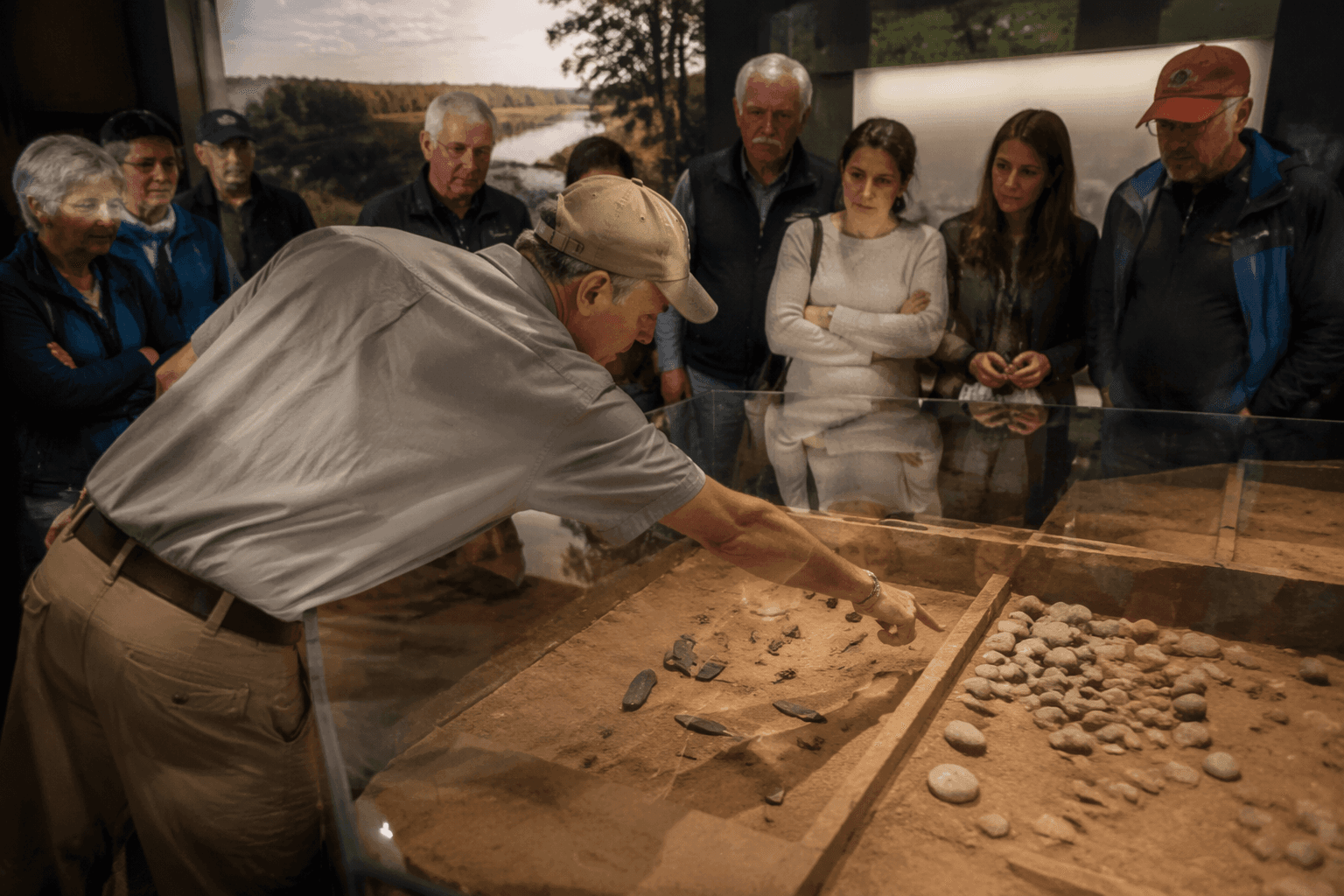
Topper gives Allendale County a distinction that few rural counties can claim: a locally rooted story that reaches into one of archaeology’s biggest debates. The exhibit centers on stone tools recovered from the site, the kind of material evidence that makes the case concrete and visible rather than abstract. S.C. Sea Grant Consortium’s Coastal Heritage Magazine has described those small stone pieces as potentially central to the story of Homo sapiens, which places the site inside a much larger scientific question about human origins.
That matters for identity as much as for scholarship. A county often framed by hardship can point instead to a world-class archaeological claim, one tied to place by the Savannah River and to people by the name David Topper. For Allendale County, that is a marketable story, the kind that can support local pride while giving teachers, visitors and small businesses a reason to see the county as more than a map dot between better-known destinations.
What the West Campus exhibit shows
USC Salkehatchie says the exhibit is part of the campus’s community programming on the West Campus, which makes it more than a display case. The library setting puts the Topper story where students, residents and visitors can encounter it directly, without needing a field season or a research conference to understand why the site matters. The exhibit’s focus on artifacts and excavation evidence turns a complicated scientific debate into something tangible.
That public-facing approach is important because the Topper story has always lived at the intersection of research and outreach. The exhibit has also been described as the first permanent display of artifacts from the Topper Site, which gives Allendale County a fixed place to tell a story that has otherwise moved through excavation seasons, academic papers and occasional media bursts. In a county where public identity often comes from familiar landmarks, that permanence gives the archaeology a stronger civic footprint.
The people behind the dig
Albert Goodyear is the central name tied to the Topper research, and university material also identifies Dr. Al Goodyear as a key figure in the project. USC Salkehatchie’s 2023 news item noted that a dean participated in a Topper Site excavation, a reminder that the work is still active and still connected to the university community. The project is not a relic from a single season; it is an ongoing scholarly effort with a long trail of teaching, fieldwork and outreach.
That history stretches back decades. Excavations at Topper began in 1986, and the site has continued to draw attention through conferences and volunteer digs. A 2002 Allendale-Topper conference was held on the University of South Carolina campus on January 25 and 26, 2002, showing that the discussion had already become large enough to bring together scholars and supporters in Columbia. A 2012 announcement sought volunteers for a Topper archaeological dig from April 30 through June 2 that spring, led by Albert Goodyear, which underlines how the site has remained open to public involvement as well as academic study.
Why this matters for Allendale County now
For schools, the exhibit offers a field-trip destination built around one of the oldest debates in North American prehistory. For residents, it offers a locally owned story that can sit alongside the county’s churches, farms and historic sites without borrowing anyone else’s identity. For Allendale County government and community leaders, it creates a ready-made narrative for heritage tourism: a small county with a site that scholars around the world have already put on their map.
That combination is rare. The Topper Site is not just evidence of ancient human presence, it is a durable local asset, one that can keep working for the county every time a student walks through the West Campus library, every time a visitor asks what makes Allendale County different, and every time the county needs a story rooted in something real and unmistakably its own.
This article was produced by Prism’s automated news system from verified source data, official records, and press releases, then run through automated quality and moderation checks before publishing. The system is built and supervised by the people who set the standards it runs under. Read our full AI policy.
Did this article answer your question?