Apache County Residents Guide to Civic Offices, Records, and Public Services
Apache County's civic offices, public records, and tribal chapter contacts explained in one place for St. Johns, Eagar, and surrounding community residents.
Navigating county government shouldn't require a law degree or an entire afternoon on hold. Apache County spans more than 11,000 square miles of northeastern Arizona, making it one of the largest counties in the contiguous United States, and the distance between communities like St. Johns, Eagar, and the Navajo and White Mountain Apache tribal lands means that knowing exactly where to go, who to call, and what to bring can save residents hours of wasted travel.
This guide consolidates the civic offices, public records processes, and chapter and tribal administrative contacts that Apache County residents most frequently need, organized by function rather than by bureaucratic hierarchy.
County Seat and Core Administrative Offices
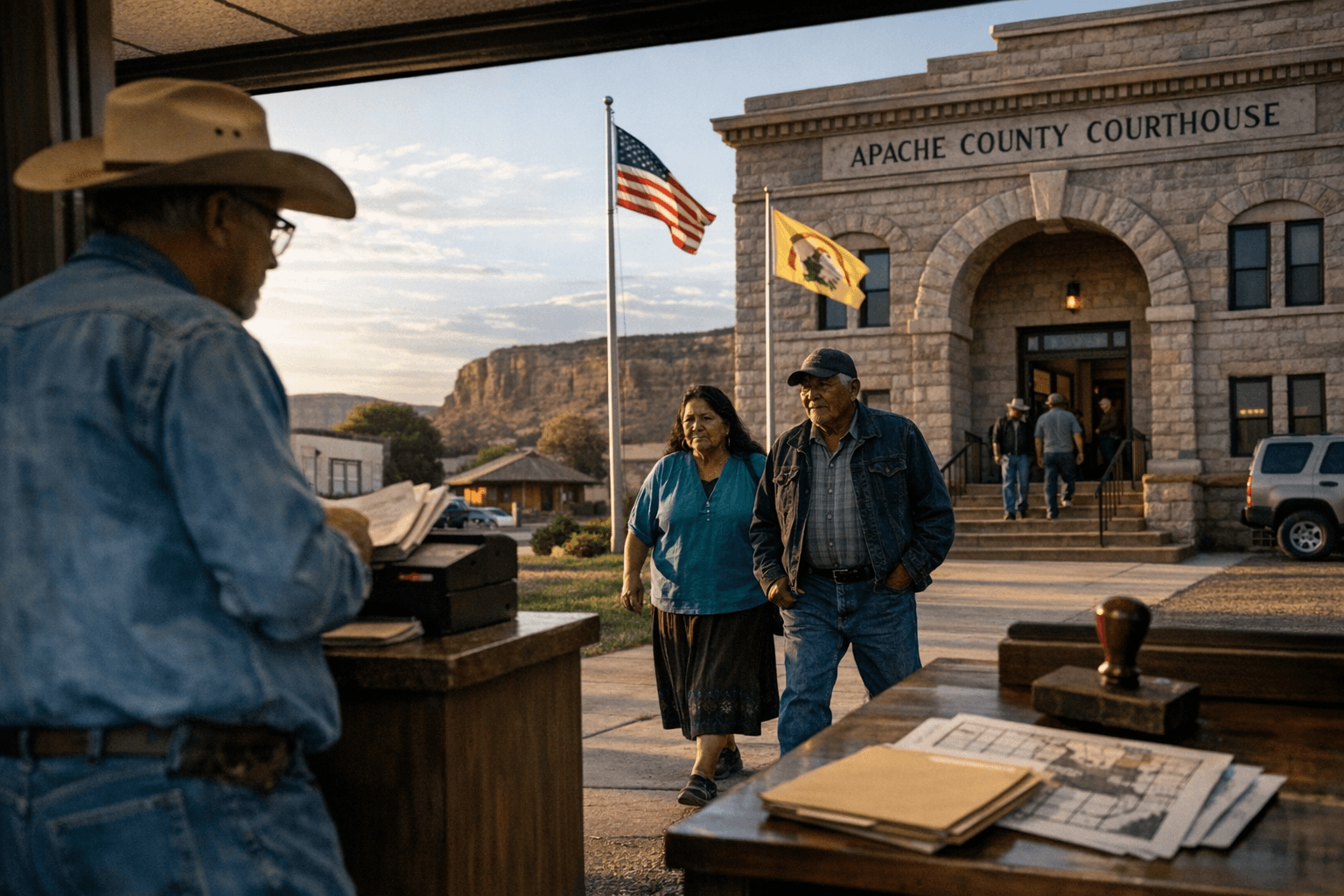
St. Johns serves as the Apache County seat, which means the majority of county-level administrative functions are anchored there. The Apache County Courthouse complex houses the core elected offices including the Board of Supervisors, County Assessor, County Recorder, County Treasurer, and the Superior Court. For residents in Eagar or Springerville, the round trip to St. Johns along Highway 60 runs roughly 60 miles, which makes understanding what can be handled remotely or by mail a practical priority before making the drive.
The Board of Supervisors governs Apache County through three district seats and holds regular public meetings where residents can address commissioners directly. Meeting agendas and minutes are public record and are typically posted in advance, giving community members the opportunity to track decisions on zoning, budgets, and intergovernmental agreements before they are finalized.
Assessor, Recorder, and Treasurer
Property-related inquiries in Apache County run through three distinct offices, and knowing which handles which function prevents unnecessary redirects. The County Assessor determines the assessed valuation of all real and personal property within the county, which directly affects property tax calculations. Homeowners disputing a valuation have a formal appeals process that begins with the Assessor's office and can escalate to the State Board of Equalization.
The County Recorder maintains the official repository for real property documents including deeds, mortgages, liens, and plats. Recorded documents are public record, and the Recorder's office processes both in-person filings and mail submissions. For title searches or deed verification, this is the correct starting point. The County Treasurer is responsible for collecting property taxes, distributing tax revenues to jurisdictions including school districts and fire districts, and managing county investment funds. Residents with questions about tax payment deadlines, delinquent tax status, or payment plans should contact the Treasurer directly rather than the Assessor.
Elections and Voter Registration
The County Recorder also serves as the chief elections officer for Apache County, which consolidates voter registration, early ballot requests, and election administration under one office. Eligible residents can register to vote, update registration following a move, or request a permanent early voter status through the Recorder. Arizona law permits voters to register up to 29 days before an election, though deadlines for specific races should be confirmed directly with the Recorder's office as they vary by election cycle.
Polling locations for residents in rural precincts, including those served by chapter communities on the Navajo Nation, have historically been a point of access concern given the geographic spread of the county. Confirming your assigned polling place and early voting site well before election day is advisable.
Courts and Legal Records
The Apache County Superior Court handles felony criminal cases, civil matters above the jurisdictional limit of justice courts, family law including divorce and child custody, and probate proceedings. Court records are generally public, though certain categories such as juvenile proceedings and sealed cases are restricted. Requests for court records can be made through the Clerk of the Superior Court, also located in St. Johns.
Justice of the Peace courts operate at the precinct level and handle misdemeanor matters, small claims cases up to the statutory limit, and initial appearances. Eagar and other communities have historically been served by precinct-level justice courts, so residents outside St. Johns should confirm which justice court precinct covers their address.
Chapter and Tribal Administrative Contacts
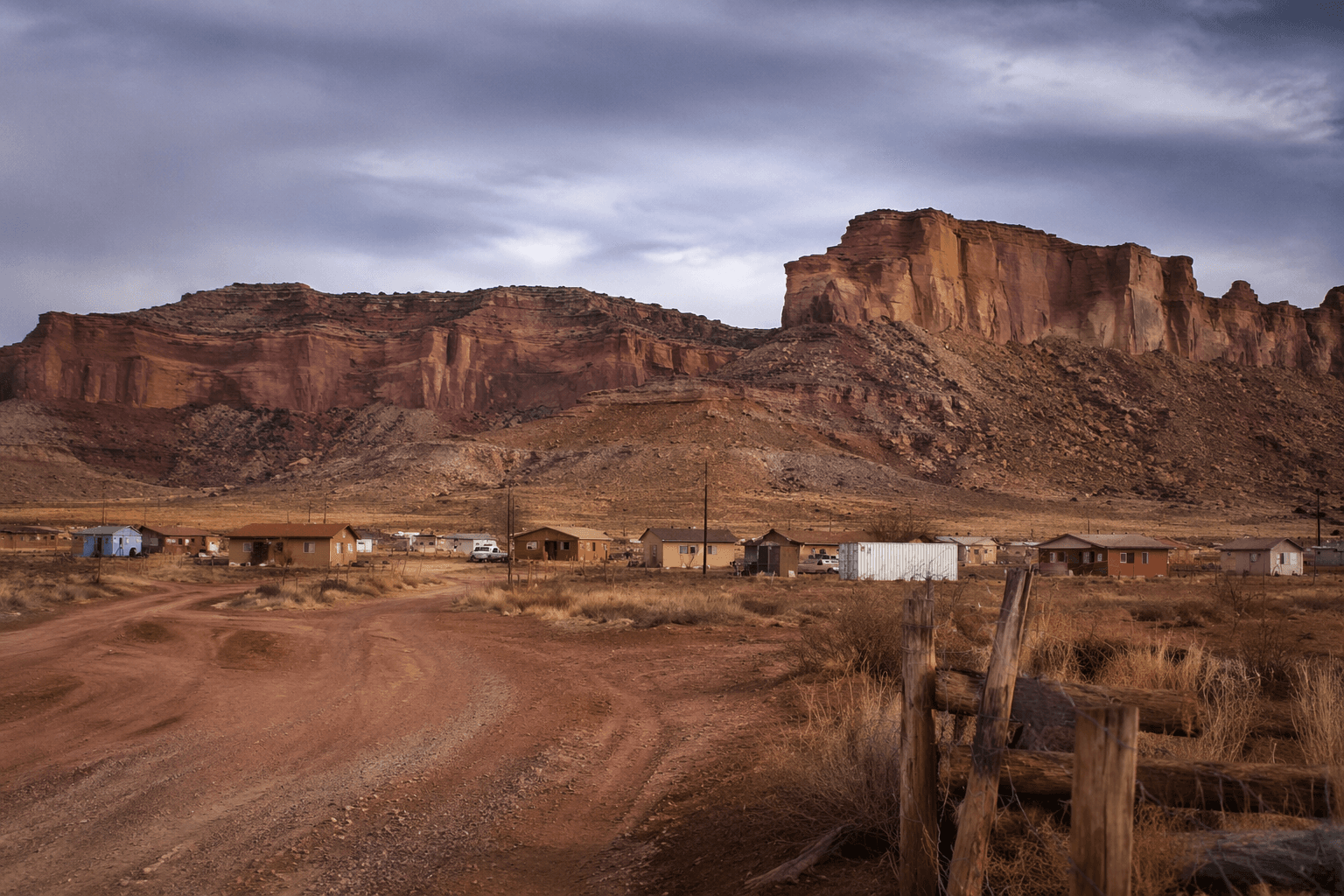
A significant portion of Apache County's population lives within the boundaries of the Navajo Nation or the Fort Apache Indian Reservation, which means that for many daily government needs, tribal or chapter-level offices are the first and most relevant point of contact rather than county offices.
Navajo Nation chapters function as the grassroots unit of Navajo government, and dozens of chapters operate within Apache County's boundaries. Each chapter has its own chapter house, elected chapter officers (President, Vice President, and Secretary/Treasurer), and a Land Board that handles local grazing and land use matters. Chapter meetings are open to community members and serve as the primary venue for residents to raise local concerns, access community development funds, and interact with Navajo Nation program administrators. Residents should contact their specific chapter house directly for meeting schedules, as chapter governance operates on its own calendar independent of county government.
The White Mountain Apache Tribe governs the Fort Apache Indian Reservation from Whiteriver and maintains its own administrative structure for tribal members, including housing, education, natural resources, and law enforcement through the White Mountain Apache Tribe Police Department.
Public Records Requests
Arizona's Public Records Law grants broad access to government documents held by state and local agencies, and Apache County offices are subject to this framework. Requests can generally be made verbally, in writing, or by email, though submitting a written request creates a clearer record and typically produces faster responses for complex document sets. Each county office maintains its own records, so a request should be directed to the specific office that generated or holds the documents in question rather than to a central records clearinghouse.
There is no fee for inspecting public records in Arizona, though agencies may charge reasonable costs for copying and staff time on large requests. Response timelines are not strictly defined by statute but are expected to be prompt, and delays can be challenged through the County Attorney's office or in court.
Emergency Services and Additional Contacts
Apache County Emergency Management coordinates disaster preparedness and response across the county's vast geography, working alongside municipal fire departments, volunteer fire districts, and the Arizona Department of Emergency and Military Affairs. For non-emergency inquiries, the Apache County Sheriff's Office serves as the primary law enforcement contact for unincorporated areas of the county. Incorporated communities like St. Johns and Eagar maintain their own municipal police departments.
For health and human services, Apache County operates through the Arizona Department of Economic Security for programs including nutrition assistance and child support, while the county health department addresses public health issues including vital records such as birth and death certificates.
Understanding which level of government, county, municipal, tribal, or state, handles a given service is often the most practical knowledge a county resident can carry. Apache County's layered jurisdictional landscape reflects the complexity of governing a region where sovereign tribal nations, rural municipalities, and unincorporated communities share geography but operate under distinct legal frameworks.
This article was produced by Prism’s automated news system from verified source data, official records, and press releases, then run through automated quality and moderation checks before publishing. The system is built and supervised by the people who set the standards it runs under. Read our full AI policy.
Did this article answer your question?