Apache County's Top Destinations, From Canyon de Chelly to Lyman Lake
Canyon de Chelly's canyon floor is off-limits without a Navajo guide, making it one of Arizona's most distinctly local travel experiences.
Apache County stretches across northeastern Arizona as one of the largest counties in the United States, yet it remains one of the least visited. That gap between scale and attention is precisely what makes it compelling: the same landscape that kept settlers and tourists at bay for generations now draws hikers, anglers, skiers and cultural travelers who want something beyond a packaged resort experience. Four destinations anchor the county's identity and its tourism economy, each distinct in character but connected by the high-desert geography that defines this corner of Arizona.
Canyon de Chelly National Monument
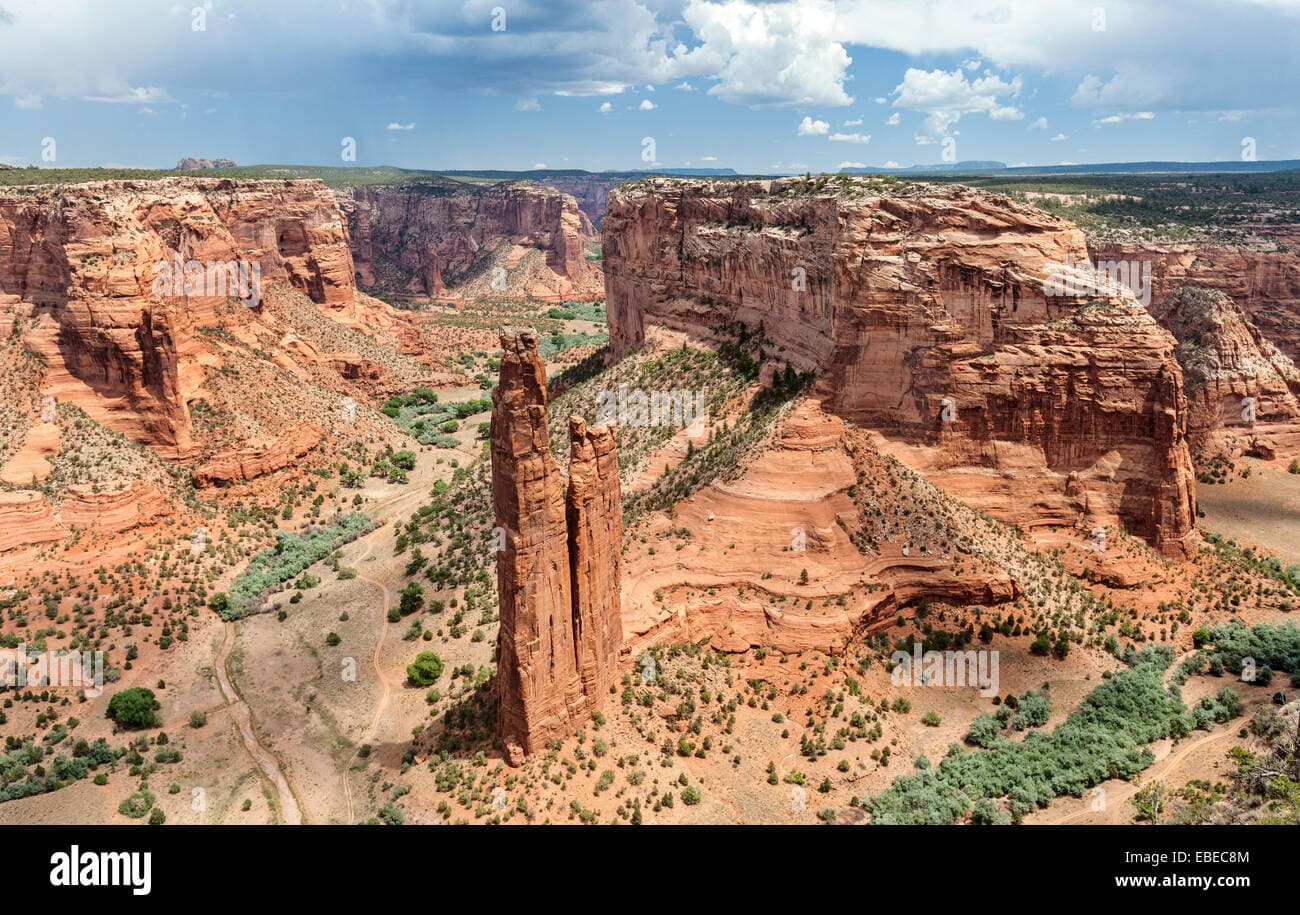
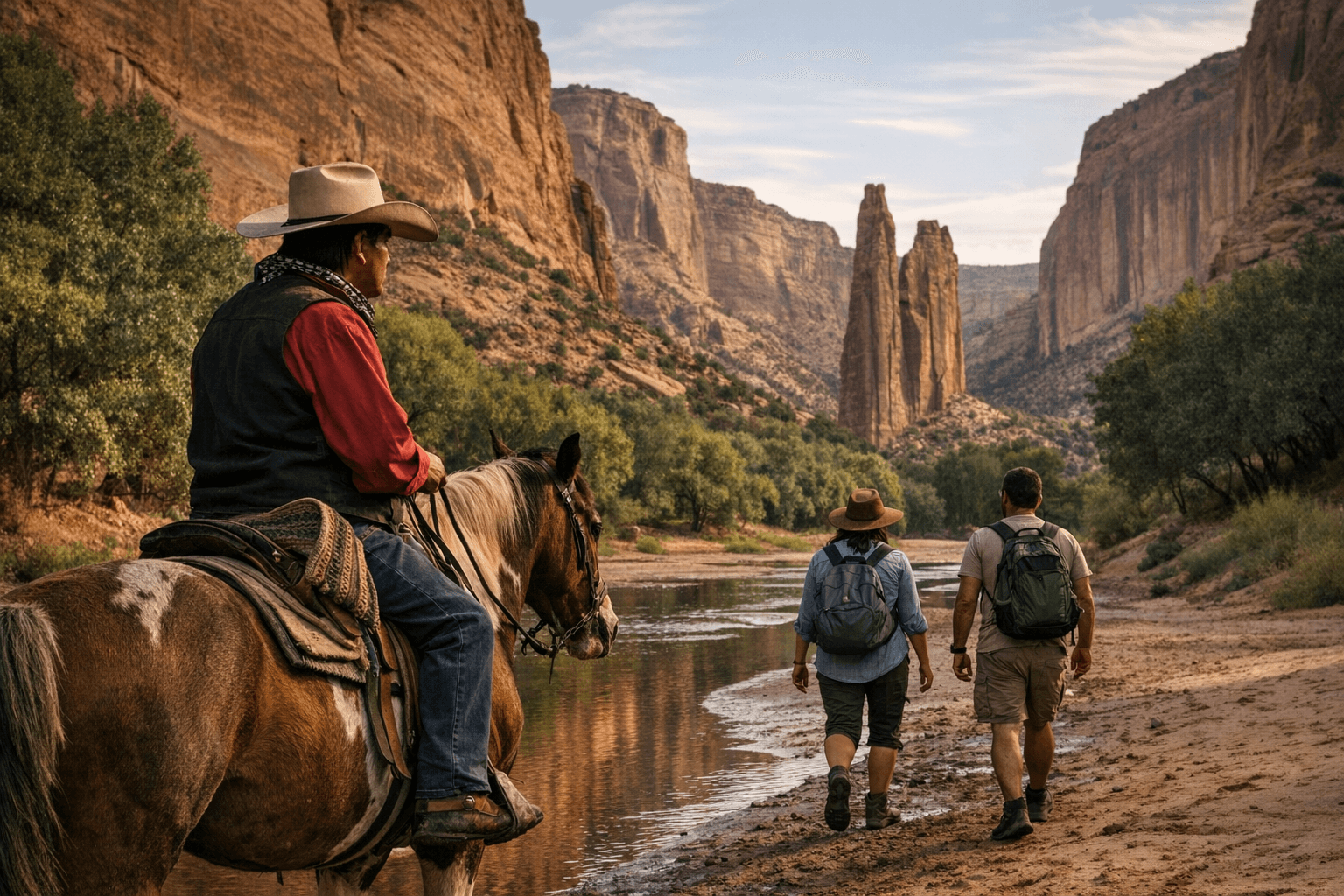
No single site better captures Apache County than Canyon de Chelly, located in Chinle on the Navajo Nation. The monument encompasses a network of red sandstone canyons carved by the Chinle Wash and its tributaries, sheltering cliff dwellings, Ancestral Puebloan ruins and centuries of Navajo farming history within walls that rise several hundred feet from the canyon floor. Unlike most national parks, Canyon de Chelly charges no entrance fee, but that accessibility comes with a significant caveat: the interior of the canyon is accessible only with an authorized Navajo guide. Private Navajo-owned companies offer tours by horseback, hiking or four-wheel drive vehicle, and these outings are not optional formalities. Interior features, including Mummy Cave and the canyon's most significant rock art panels, are unreachable without them.
The two rim drives, North Rim Drive and South Rim Drive, give unguided visitors sweeping views of canyon geology and distant ruins. Spider Rock, a sandstone spire rising roughly 800 feet from the canyon floor at the junction of Canyon de Chelly and Monument Canyon, is one of the most photographed formations in the Southwest and visible from the South Rim. For visitors who want more than rim overlooks, booking a guided tour in advance is essential, particularly in spring and fall when demand is high. Cottonwood Campground, located near the visitor center, provides a base for multi-day visits with plenty of shaded sites, though without shower facilities. Spider Rock Campground, privately managed just outside the monument boundary along South Rim Drive, offers an alternative for those who prefer a quieter setting.
The monument's economic ties to Chinle and surrounding chapters are direct. Guide businesses, artisan vendors near the visitor center and the Thunderbird Lodge all draw income from the roughly half-million visitors who pass through annually. Hiring a local guide here is not just good etiquette; it is the only legal way to access the canyon floor, and the experience consistently exceeds what rim drives alone can offer.
Lyman Lake State Park
Eleven miles south of St. Johns, Lyman Lake is an anomaly in Apache County's high-desert landscape: a genuine reservoir large enough for open-water boating. The lake was created by damming the Little Colorado River, and it holds a distinction rare in Arizona: no size restrictions on boats, motors or personal watercraft. That openness draws families with ski boats and anglers in equal measure, and the on-site market and outfitter make it straightforward to arrive without a full gear kit.
Camping infrastructure here is substantial for a rural state park. More than 60 campsites accommodate RVs with hookups, tent campers and visitors who prefer the park's eight lakeside cabins with water views. Shade ramadas along the shoreline offset the exposed terrain, which is dotted with juniper scrub rather than tall pines. Beyond the water, Lyman Lake has a hiking trail system that includes access to a petroglyph site, placing it in the broader cultural landscape of Apache County rather than treating it purely as a recreation amenity.
For Apache County residents in St. Johns and the surrounding communities, Lyman Lake functions as a practical backyard resource. The absence of major water recreation elsewhere in the county makes it a consistent draw for local families throughout spring and summer.
Sunrise Park and the White Mountains
The communities of Eagar, Springerville and Round Valley sit at the western edge of the White Mountains region, giving residents direct access to one of Arizona's most versatile outdoor corridors. Sunrise Park Resort, operated by the White Mountain Apache Tribe and located near Greer, defines the area's winter identity. The resort spans three mountains, Sunrise Peak, Cyclone Circle and Apache Peak, with a base elevation of 9,200 feet and 65 runs ranging from beginner terrain to expert pitches. A dedicated snowboarding area, cross-country trails and a children's ski-wee zone make it a full-service mountain destination rather than a single-demographic resort. For visitors from the Phoenix metro, it sits roughly 216 miles out, a four-hour drive that puts legitimate alpine skiing within a day trip for millions of Arizonans.
Summer transforms the same terrain. Scenic lift rides, zip-line tours, downhill mountain biking, tubing, archery and nature hikes populate the resort's warm-weather calendar, extending its economic contribution well beyond ski season. Alpine lakes throughout the broader White Mountains region offer fishing and paddling. The trail networks connecting Eagar, Springerville and the surrounding national forest land draw hikers and mountain bikers from across the state, fueling local hospitality businesses and restaurants that would otherwise depend solely on passing highway traffic.
Hubbell Trading Post and the County's Cultural Sites
In Ganado, just off State Highway 264 roughly one mile west of town, Hubbell Trading Post National Historic Site preserves what is documented as the oldest continuously operated trading post on the Navajo Nation. The site's history traces to approximately 1874, when William Leonard first established a post in the Ganado Valley. John Lorenzo Hubbell purchased it in 1878, a decade after Navajo people were permitted to return to the Ganado region following the forced march to Bosque Redondo known as the Long Walk. Established as a National Historic Site on August 28, 1965, the property spans about 160 acres and functions simultaneously as a museum, a working trading post and a demonstration space for Navajo weaving and other traditional crafts.
The National Park Service maintains the site, but its cultural significance extends beyond a preserved building. Hubbell is explicitly described as a meeting ground of two cultures, a place where Navajo artisans and Anglo traders built lasting commercial and social relationships. That dynamic continues today in the broader network of trading posts and regional markets across Apache County, where Navajo jewelers, weavers and potters sell work directly to visitors. For artisan households, this channel of commerce represents real income, and it is one reason that encouraging visitors to shop at established trading posts, rather than purchasing off-reservation reproductions, carries direct economic weight for local families.
Planning a Visit
Apache County rewards preparation more than most destinations. A few essentials:
- Fuel, groceries and repair services can be separated by significant distances. Carry extra water, check road conditions in advance and never assume the next town has a gas station with regular hours.
- High-elevation roads throughout the White Mountains can close without notice in winter. Confirm access before driving up.
- Large portions of Apache County fall under Navajo Nation jurisdiction. Chapter rules govern access to many roads and sites; always follow posted guidance and obtain permission before entering private or restricted land.
- Hiring local guides, particularly at Canyon de Chelly, is not merely a courtesy. It is how canyon access works, and it routes visitor dollars directly into the community providing the experience.
The county's size means visitors rarely feel crowded, and the combination of a rim-drive canyon monument, an open-water reservoir, a multi-mountain ski resort and a federally preserved trading post within a single county is genuinely unusual. Each destination reflects a different chapter of the same long story about land, water and cultural continuity in northeastern Arizona.
This article was produced by Prism’s automated news system from verified source data, official records, and press releases, then run through automated quality and moderation checks before publishing. The system is built and supervised by the people who set the standards it runs under. Read our full AI policy.
Did this article answer your question?