Apache-Sitgreaves Forest closes Greer Lakes area to protect bald eagles
The Forest Service shut down the Greer Lakes nesting zone through June 30, keeping the roads open but closing forest land around River Reservoir to protect bald eagles.
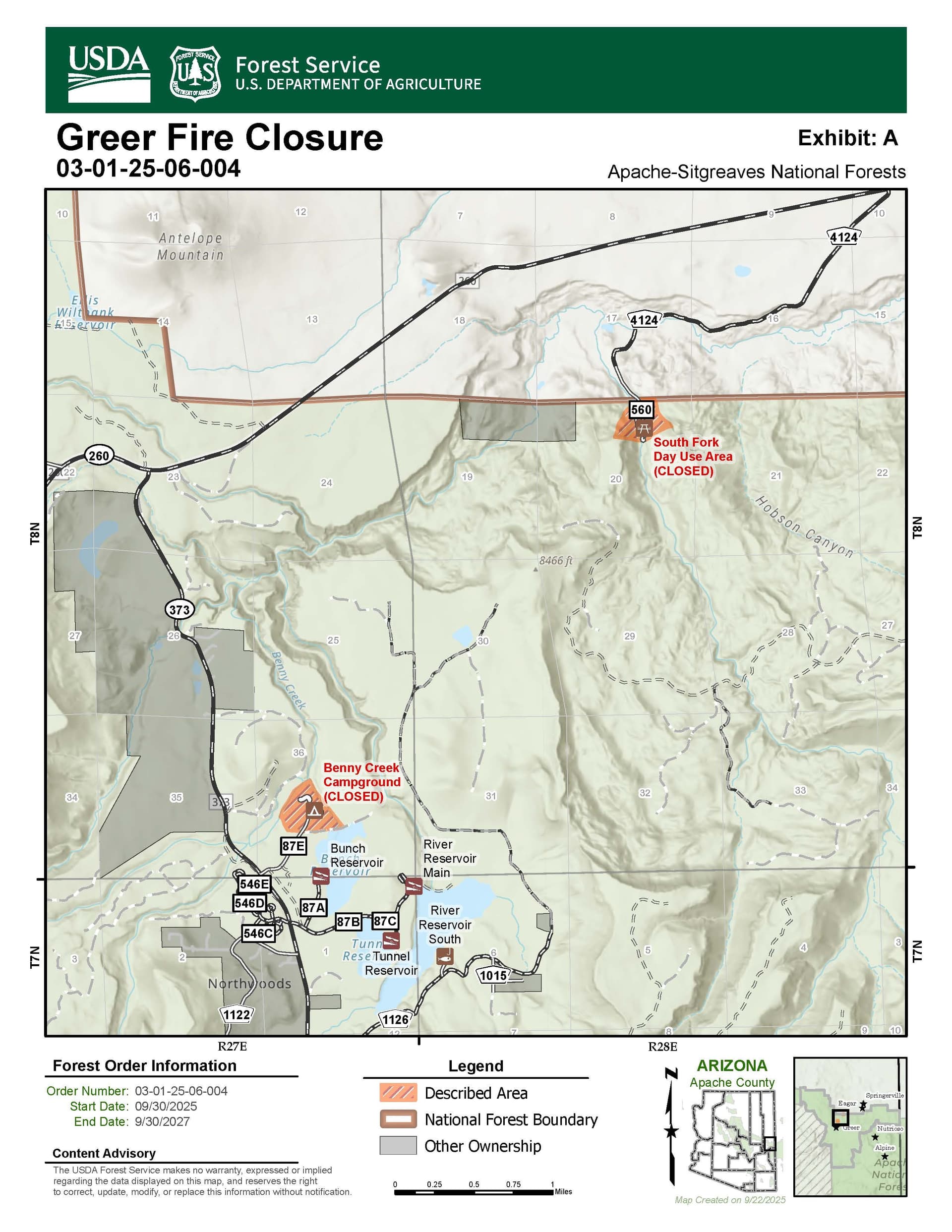
The Apache-Sitgreaves National Forests closed the forest land around River Reservoir, also known as Greer Lakes, to reduce disturbance to bald eagles during nesting and fledgling season. The temporary order, No. 03-01-06-26-001, took effect at 5 p.m. May 1 and runs through 5 p.m. June 30 unless rescinded.
The closure covers all National Forest System lands inside the mapped boundary on the Springerville Ranger District. Apache County Roads 1126 and 1015 remain open for travel unless they are separately closed, but entry into the closed forest area itself is barred except for people with Forest Service Permit No. FS-7700-48 and federal, state or local officers, along with organized rescue or firefighting resources acting in the line of duty.
The Forest Service tied the order to federal authority under 16 U.S.C. § 551 and 36 C.F.R. § 261.50(a), saying the restriction is needed to protect a threatened, endangered, rare, unique or vanishing species. The notice specifically cites the Bald and Golden Eagle Protection Act, which prohibits activities that interfere with breeding behavior or cause nest abandonment.
For residents and visitors around Springerville and Greer, the practical effect is straightforward: do not enter the closed forest polygon around the lakes, even if the county roads leading past it are open. Anglers, campers, sightseers and spring hikers will need to adjust plans away from shoreline access and any foot travel inside the closure boundary while the nesting season continues.
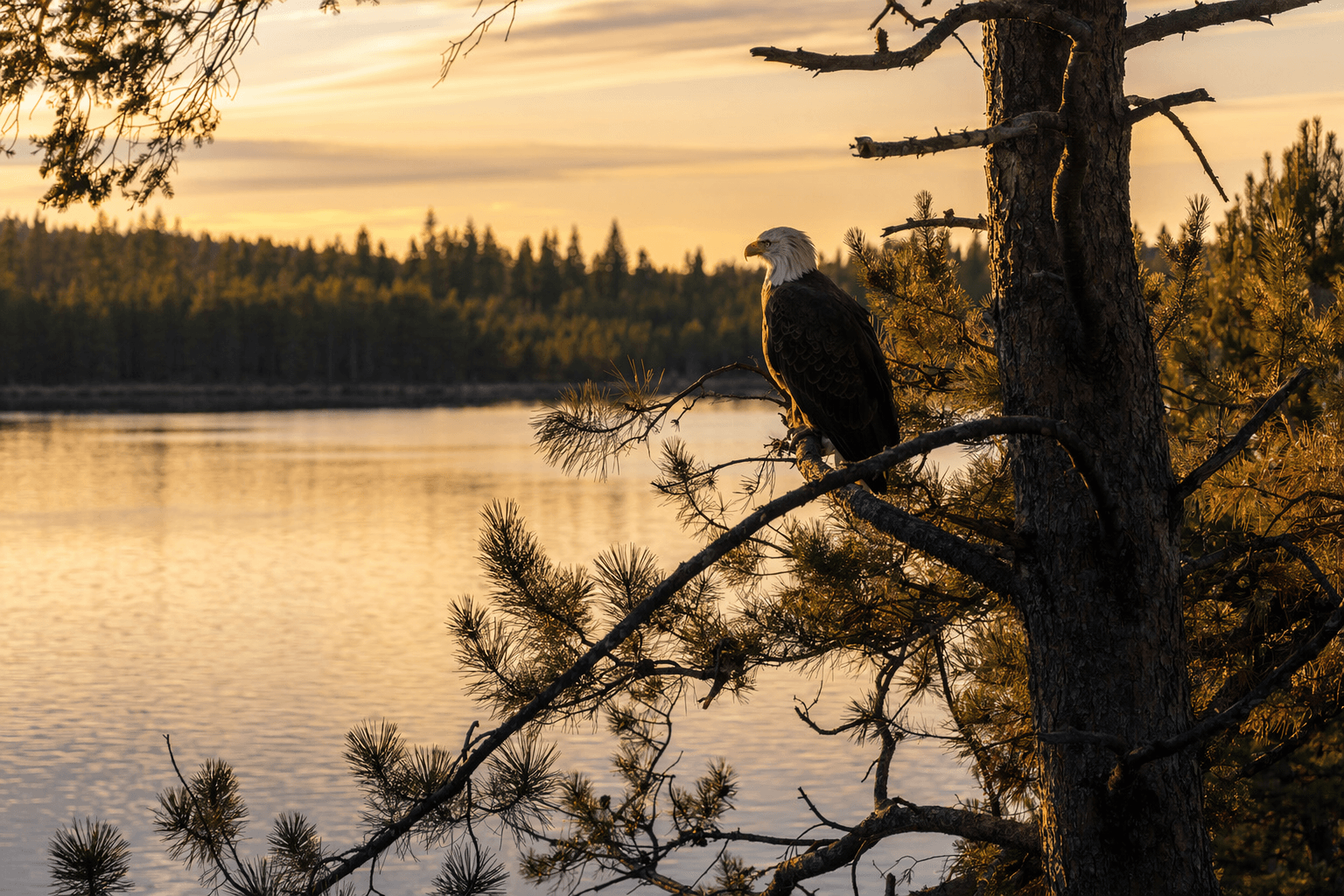
Greer Lakes is not a random precaution area. The Southwestern Bald Eagle Management Committee lists it as a bald eagle nest site discovered in 2008, at 8,260 feet in the Little Colorado River drainage, and its seasonal guidance has long treated the site as sensitive from March 1 through July 31. That makes the 2026 Forest Service order part of a longer-running protection pattern in eastern Apache County, where recreation and nesting habitat overlap.
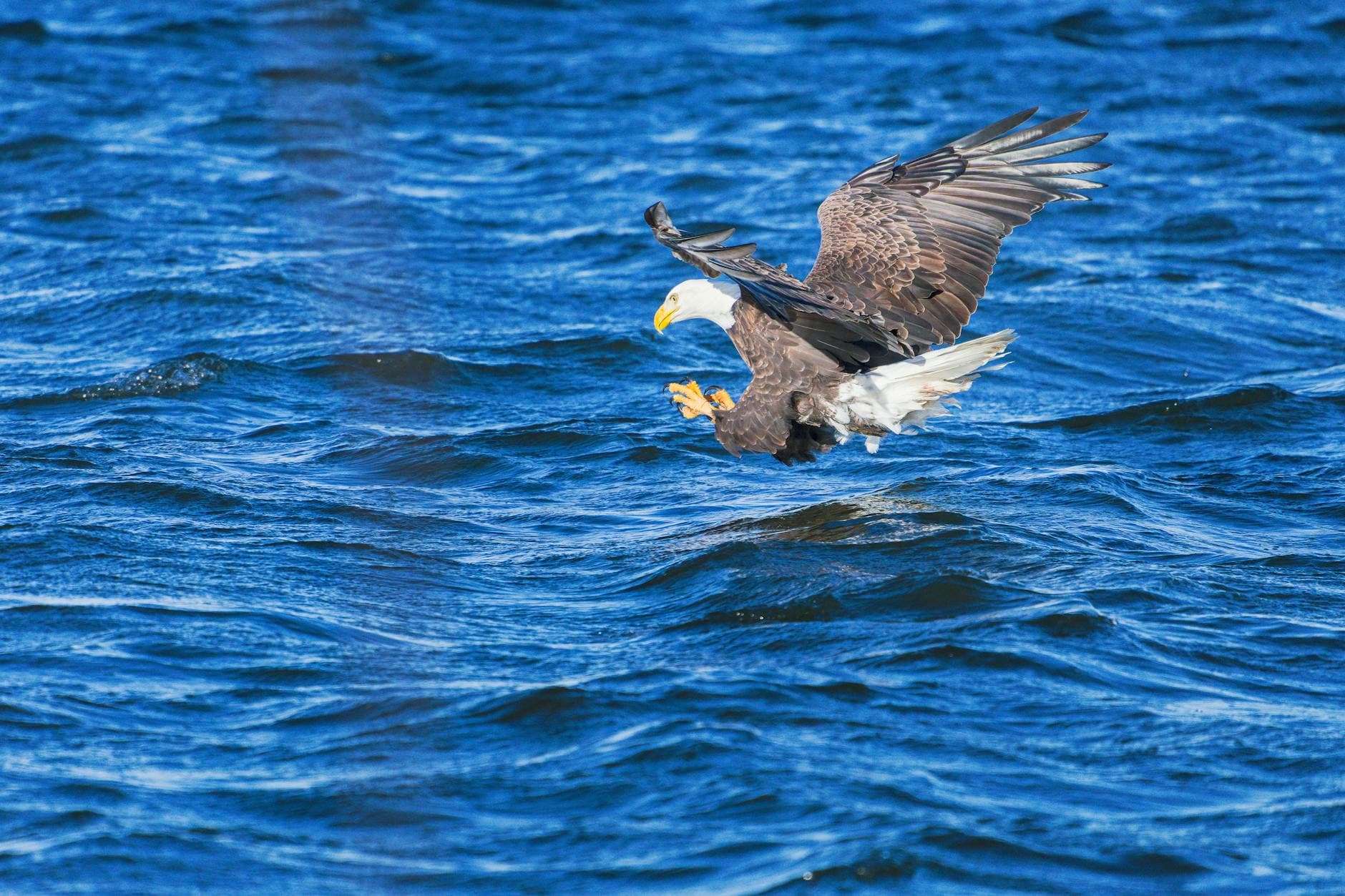
Statewide, Arizona Game and Fish says Arizona now has 111 eagle breeding areas. During the 2025 breeding season, 83 young hatched and 71 fledged, underscoring why agencies keep using closures and flight advisories around known nest sites. The department also says bald eagles can be sensitive to short periods of disturbance, and a disruption lasting just 15 to 30 minutes can cause a breeding attempt to fail.
The broader history explains why the protections remain strict. Arizona’s bald eagles were listed as endangered in 1978, downlisted to threatened in 1995 and removed from the endangered species list in 2007. The Arizona Bald Eagle Nestwatch Program began that same year as a weekend volunteer effort by the U.S. Forest Service and Maricopa Audubon Society, then grew into a multiagency effort that now contracts about 20 biologists each year. In a forest system that spans more than 2 million acres and includes more than 400 miles of rivers and streams, the Greer Lakes closure is another reminder that access in Apache County often comes with a seasonal limit when wildlife is nesting.
This article was produced by Prism’s automated news system from verified source data, official records, and press releases, then run through automated quality and moderation checks before publishing. The system is built and supervised by the people who set the standards it runs under. Read our full AI policy.
Did this article answer your question?