Butterfly Lodge Museum preserves Greer’s Schultz family history
Butterfly Lodge Museum is more than a cabin in Greer: its seasonal operation, National Register status and Schultz-Lone Wolf ties make it a test of tourism and preservation.
Butterfly Lodge Museum is one of Greer’s few places where a single cabin carries both cultural memory and civic pressure. Built in 1913, first occupied in 1914 and now open only through a short summer season, the lodge has to do more than display the Schultz family story: it has to draw visitors, support preservation and justify its place in a small mountain town’s economy.
A landmark built around the Schultz family
Butterfly Lodge began as a hunting cabin built by John Butler for James W. Schultz, then later became the home of Hart Merriam Schultz, known as Lone Wolf. The cabin’s Blackfeet name, Apuni Oyis, was inspired by butterflies in the surrounding meadows, a detail that still gives the site a sense of place tied to Greer’s landscape rather than to a generic frontier past.
The structure is listed on the National Register of Historic Places, and the National Park Service record places it in Apache County near Greer, Arizona. That listing matters because the lodge is not simply a preserved house museum. It is a formally recognized historic building with alternate names that reflect its layered identity: Lone Wolf cabin, James Willard Schultz cabin and Apuni Oyis.
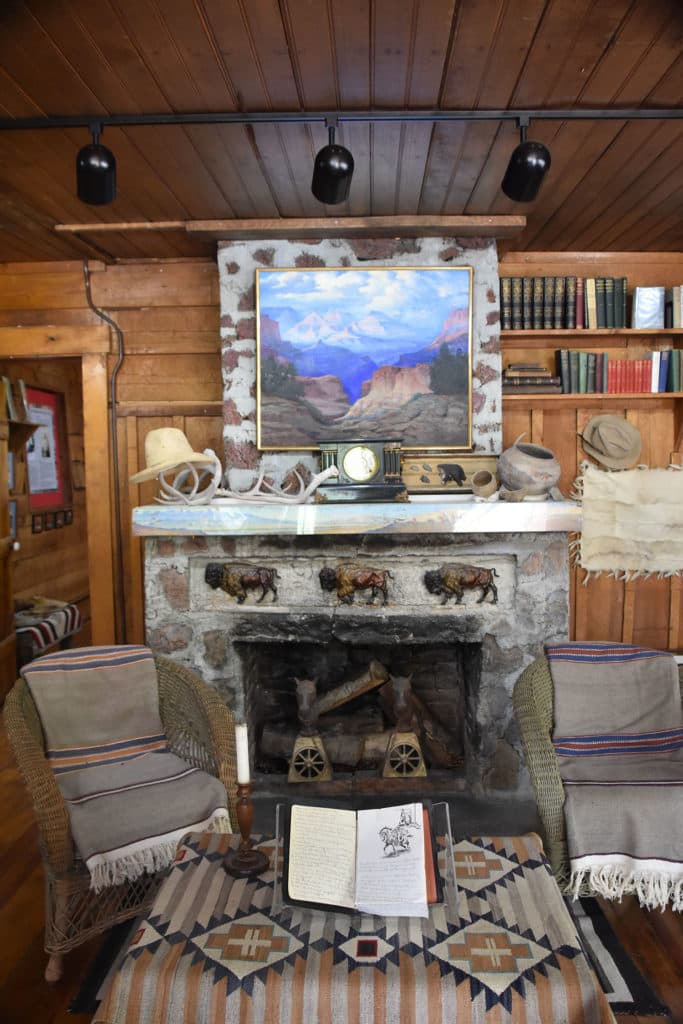
What survives inside reinforces that status. The museum preserves original features including floors, windows and a fireplace, along with artifacts tied to the Schultz family. In a town where historic sites can easily become little more than roadside references, Butterfly Lodge remains an intact cabin that still reads as a lived-in place.
The men whose stories still define the cabin
James Willard Schultz gave the lodge much of its larger significance. The museum describes him as an author, explorer, hunting guide, trapper, trading post operator and historian of Native American lore, and the National Register file identifies him as the author of 37 Western books. That literary record turned the cabin into more than a mountain retreat; it became part of the footprint of a writer whose work reached far beyond Apache County.

The National Register nomination adds another telling detail: Schultz was the first non-resident, or tourist, to build a log cabin in the area. That makes Butterfly Lodge part of the early history of recreational settlement in the White Mountains, not just a family residence. In a region now shaped by tourism, forest access and seasonal visitation, that origin story still fits the local economy.
Hart Merriam Schultz, better known as Lone Wolf, kept that legacy going in a different medium. Born in 1882 and dying in 1970, he was the son of James Willard Schultz and Natahki. He grew up on the Blackfoot Reservation in Montana and became a prolific painter and sculptor whose signature appears on hundreds of paintings. The lodge therefore carried two generations of creative work: one rooted in books, the other in visual art.
That father-son connection is central to the museum’s identity. The National Register nomination describes Butterfly Lodge as historically significant as the mountain residence and hunting lodge for both men. For Greer, that means the museum is not just preserving architecture. It is preserving an argument about how this place should be interpreted: as family home, artistic base camp, literary landmark and symbol of early mountain settlement all at once.
Why the museum matters to Greer now
The practical question is whether a small historic site can convert significance into steady public value. Butterfly Lodge Museum operates on a narrow calendar, with the 2026 season running from May 21 through September 19, Thursday through Saturday, from 10 a.m. to 3 p.m. Entry is by donation, which makes every visit part of the museum’s preservation model rather than a simple ticket sale.
That schedule tells its own story. The lodge does not function as a year-round attraction, so its local impact depends on whether summer visitors through Greer, the White Mountains and the Apache National Forest make time to stop. It also means the museum has to compete for attention in a county where distance, weather and seasonal travel patterns shape where people spend their time and money.
For Apache County, the stakes are civic as well as economic. A site like Butterfly Lodge can help keep Greer visible to travelers who might otherwise pass through without stopping, and it can strengthen the case for preservation funding by showing that the cabin still draws interest. The museum’s challenge is to translate a national historic listing and a famous family name into repeat visitation, local spending and public support that outlasts a single summer.
That is why the Schultz story still travels. James Willard Schultz gave the cabin literary weight through 37 Western books and a life spent writing about Native American lore. Lone Wolf gave it artistic reach through paintings and sculpture. Together, their histories make Butterfly Lodge a compact test of how one museum in a small mountain town can keep interpretation, stewardship and identity in balance.
How to visit
Butterfly Lodge Museum’s current season is brief, so planning matters. The museum and gift store are open from May 21 through September 19, Thursday through Saturday, from 10 a.m. to 3 p.m., with admission by donation.
A visit is as much about the setting as the building itself. The cabin’s name, Apuni Oyis, comes from the butterflies in the meadows around it, and that landscape remains part of what gives the site meaning. In Greer, where history and tourism are tightly linked, the lodge stands as a reminder that preservation only works when people still come through the door.
This article was produced by Prism’s automated news system from verified source data, official records, and press releases, then run through automated quality and moderation checks before publishing. The system is built and supervised by the people who set the standards it runs under. Read our full AI policy.
Did this article answer your question?