Canyon de Chelly Winter Visitors Bolster Chinle Economy and Culture
Canyon de Chelly National Monument continues to draw winter visitors, offering quieter trails and scenic overlooks while sustaining local guides, craft vendors and hospitality providers in Chinle and surrounding communities. The site is managed by the National Park Service in partnership with the Navajo Nation, and access rules and seasonal operations make winter visitation an important economic and cultural lifeline.

As winter settles across Apache County, Canyon de Chelly National Monument remains a focal point for both cultural tourism and local economic support. The monument, managed by the National Park Service in partnership with the Navajo Nation, features dramatic sandstone walls, Ancestral Puebloan ruins and Navajo cultural sites that attract visitors seeking outdoor scenery and heritage experiences outside the busy summer months.
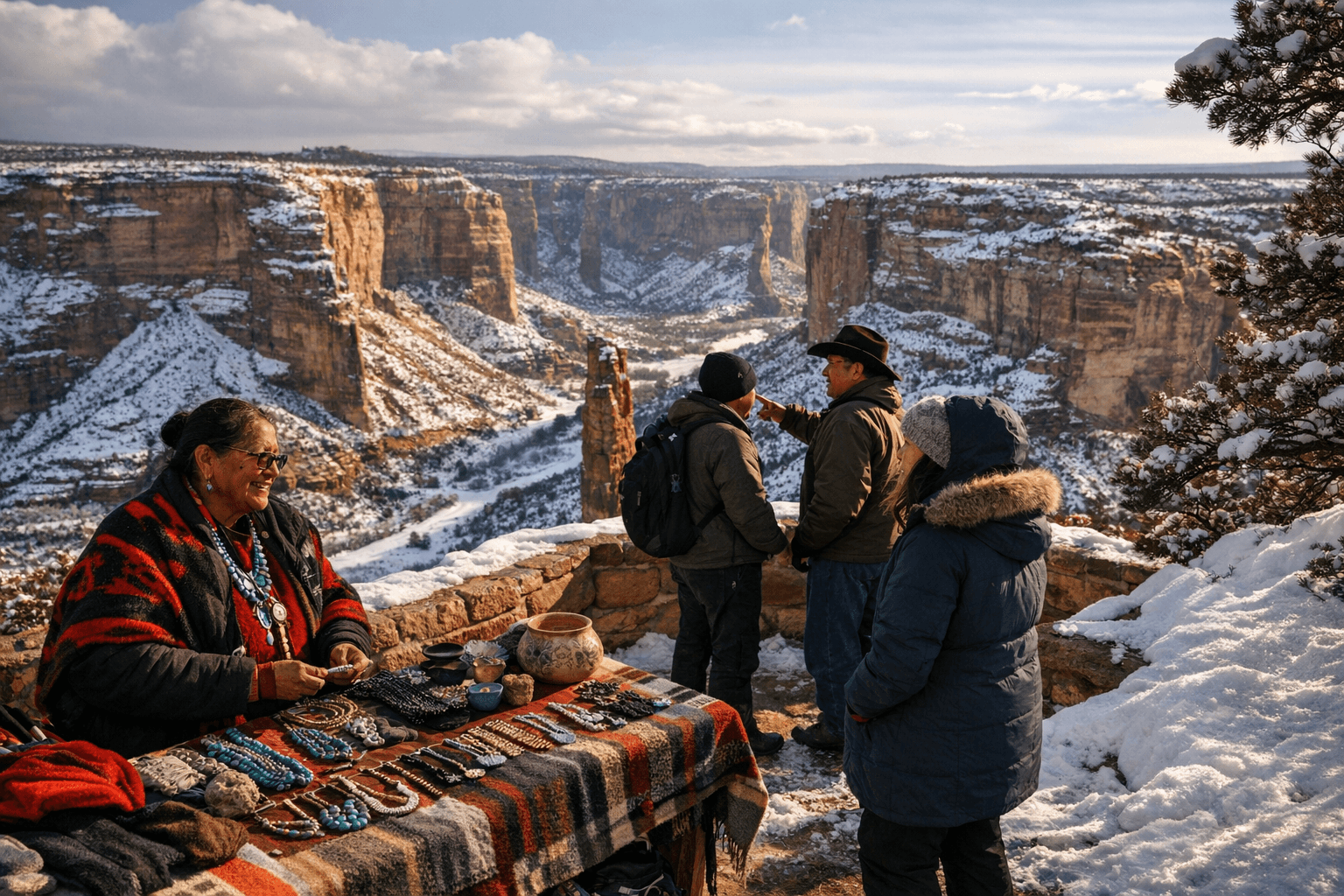
Visitors in winter often encounter quieter trails and expanded opportunities to use scenic overlooks such as Spider Rock and the White House Overlook. Access to the canyon floor itself is restricted to guided Navajo tours, a requirement that channels tourist spending directly to authorized local tour operators and Navajo guides. Visitor center hours vary seasonally, so travelers and residents planning trips should confirm hours before arriving.
The economic implications for Chinle and neighboring communities are tangible. Winter visitation helps sustain guide income, sales for craft vendors and bookings for lodging and food service when foot traffic otherwise softens. For small operators that rely on seasonal tourism, steady winter demand can smooth revenue across the year and reduce the volatility that affects many rural economies. The monument thus functions not only as a heritage site but also as a seasonal economic stabilizer for local households and small businesses.
Beyond immediate income effects, the monument’s management model carries longer term importance. The partnership between the National Park Service and the Navajo Nation supports both cultural stewardship and local control over tours and interpretive programming. Requiring Navajo guides for canyon floor access reinforces protections for archaeological sites while ensuring that cultural interpretation and a portion of tourism revenues remain within local communities.
For residents and visitors this winter, the practical takeaway is straightforward. Canyon de Chelly remains accessible with quieter trails and key overlooks open for visitation, but canyon floor tours require booking through authorized local operators and visitor center hours change with the season. Maintaining winter visitation while protecting cultural and natural resources will be essential for preserving the site and supporting the local economy in the years ahead.
This article was produced by Prism’s automated news system from verified source data, official records, and press releases, then run through automated quality and moderation checks before publishing. The system is built and supervised by the people who set the standards it runs under. Read our full AI policy.
Did this article answer your question?