Chinle woman becomes CNA to help families find care closer home
A Valley Store woman will graduate as a CNA after watching her niece travel for care, a path that points to Apache County’s need for local providers.
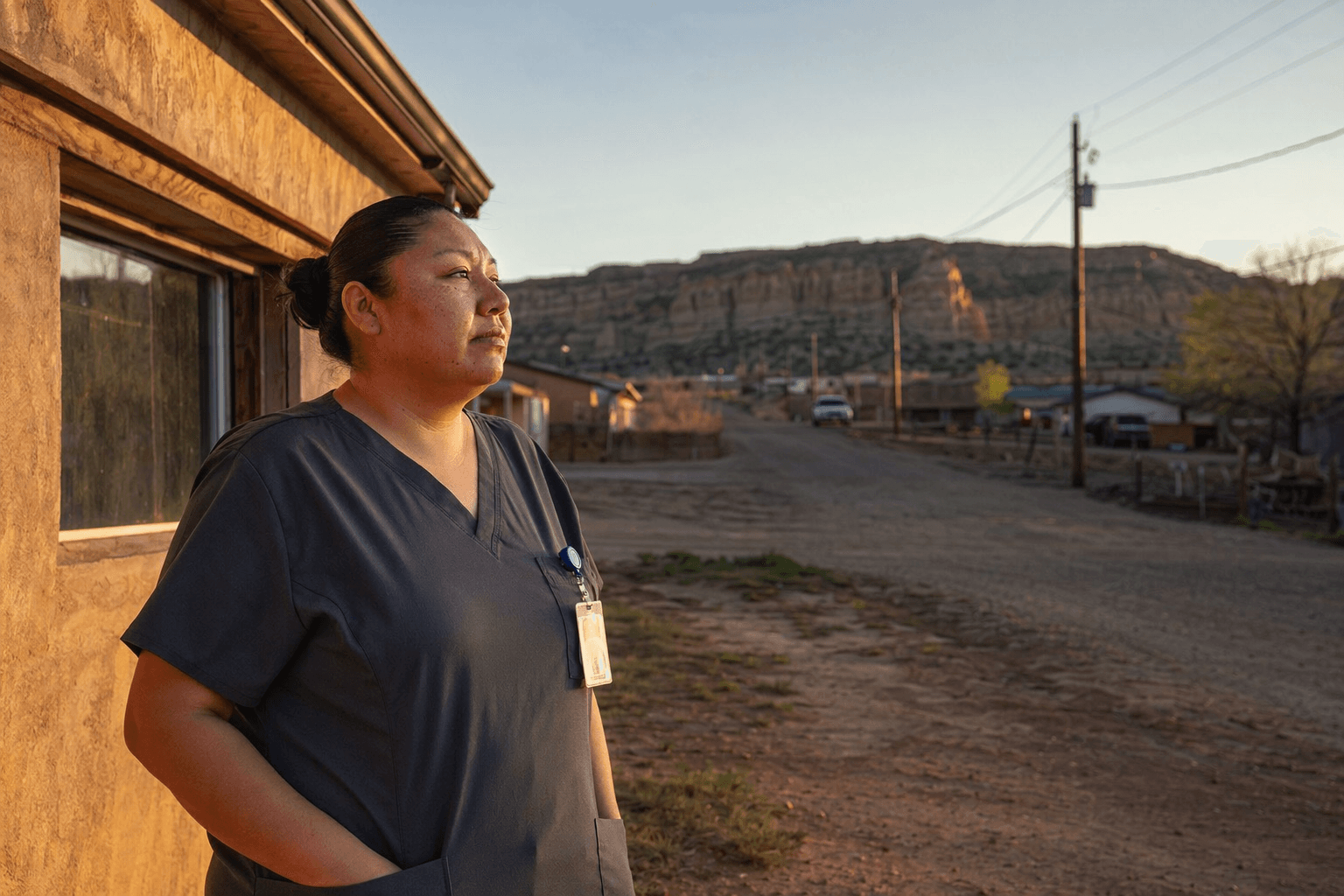
Apache County families often run into the same barrier before they ever reach a doctor: the nearest care is too far away, too crowded or too hard to staff. In Chinle, where the 60-bed Chinle Comprehensive Health Care Facility serves as the region’s health care hub, one Navajo Technical University graduate is trying to change that by training for the front lines of local care instead of leaving patients to chase it elsewhere.
Tia Julian Bia, a Valley Store native, will graduate Friday, May 15, from Navajo Technical University with a certified nursing assistant certificate along with 11 classmates. Her path into health care came after watching her young niece live with serious medical complications and depend on a tracheostomy, a condition that has forced the family to travel for services not available nearby. Those trips have carried financial and emotional costs that many Apache County households know well, from fuel and lodging to missed work and repeated drives across a county that stretches across wide distances.
The local stakes are easy to measure. Apache County had 66,021 residents in the 2020 Census, and 72.6% identified as American Indian and Alaska Native alone, according to U.S. Census Bureau estimates. The agency also estimates that 13.0% of county residents under age 65 lacked health insurance in 2020-2024. Across the Navajo Nation, the Navajo Area Indian Health Service serves more than 244,000 American Indians in five federal service units on and near a land base that covers more than 25,000 contiguous square miles across Arizona, New Mexico and Utah. When staffing falls short, every extra mile becomes another obstacle for families trying to get routine and urgent care.
Bia said the CNA program is only her first step. She intends to apply for work at Chinle Comprehensive Health Care Facility or Sage Memorial Hospital in Ganado, where Navajo preference in employment applies and the hospital identifies itself as an equal-opportunity employer. She later plans to return to Navajo Technical University for a pharmacy technician program, reflecting the school’s mission to train students for careers that lead to self-sufficiency and independence. That kind of local pipeline matters in a region where the Government Accountability Office found a 25% overall Indian Health Service provider vacancy rate in 2018, with rural location and insufficient housing among the hurdles to filling jobs.
The graduation photo itself was taken at Tseyi Overlook at Canyon de Chelly National Monument, where Bia stood with help from her sister and boyfriend. The National Park Service says the canyon is home to Diné families and that people have lived there for nearly 5,000 years. For Chinle and nearby communities, Bia’s next step is more than a diploma: it is a small but practical effort to keep care, and the people who deliver it, closer to home.
This article was produced by Prism’s automated news system from verified source data, official records, and press releases, then run through automated quality and moderation checks before publishing. The system is built and supervised by the people who set the standards it runs under. Read our full AI policy.
Did this article answer your question?